

The Nubian nightjar is a species of nightjar in the family Caprimulgidae. It is found in salt marshes of Djibouti, Egypt, Eritrea, Ethiopia, Israel, Kenya, Oman, Saudi Arabia, Somalia, Sudan, and Yemen.
Region
Northeast Africa and the Arabian Peninsula
Typical Environment
It occurs in arid lowlands, especially around salt marshes, saline flats, and sparsely vegetated wadis. Birds also use acacia scrub, gravel plains, and the margins of oases and irrigated fields. During the day it roosts on open ground or among low shrubs where its mottled plumage provides excellent concealment. At night it forages along tracks, marsh edges, and open flats with scattered bushes.
Altitude Range
Sea level to 1500 m
Climate Zone
Arid
Ease of Keeping
Beginner friendly: 1/5
The Nubian nightjar is a cryptic, nocturnal insect-eater that relies on superb camouflage, often remaining motionless on the ground by day. It nests directly on bare earth or gravel without building a nest, with eggs and adults blending into the substrate. A wide, bristle-framed gape helps it snatch moths and beetles in flight at dusk and night. Local populations are vulnerable to loss and disturbance of saltmarsh and wadi-edge habitats.

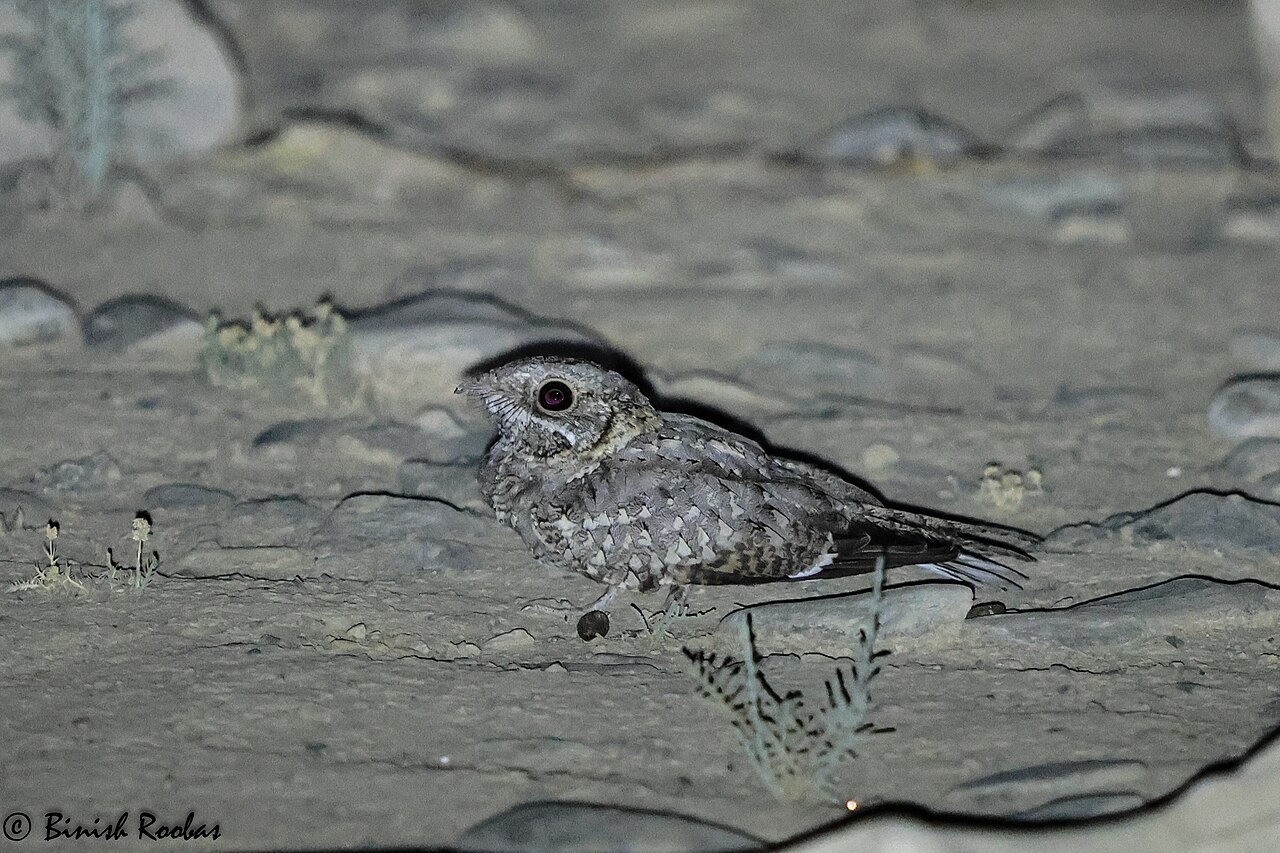
In Saudi Arabia
Temperament
solitary and territorial
Flight Pattern
buoyant, moth-like flight with short rapid wingbeats and brief glides close to the ground
Social Behavior
Typically encountered singly or in pairs. It nests on the ground without a constructed nest, relying on camouflage for protection. Males perform display flights at dusk and give advertising calls from the ground or low perches. Adults defend small feeding and nesting areas during the breeding season.
Migratory Pattern
Resident
Song Description
A repetitive, soft churring or trilling series delivered at dusk and during the night, often interspersed with sharp tchik notes. The call carries well over quiet saltmarshes and wadis and may continue for extended periods.
Plumage
Finely mottled sandy-brown, grey, and black with subtle streaking and vermiculations; very cryptic against gravel and salt flats.
Diet
Primarily flying insects such as moths, beetles, and other nocturnal arthropods. It hawks prey on the wing using a wide gape and silent, buoyant flight. Birds also sally from the ground or low perches along tracks and open flats. Foraging sometimes concentrates near water or artificial lights where insects aggregate.
Preferred Environment
Open, sparsely vegetated areas including saltmarsh margins, saline flats, and wadi edges. It also uses gravel plains and acacia scrub with nearby open flyways for aerial hawking.


