

The northern parula is a small New World warbler. It is migratory and breeds in eastern North America from southern Canada to Florida.
Region
Eastern North America, Caribbean, and Central America
Typical Environment
Breeds from southern Canada through the eastern United States to Florida and the Gulf Coast, favoring moist forests, riparian corridors, and swamps. It relies on epiphytes for nesting, using Spanish moss in the Southeast and beard lichens farther north. During the nonbreeding season it occupies tropical and subtropical forests, forest edges, mangroves, shade coffee, and second-growth in the Caribbean and Central America. It primarily uses the mid to upper canopy but may descend during migration and on the wintering grounds.
Altitude Range
Sea level to 2000 m
Climate Zone
Temperate
Ease of Keeping
Beginner friendly: 1/5
The northern parula is a tiny, energetic New World warbler that breeds in eastern North America and winters in the Caribbean and parts of Central America. It typically nests in hanging clumps of Spanish moss in the South or beard lichens (Usnea) in northern forests. Its song is a distinctive rising, buzzy trill that often snaps off at the end. The species often forages high in the canopy, hovering and gleaning from the tips of branches.


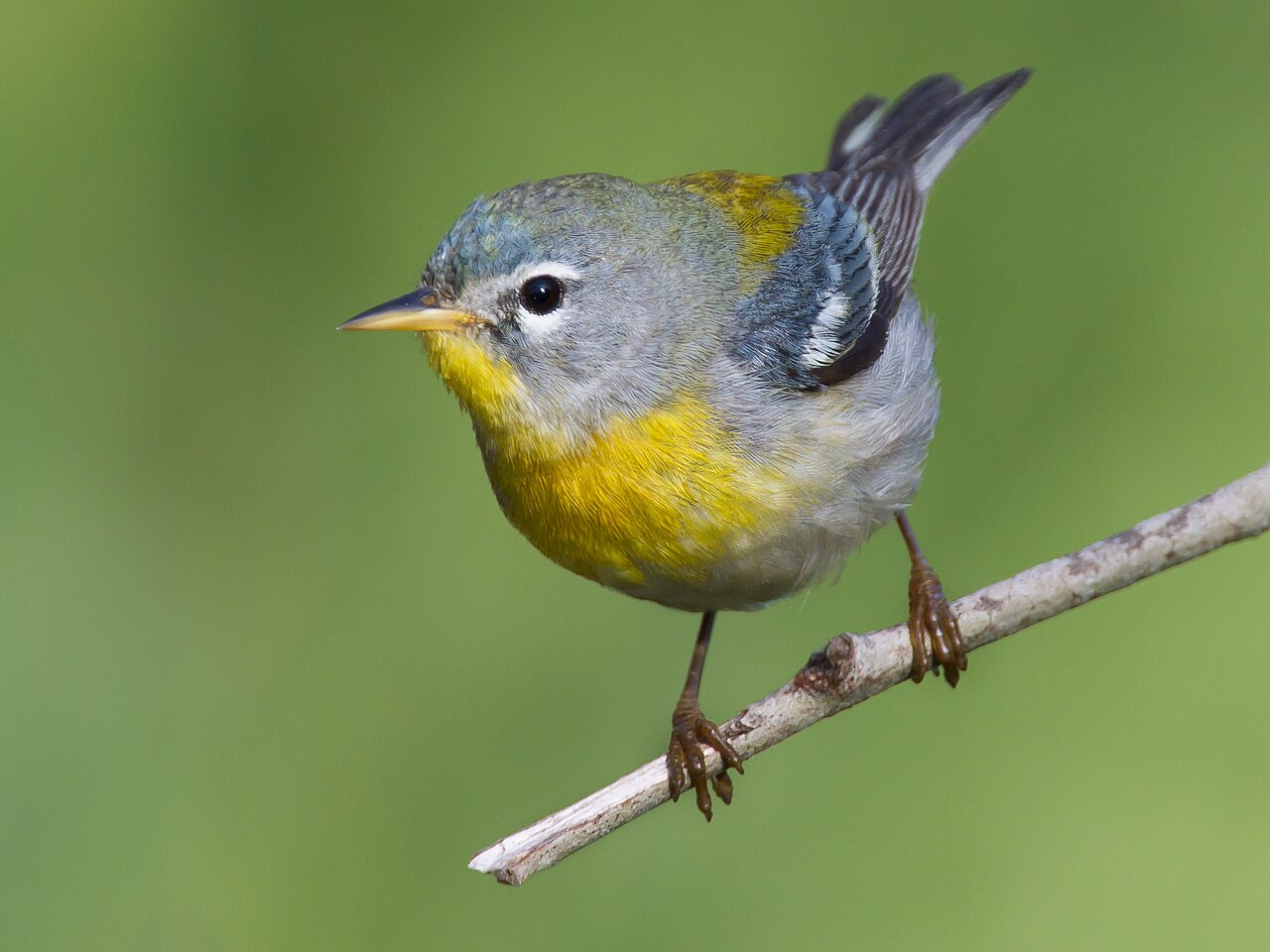
At Galveston, Texas during spring migration

Resting during fall migration in New York

At High Island, Texas

Temperament
active and somewhat secretive
Flight Pattern
short rapid wingbeats with quick, darting movements
Social Behavior
Generally solitary or in pairs during the breeding season and strongly territorial around nest sites. Nests are concealed within hanging clumps of moss or lichen, with the female doing most incubation while the male helps feed nestlings. Outside breeding, it often joins mixed-species flocks while foraging in the canopy.
Migratory Pattern
Seasonal migrant
Song Description
Song is a rising, buzzy trill that often ends abruptly, sometimes described as zee-zee-zee-zee-zup. Calls include a sharp chip and thinner contact notes. Males sing persistently from high perches during territory defense.
Plumage
Bluish-gray upperparts with a greenish mantle patch, bright yellow throat and upper chest, and clean white belly with two bold white wing bars.
Diet
Primarily small insects and spiders, including caterpillars, beetles, and flies gleaned from foliage and twigs. It will occasionally take small berries or nectar, especially during migration when insect availability is lower. Foraging often involves hovering to pick prey from leaf tips and dangling vegetation.
Preferred Environment
Feeds mainly in the mid to upper canopy of deciduous and mixed forests, especially where epiphytes or dead leaf clusters are present. On the wintering grounds it uses forest edges, second growth, and shaded agroforestry, and may join mixed flocks.


