
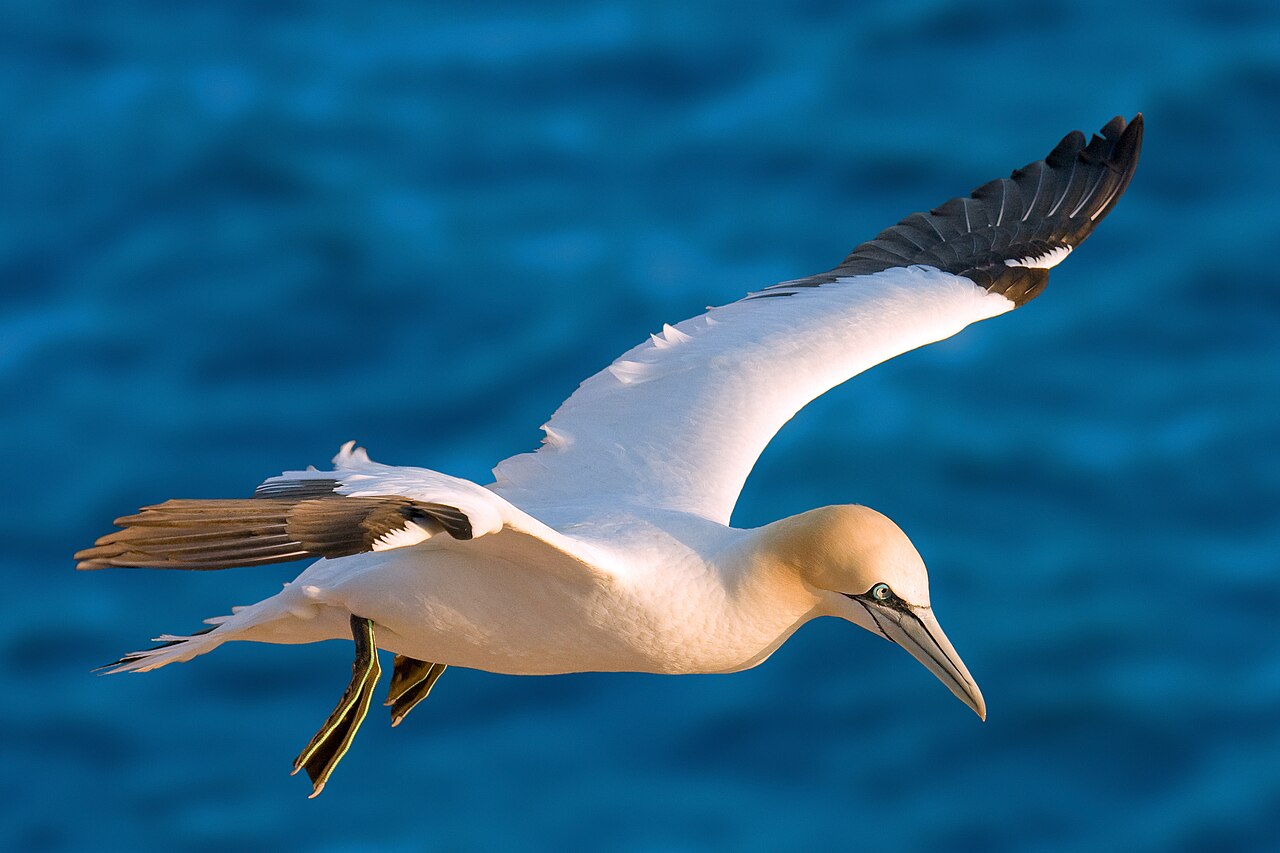
The northern gannet is a seabird, the largest species of the gannet family, Sulidae. It is native to the coasts of the Atlantic Ocean, breeding in Western Europe and Northeastern North America. It is the largest seabird in the northern Atlantic. The sexes are similar in appearance. The adult northern gannet has a mainly white streamlined body with a long neck, and long and slender wings. It is 87–100 cm long with a 170–180 cm (67–71 in) wingspan. The head and nape have a buff tinge that is more prominent in breeding season, and the wings are edged with dark brown-black feathers. The long, pointed bill is blue-grey, contrasting with black, bare skin around the mouth and eyes. Juveniles are mostly grey-brown, becoming increasingly white in the five years it takes them to reach maturity.
Region
North Atlantic
Typical Environment
Breeds on rocky islands and steep sea cliffs in the North Atlantic, notably around the British Isles, Iceland, Norway, and eastern Canada. Outside the breeding season it ranges widely at sea, dispersing south along both sides of the Atlantic to the Iberian coast, Northwest Africa, and the southeastern United States. It forages mainly over continental shelf waters and upwelling zones where fish schools aggregate. Rarely seen inland except when blown off course by storms.
Altitude Range
Sea level to 300 m
Climate Zone
Temperate
Ease of Keeping
Beginner friendly: 1/5
Northern gannets are famed for dramatic high-speed plunge-dives from up to 30–40 m, folding their wings to spear into shoals of fish. Air sacs under the skin cushion impacts and their forward-facing eyes give excellent binocular vision underwater. They breed in dense, noisy colonies on sea cliffs and offshore stacks, often returning to the same nest site for many years.


Red dots show breeding colonies in the north Atlantic
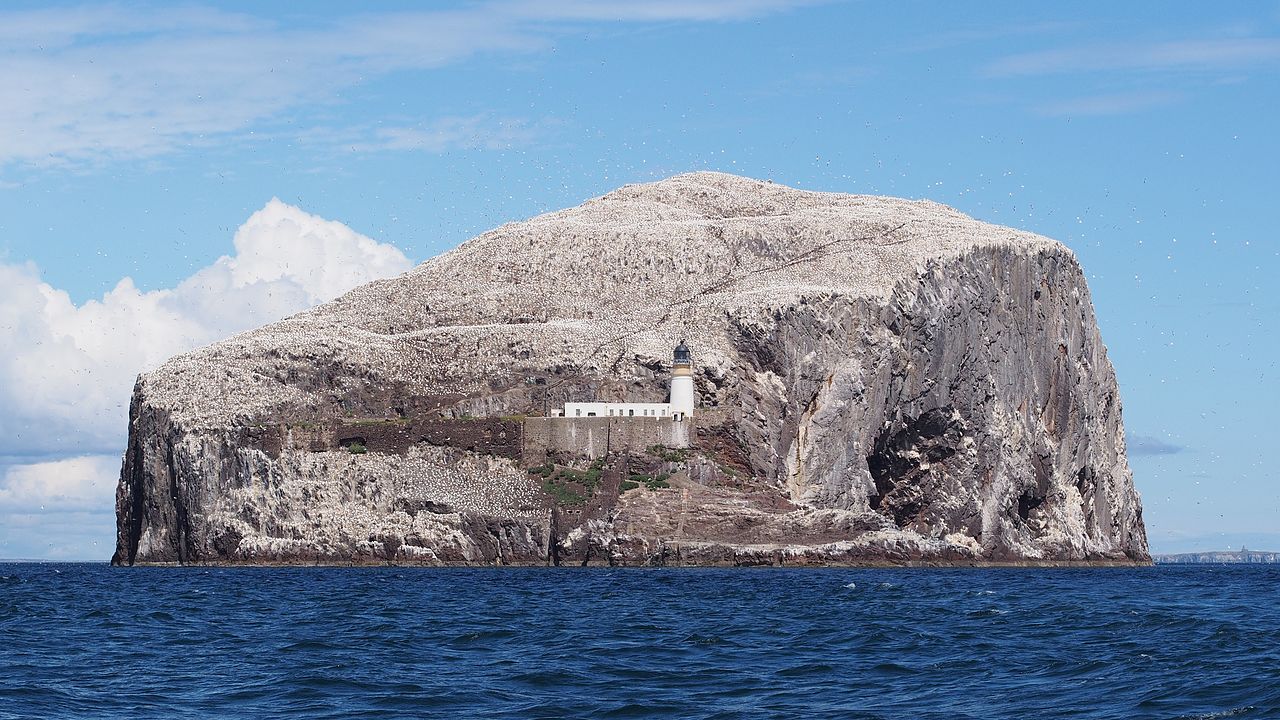
Bass Rock in the Firth of Forth, Scotland, is the world's largest colony.
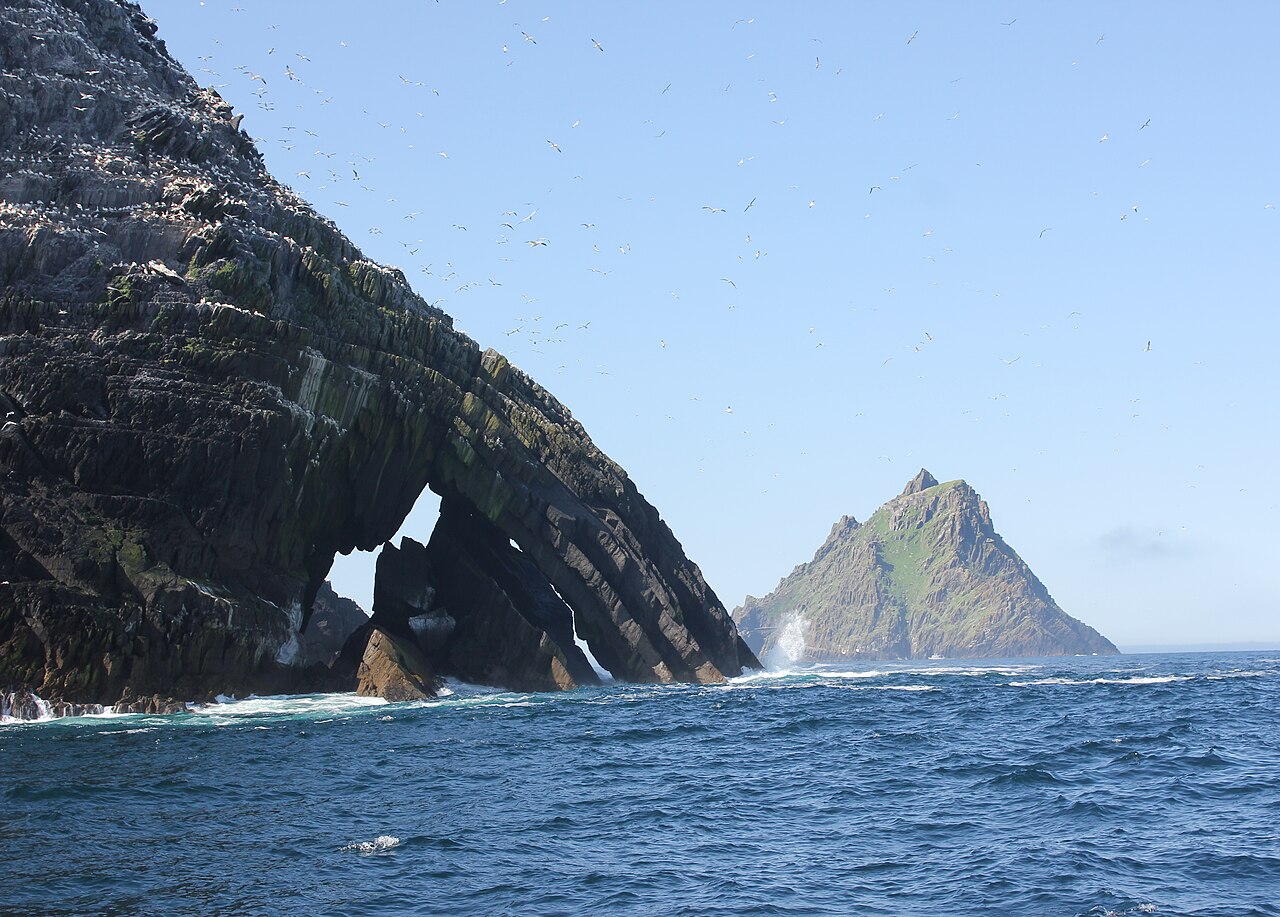
Northern gannet colony on Little Skellig, Ireland

Plunge-diving with wings retracted
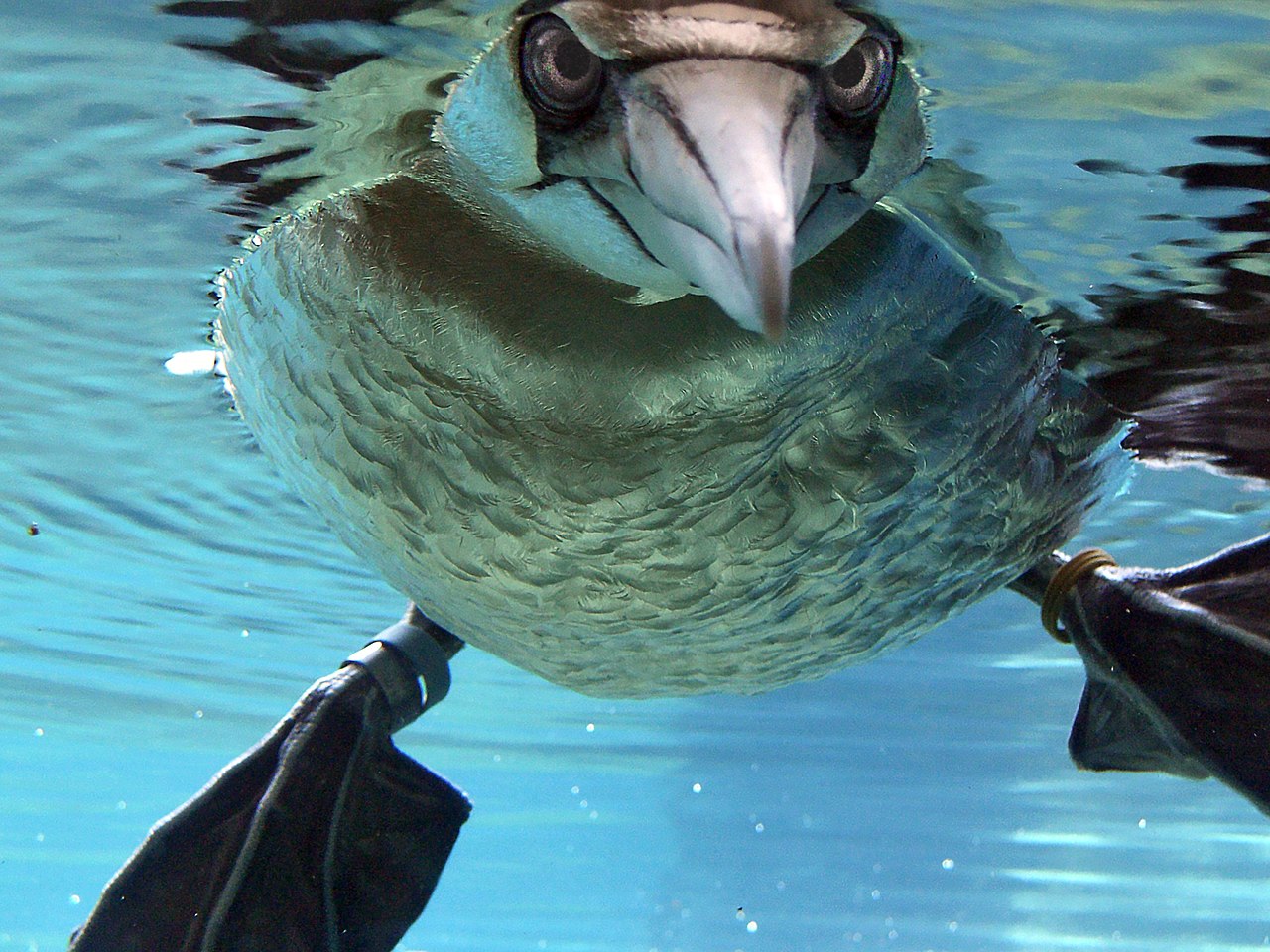
Searching for fish in a zoo

Transporting material for the nest

Egg

A downy chick

"Fencing" or "billing", a mutual greeting gesture

A great skua robbing a gannet

Nests among the rocks. The population of this species appears to be increasing.

Leucothea by Jean Jules Allasseur (1862)

The Heather Isle collecting guga hunters from Sula Sgeir
Temperament
social and colonial
Flight Pattern
strong flier with long glides; capable of high-altitude plunge-dives
Social Behavior
Breeds in large, crowded colonies where pairs perform mutual bill-fencing and sky-pointing displays. Typically monogamous with long-term pair bonds, laying a single egg on a nest of seaweed and grasses. Both parents share incubation and chick-rearing duties, and adults show strong site fidelity.
Migratory Pattern
Seasonal migrant
Song Description
Generally quiet at sea, but colonies are loud with harsh, barking grunts and cackles. Calls are repetitive and carry well over surf and wind, used for pair contact and territorial disputes at the nest.
Plumage
Adults are sleek and mainly white with contrasting black wingtips and a buff wash on the head and nape, especially in breeding season. Juveniles are dark brown and heavily speckled with white, gradually whitening over several years. Feathers are dense and waterproof, suited to plunge-diving.
Diet
Feeds mainly on schooling fish such as herring, mackerel, sardines, and sand eels, and occasionally takes squid. Hunts by spectacular plunge-diving and may pursue prey underwater using powerful wing strokes. Often forages in groups over bait balls and may follow predatory fish, marine mammals, or fishing vessels to exploit concentrated prey.
Preferred Environment
Forages over coastal and offshore shelf waters, tidal fronts, and upwelling zones where prey is abundant. Frequently seen along productive current lines and near colony-adjacent feeding grounds.


