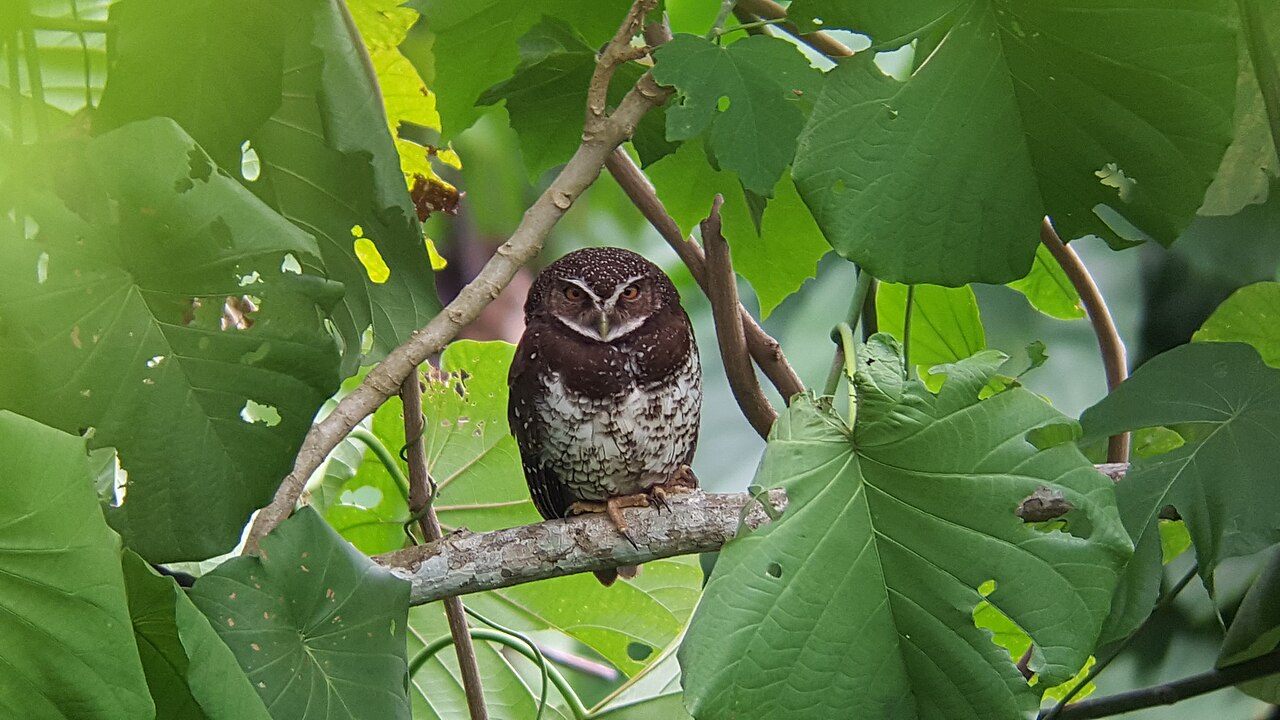
Neumann's warbler, also known as Neumann's short-tailed warbler, is a species of bird in the family Cettiidae. It is found in Democratic Republic of the Congo, Rwanda, and Uganda. Its natural habitat is subtropical or tropical moist montane forest.
Region
Albertine Rift, East-Central Africa
Typical Environment
Occurs in moist montane forests and adjacent secondary growth across parts of the Democratic Republic of the Congo, Rwanda, and Uganda. Prefers dense understorey with tangles, bracken, or bamboo, especially along ravines and near streams. Frequently keeps close to the ground or low shrubs, moving mouse-like through cover. It may use forest edges and regenerating clearings so long as dense cover is present.
Altitude Range
1200–2600 m
Climate Zone
Highland
Ease of Keeping
Beginner friendly: 1/5
Neumann's warbler, also called Neumann's short-tailed warbler, is a shy undergrowth specialist of the Albertine Rift montane forests and a member of the Cettiidae. It is often detected by its thin, high-pitched song rather than seen, as it keeps low in dense thickets and bamboo. The species honors the German ornithologist Oscar Neumann.

Temperament
secretive and skulking
Flight Pattern
short rapid wingbeats, low and brief flights between cover
Social Behavior
Usually seen singly or in pairs, especially during the breeding season. Nests are placed low in dense vegetation, often dome-like and well concealed. Territorial during breeding, but may loosely associate with mixed-species flocks outside of it.
Migratory Pattern
Resident
Song Description
A thin, high-pitched series of trills and whistles delivered from within cover. Calls include sharp ticks and soft seep notes that can be hard to localize.
Plumage
Plain olive-brown to olive-green upperparts with paler, greyish-buff underparts; short, often cocked tail and rounded wings. Feathers appear soft and smooth, aiding a sleek, skulking profile in dense foliage.
Diet
Feeds mainly on small insects, spiders, and other arthropods gleaned from leaves, stems, and the forest floor. Probes into moss, bamboo sheaths, and leaf litter for hidden prey. Occasionally takes larvae and small soft-bodied invertebrates.
Preferred Environment
Forages in dense undergrowth, bracken, and bamboo within moist montane forest, often near streams and gullies. Stays close to the ground or within the first few meters of vegetation.