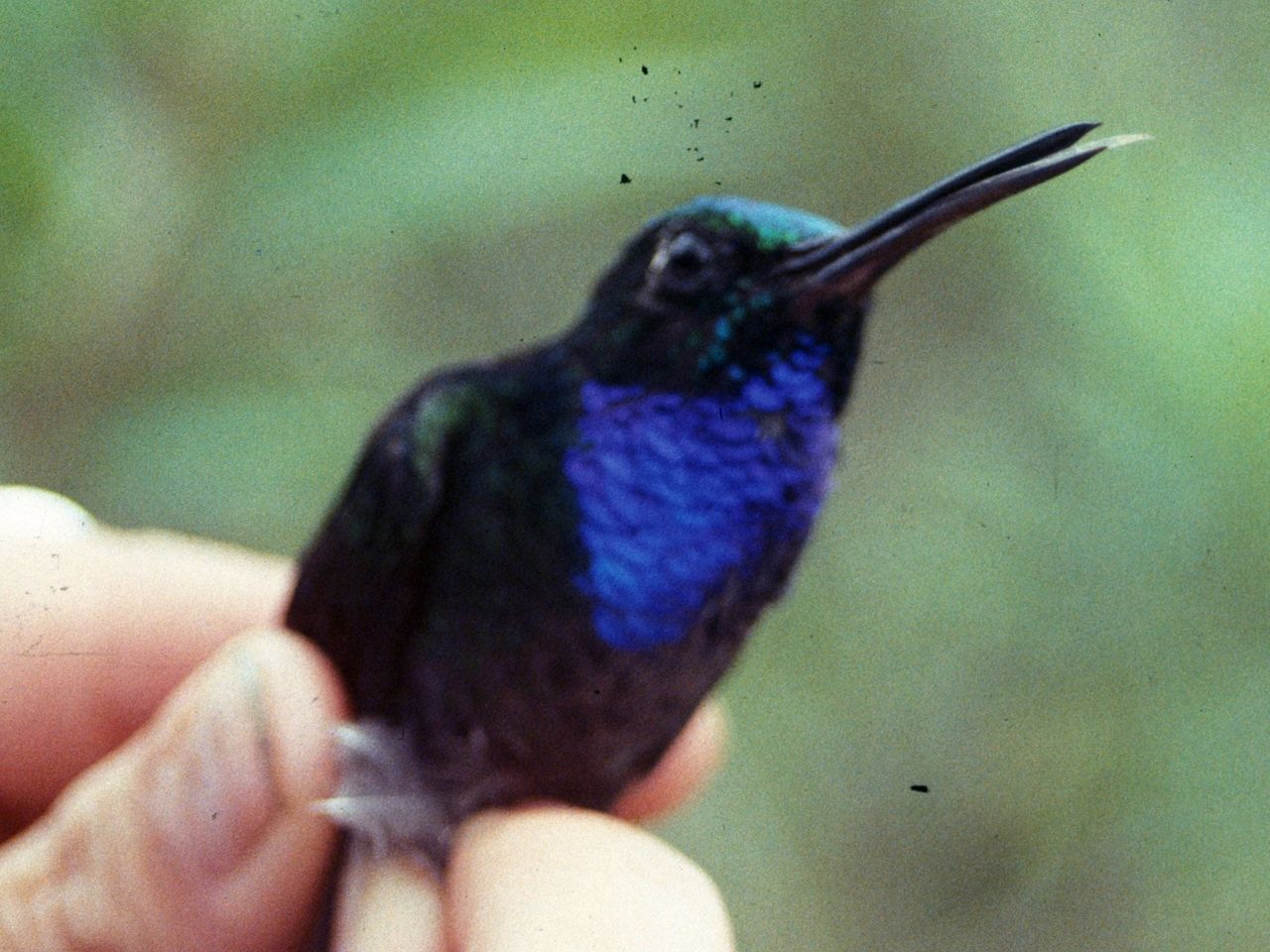
The Napo sabrewing is a Near Threatened species of hummingbird in the "emeralds", tribe Trochilini of subfamily Trochilinae. It is found in Colombia, Ecuador, and Peru.
Region
East Andean foothills of Colombia, Ecuador, and northern Peru
Typical Environment
Occurs on the eastern slopes of the Andes, mainly in humid foothill and lower montane forests and along forest edges. It frequents ravines, stream corridors, secondary growth, and clearings with abundant flowering shrubs and epiphytes. Birds often forage from the understory to mid‑story, occasionally visiting gardens near forest. It is generally local and uncommon, tracking seasonal blossoms within intact forest mosaics.
Altitude Range
300–1400 m
Climate Zone
Tropical
Ease of Keeping
Beginner friendly: 1/5
A large hummingbird of the Andean foothills, the Napo sabrewing belongs to the “emeralds” (tribe Trochilini). Males have broadened outer primaries that give sabrewings their name and are used in display. It was rediscovered in Ecuador after years without confirmed records, drawing conservation attention to its foothill forest habitats. Habitat loss and fragmentation are the principal concerns across its range.


Wildsumaco Lodge - Ecuador (flash photo)

Temperament
generally shy but territorial at rich flower patches
Flight Pattern
short rapid wingbeats with agile hovering; fast direct dashes between flowers
Social Behavior
Mostly solitary while foraging, with males defending nectar resources against intruders. Courtship involves aerial chases and display flights that emphasize the modified primaries. Nests are small cups of plant down bound with spider silk, placed on horizontal branches or overhanging streams.
Migratory Pattern
Resident
Song Description
Vocalizations are thin, high-pitched chips and tseet notes, often given while perched within cover. During display, males add faster series of buzzy chips and trills. Wing noise may be audible at close range during aggressive chases.
Plumage
Shimmering emerald-green overall with bronzy tones, darker dusky wings, and a slightly forked, dark tail with a bronzy gloss. Females tend to be paler below with grayish underparts washed or spotted with green. Both sexes show a small whitish post‑ocular spot. Males have thickened, flattened outer primaries characteristic of sabrewings.
Diet
Primarily nectivorous, visiting a wide variety of tubular flowers, including shrubs, vines, and epiphytes such as Heliconia and Inga. Supplements nectar with small arthropods, hawking them in short sallies or gleaning from foliage. Foraging strategy varies between traplining along regular routes and defending high-quality flower patches.
Preferred Environment
Feeds along forest edges, streamside vegetation, and clearings with abundant blossoms. Often uses the understory and mid‑story but will ascend to canopy flowers when available.