
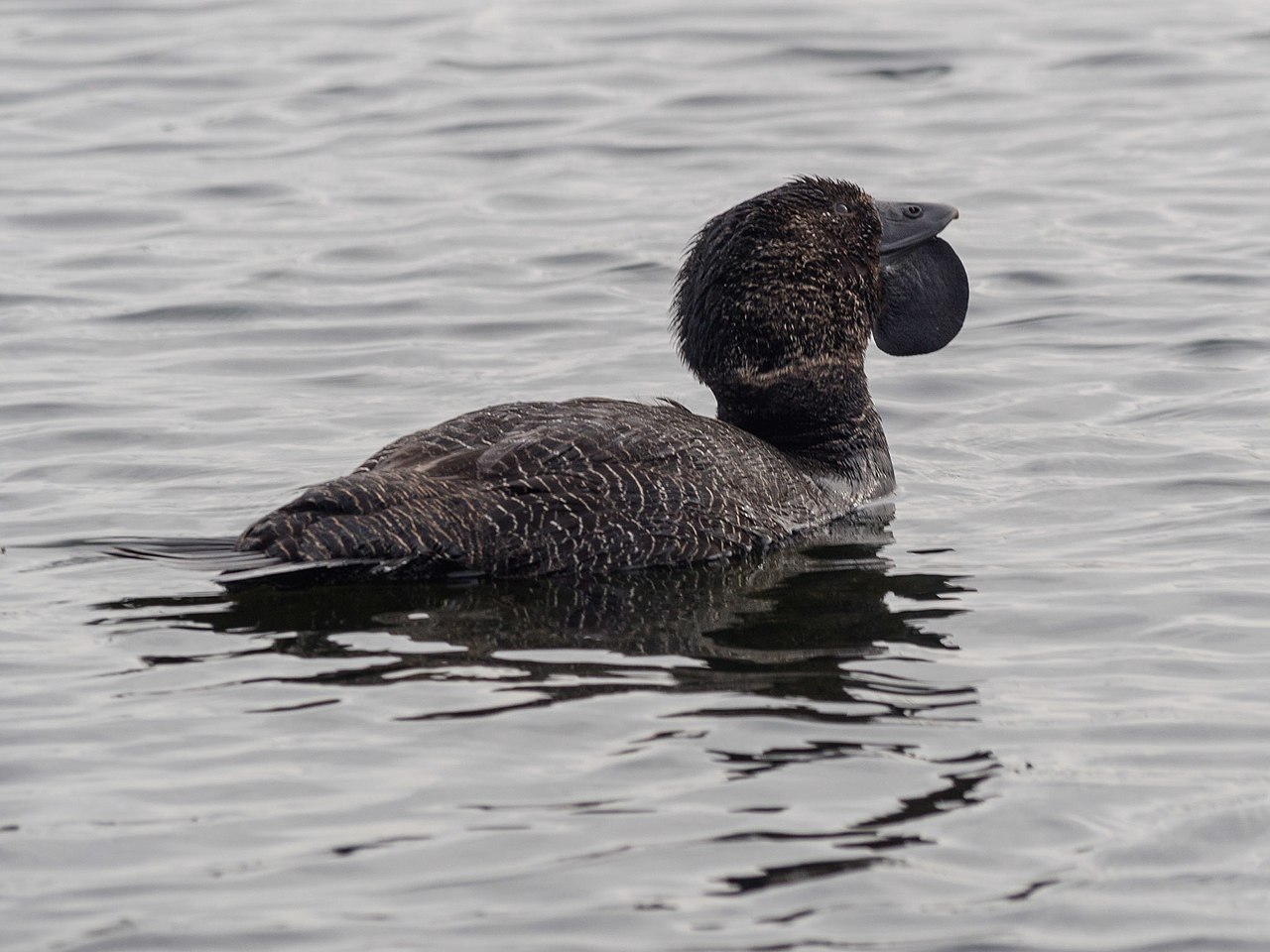
The musk duck is a highly aquatic, stiff-tailed duck native to southern Australia. It is the only living member of the genus Biziura. An extinct relative, the New Zealand musk duck or de Lautour's duck, once occurred on New Zealand, but is only known from prehistoric subfossil bones. It was about 8% longer than the living species, with a particularly large head.
Region
Southern Australia
Typical Environment
Occurs across temperate southern Australia, including southwestern Western Australia, South Australia, Victoria, New South Wales’ Murray–Darling basin, and Tasmania. It favors large, permanent wetlands, deep freshwater lakes, farm dams, and brackish estuaries, and also sheltered coastal lagoons. Dense emergent vegetation such as reeds or rushes near deep water is typical. It is highly aquatic and seldom ventures far onto land. Local movements track water availability after drought or flooding.
Altitude Range
Sea level to 1200 m
Climate Zone
Temperate
Ease of Keeping
Beginner friendly: 2/5
The musk duck is the only living member of the genus Biziura and is named for the musky odor males emit in the breeding season. Males have a distinctive, leathery throat lobe and perform dramatic splashy displays with loud popping sounds. Exceptionally aquatic, it spends most of its time diving and is reluctant to fly. An extinct relative, the New Zealand musk duck, was larger and known only from subfossil remains.
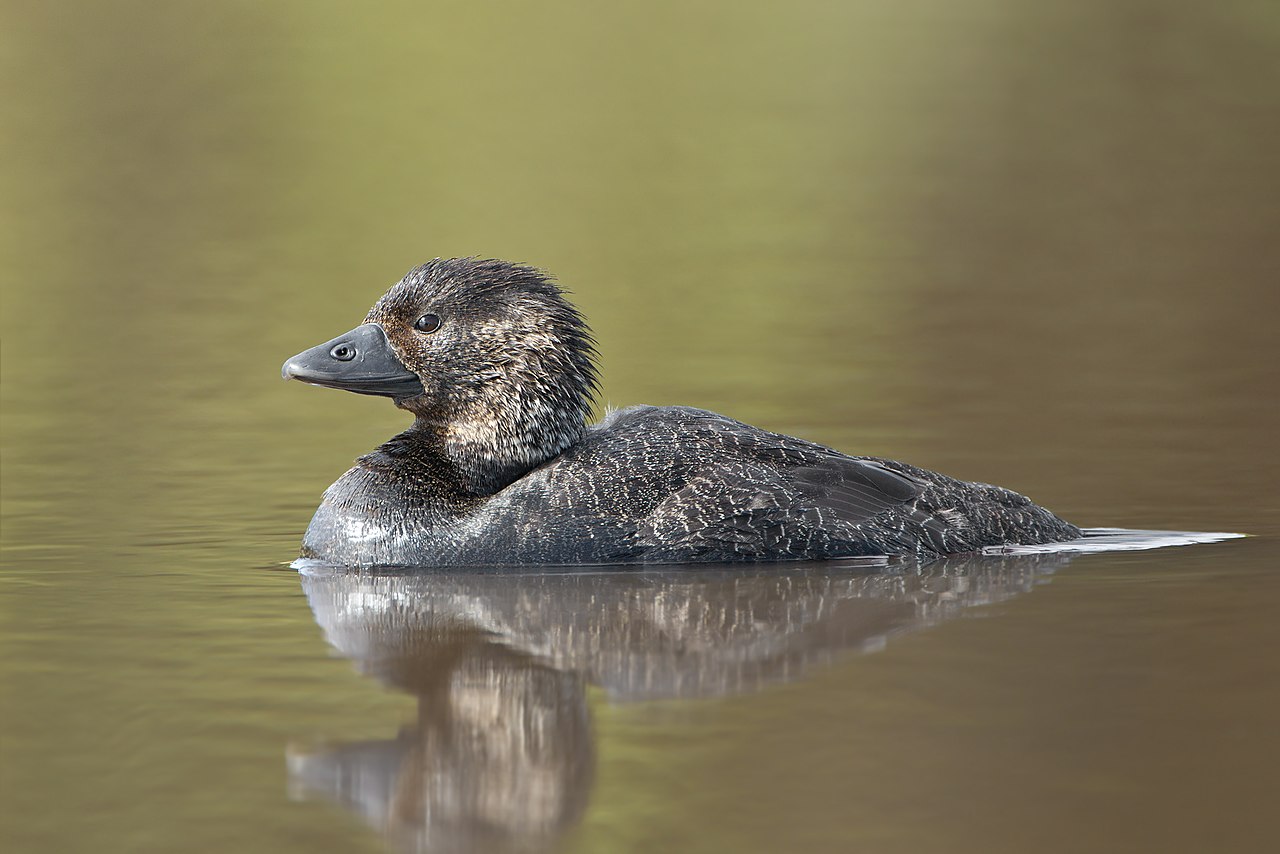


Male displaying the large bill lobe that appears during breeding season, Sandford, Tasmania, Australia
Temperament
solitary and territorial
Flight Pattern
reluctant flier; low, fast flight with rapid wingbeats; expert diver
Social Behavior
Outside breeding, individuals are usually solitary or loosely associated on large waterbodies. Males display on open water with forceful kicks, splashing, tail-fanning, and loud popping and whistles to attract females. Nests are built by the female in dense reeds or rushes over water, and the female alone incubates and tends the ducklings.
Migratory Pattern
Partial migrant
Song Description
Vocalizations are dominated by the male’s sharp popping notes and mechanical-sounding whistles during display. General calls are otherwise low and infrequent, with females and young being comparatively quiet.
Plumage
Dense, coarse, dark mottled plumage giving a blackish-brown appearance; stiff tail often held cocked.
Diet
Primarily consumes aquatic animal prey, including insect larvae, crustaceans, mollusks, small fish, and amphibians. It forages by powerful underwater diving and pursuit, often at considerable depth and duration. Plant matter is taken only incidentally.
Preferred Environment
Feeds in deep water on lakes, dams, and estuaries, often near reed beds or submerged structure. Typically forages well offshore and may remain on open water for long periods between dives.


