

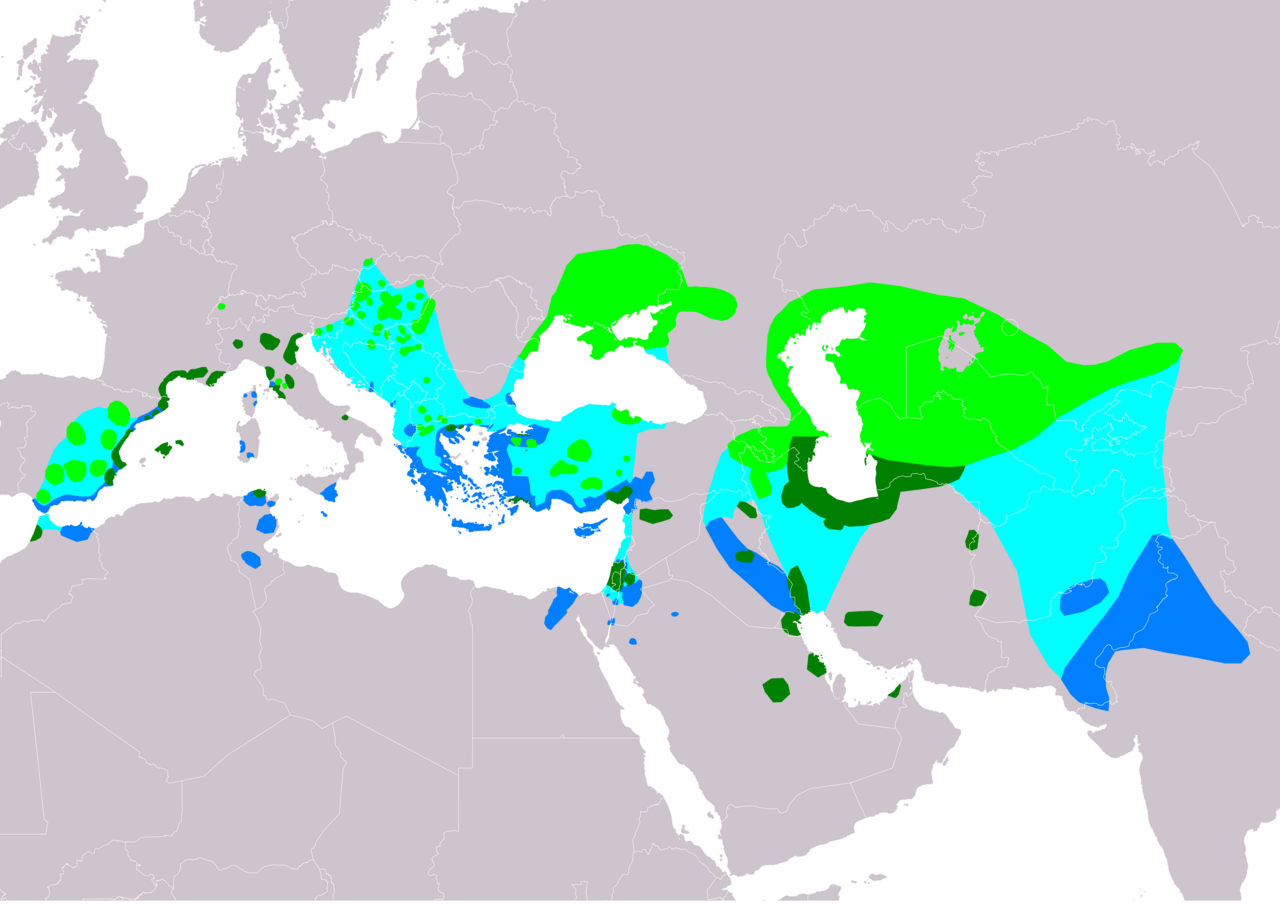
The moustached warbler is an Old World warbler in the genus Acrocephalus. It breeds in southern Europe and southern temperate Asia with a few breeding in north-west Africa. It is partially migratory. South-west European birds are resident, south-east European birds winter in the Mediterranean breeding range, and the Asiatic race migrates to Arabia, India and Pakistan.
Region
Mediterranean Basin and temperate West–Central Asia
Typical Environment
Breeds in extensive reedbeds, marshes, and vegetated margins of lakes and slow rivers. Prefers dense stands of Phragmites and other emergent plants with shallow, still or gently flowing water. In winter it uses similar wetland habitat, including brackish lagoons and coastal marshes. It avoids dry scrub and open farmland away from water, relying on wetlands for cover and food. Fragmented wetlands can limit local occupancy.
Altitude Range
0–1500 m
Climate Zone
Temperate
Ease of Keeping
Beginner friendly: 1/5
This skulking reedbed specialist is named for its dark moustachial (malar) stripe set below a bold white supercilium. It weaves a deep cup nest suspended between reed stems over shallow water. Populations are partially migratory, with movements varying across Europe, North Africa, and temperate Asia. When agitated it often flicks its tail, showing pale outer tail edges.


Eggs, Collection Museum Wiesbaden
Temperament
secretive and active
Flight Pattern
short rapid wingbeats, low over reeds
Social Behavior
Generally solitary or in pairs during the breeding season, holding small territories in dense reedbeds. The nest is a deep, woven cup suspended between vertical stems above water. Both adults care for the young, which fledge quickly to reduce predation risk. Outside breeding, it may occur loosely with other reedbed birds but remains inconspicuous.
Migratory Pattern
Partial migrant
Song Description
A lively, reedy warble with musical trills and chatter, softer and less frenetic than the sedge warbler. Song is delivered from concealed perches or low song-flights and may include brief mimicry of other marsh birds.
Plumage
Warm brown upperparts with fine streaking on the crown, clean whitish underparts with buffy flanks, and a contrasting facial pattern.
Diet
Feeds mainly on aquatic and terrestrial insects such as beetles, flies, and their larvae, as well as spiders and small crustaceans. It gleans prey from reed stems and leaves, probes among leaf litter at the waterline, and occasionally sallies to catch flying insects. Opportunistically it may take tiny snails or other invertebrates, and seldom plant material.
Preferred Environment
Forages within dense reedbeds, at reed edges, and among floating vegetation in shallow water. Frequently uses mixed stands of reeds and sedges where invertebrate density is high. Will feed along narrow channels and ditches in otherwise open marshes.


