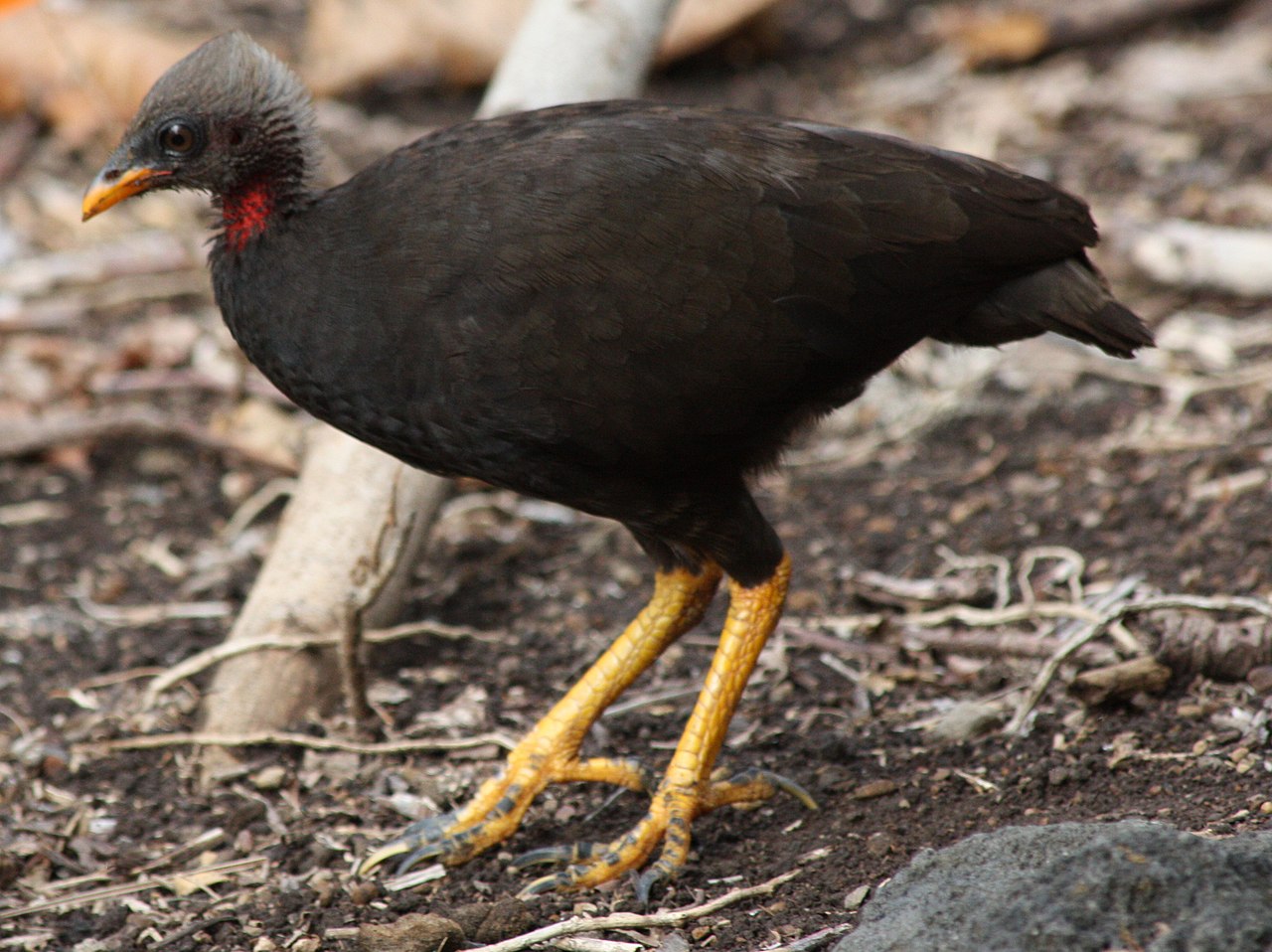
Meyer's friarbird is a species of bird in the family Meliphagidae. It is found throughout New Guinea. Its natural habitat is subtropical or tropical moist lowland forests.
Region
New Guinea and nearby islands
Typical Environment
Occurs throughout New Guinea’s subtropical and tropical moist lowland and foothill forests. It forages along forest edges, riverine corridors, secondary growth, and in village gardens with flowering trees. The species is adaptable, using both primary and disturbed habitats as long as nectar sources and insect prey are available. It may also visit mangroves and swamp-forest mosaics in suitable areas.
Altitude Range
Sea level to 1200 m
Climate Zone
Tropical
Ease of Keeping
Beginner friendly: 1/5
Meyer's friarbird is a honeyeater that helps pollinate flowering trees and disperses seeds across New Guinea’s lowland forests. It is named for the German naturalist Adolf Bernhard Meyer. Often bold and vocal, it frequents forest edges and gardens where blossoms are abundant.

Temperament
social and active
Flight Pattern
short rapid wingbeats with direct, purposeful flights between trees
Social Behavior
Usually seen singly, in pairs, or small family groups, and often joins mixed-species flocks at flowering trees. Territorial around rich nectar sources, where individuals may chase intruders. Nests are typically cup-shaped and placed in foliage several meters above ground. Likely forms monogamous pairs during the breeding period.
Migratory Pattern
Resident
Song Description
Loud, scratchy, and nasal calls interspersed with chattering phrases. Dawn chorus often features repeated, somewhat ringing notes followed by scolding rattles. Calls carry well through forest edges and clearings.
Plumage
Mostly dull brown to olive-brown above with paler, lightly streaked underparts and a whitish throat. Feathers are sleek and slightly glossy on the head with a patch of bare facial skin typical of friarbirds.
Diet
Feeds primarily on nectar from a variety of flowering trees and shrubs. Supplements diet with insects and other arthropods gleaned from foliage and bark, and occasionally takes small fruits and berries. Will hawk briefly for flying insects when available. Its mixed diet supports both energy needs and protein intake, especially during breeding.
Preferred Environment
Most often at canopy and mid-story blossoms, but also visits flowering garden trees and forest edges. Frequently forages along riverbanks and in secondary growth where nectar is abundant.