
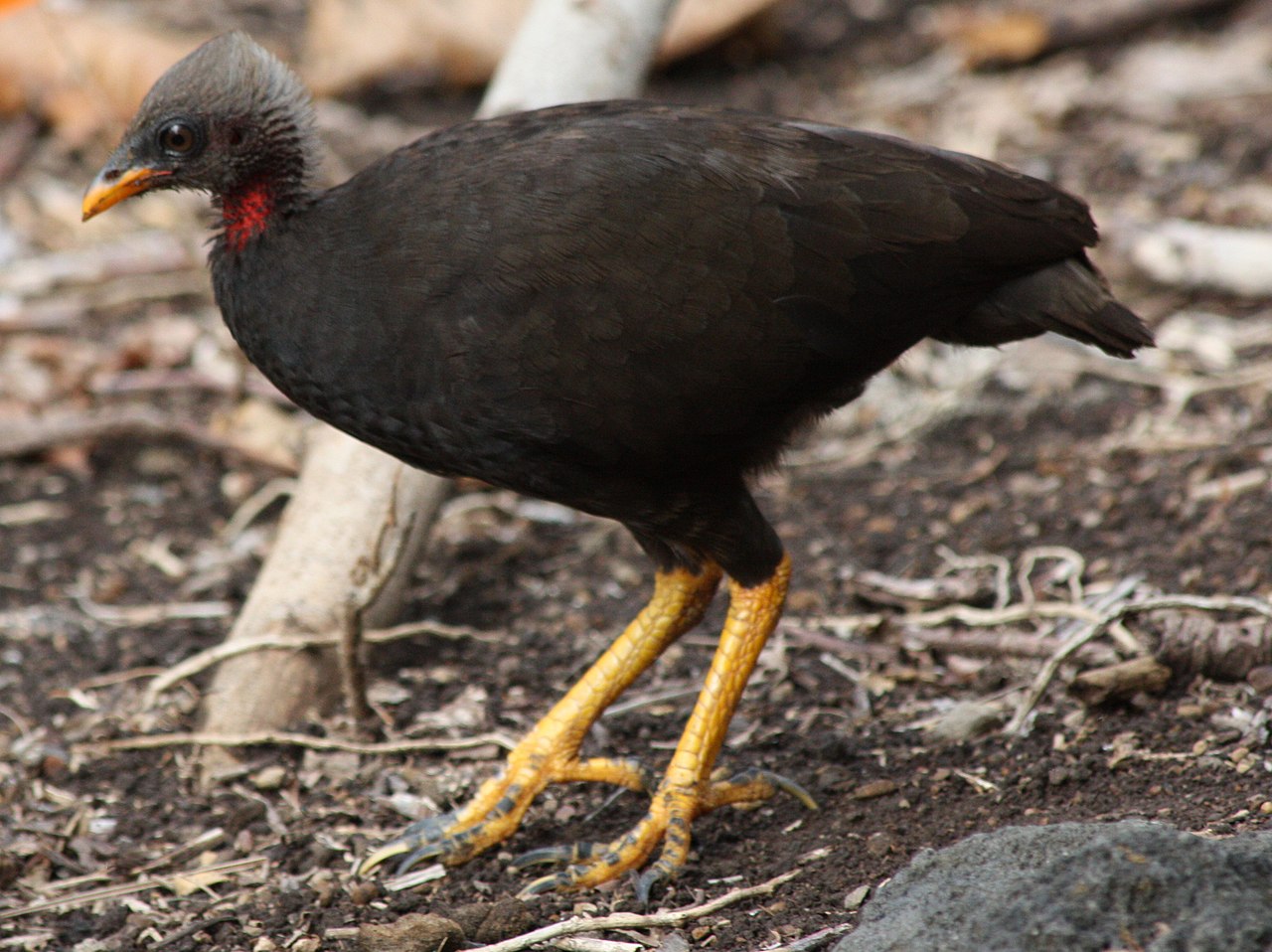
The Micronesian megapode or Micronesian scrubfowl is a megapode which inhabits islands of the Western Pacific Ocean.
Region
Micronesia, Western Pacific
Typical Environment
Occurs on limestone and volcanic islands in Micronesia, notably within Palau and parts of the Northern Mariana Islands. It inhabits coastal and lowland forests, strand vegetation, and secondary thickets near beaches and forest edges. Nesting typically occurs in sandy beaches, warm volcanic soils, or mounds of decomposing leaf litter under forest canopy. The species favors areas with deep leaf litter and loose substrates suitable for scratching and mound construction.
Altitude Range
Sea level to 500 m
Climate Zone
Tropical
Ease of Keeping
Beginner friendly: 1/5
The Micronesian megapode, or Micronesian scrubfowl, is a mound-building bird that uses external heat sources—such as sun-warmed sand, decaying vegetation, or geothermal soils—to incubate its eggs. Both sexes tend and maintain the nest mound, regularly adding material and checking temperature. It is shy and mostly terrestrial, relying on powerful legs and large feet for digging. Habitat loss and introduced predators have caused declines on several islands.


Micronesian megapode on the island of Sarigan
Temperament
shy and wary
Flight Pattern
short rapid wingbeats; reluctant flier
Social Behavior
Usually encountered singly, in pairs, or small family groups. Pairs cooperate to build and maintain incubation mounds or use naturally warmed sites, adjusting material to regulate temperature. Territorial around nesting areas, with soft contact calls while foraging on the forest floor.
Migratory Pattern
Resident
Song Description
Vocalizations include low clucks and gruff calls, with louder crowing or duet-like notes at dawn and dusk. Alarm calls are sharp and repeated when disturbed near nesting sites.
Plumage
Mostly dark, sooty-brown to blackish-brown with slightly paler underparts and a short, rounded tail; feathers are dense and plain without heavy patterning.
Diet
Forages by scratching in leaf litter for insects, beetles, ants, termites, worms, and other invertebrates. Also consumes fallen fruits, seeds, and occasionally small snails or crustaceans near coastal areas. The varied diet shifts with seasonal availability of fruiting trees and invertebrate abundance.
Preferred Environment
Feeds on the forest floor in coastal and lowland woodlands, including limestone forest and secondary growth. Often near beaches, edges, and clearings where leaf litter accumulates and invertebrates are plentiful.


