
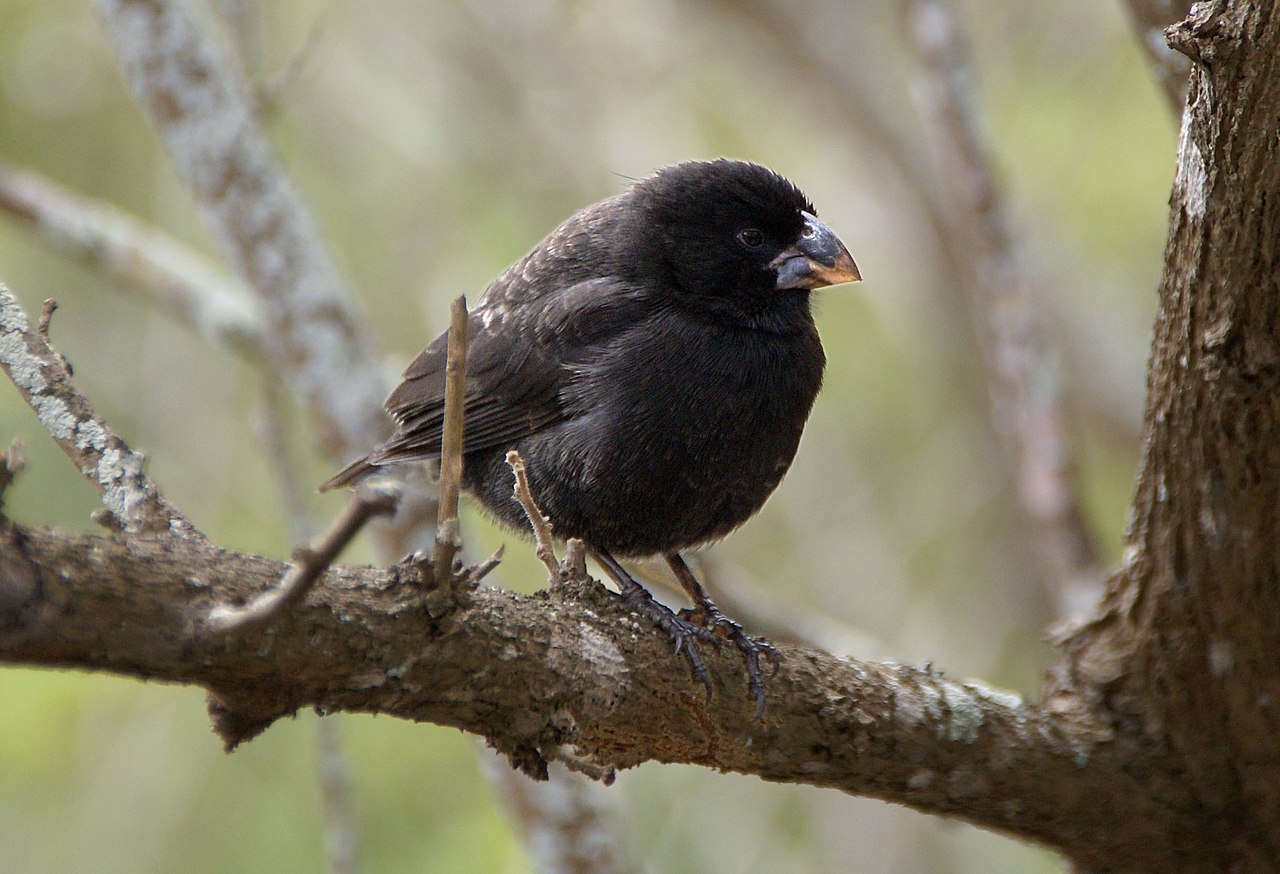
The medium ground finch is a species of bird in the family Thraupidae. It is endemic to the Galápagos Islands. Its primary natural habitat is tropical shrubland. One of Darwin's finches, the species was the first which scientists have observed evolving in real-time.
Region
Galápagos Islands
Typical Environment
Occurs across many of the central and some outer Galápagos islands, especially in arid lowlands and coastal scrub. Prefers open shrublands with cacti and thorny bushes, edges of dry deciduous woodland, and semi-open areas near human settlements. It forages mainly on or near the ground but also uses low shrubs and cacti. Populations on individual islands can fluctuate with El Niño/La Niña cycles and seed availability.
Altitude Range
Sea level to 900 m
Climate Zone
Tropical
Ease of Keeping
Beginner friendly: 1/5
One of Darwin’s finches, the medium ground finch has been central to studies of natural selection, especially long-term work on Daphne Major showing rapid beak-size shifts after droughts. Its stout, conical bill is adapted for cracking a range of seeds, and slight differences in bill depth influence which seeds individuals can handle best. During breeding, it supplements seeds with insects to meet higher protein needs.


A medium ground finch

The fly Philornis downsi has had an influence on the population of medium ground finches. These flies have altered survival among some nestlings of medium ground finches. These flies contribute to natural selection as some medium ground finches develop the antibodies to survive.
Temperament
social and active
Flight Pattern
short rapid wingbeats
Social Behavior
Often forms small flocks outside the breeding season and forages in loose groups. During breeding, pairs defend small territories with the male singing from exposed perches. Nests are cup-shaped and placed in shrubs or cacti; both parents participate in feeding the young.
Migratory Pattern
Resident
Song Description
The song is a simple series of buzzy, trilled notes repeated from a perch. Calls are sharp chips and twitters used to maintain contact within foraging groups.
Plumage
Males are mostly uniform sooty to blackish with a slight gloss in breeding condition; females and juveniles are brown with heavy streaking and a mottled breast.
Diet
Primarily feeds on dry seeds, which it cracks with its powerful bill; preferred seeds vary seasonally with availability. Also takes fruits and flower parts from native plants such as cacti. During the breeding season, it consumes more arthropods, including beetles and caterpillars, to boost protein intake.
Preferred Environment
Forages on the ground and in low shrubs in arid scrub and cactus zones. Frequently visits edges of human-modified areas where seeds are abundant, especially in the dry season.


