

The Mauritius olive white-eye is a very rare and localized passerine from the family of white-eyes (Zosteropidae). It is one of two white-eye species endemic to the island of Mauritius, the other being the Mauritius grey white-eye.
Region
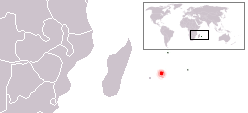
Mascarene Islands, western Indian Ocean
Typical Environment
Occurs in remnant tracts of native evergreen upland forest in southwest Mauritius, especially in and around Black River Gorges National Park. Prefers mature forest with dense midstory and a good supply of flowering native trees and shrubs. Frequently forages along forest edges, ravines, and in the canopy where flowers and arthropods are abundant. It avoids heavily degraded or exotic-dominated woodland but may pass through mixed habitat to reach resources.
Altitude Range
300–800 m
Climate Zone
Tropical
Ease of Keeping
Beginner friendly: 1/5
This is one of the rarest white-eyes, confined to the upland native forests of Mauritius. It feeds on small insects, spiders, nectar, and some fruit, and plays a role in pollination of native flowering plants. The species is threatened by habitat loss and invasive predators, but targeted conservation management has helped some subpopulations persist. It is a flagship for Mauritius forest restoration programs.



Temperament
active and wary
Flight Pattern
short rapid wingbeats with agile, hopping movements between branches
Social Behavior
Typically seen in pairs during the breeding season and in small family groups or loose parties outside it. Builds a small cup nest suspended in dense foliage, where both parents participate in care. Often joins mixed-species foraging flocks with other small forest birds.
Migratory Pattern
Resident
Song Description
A thin, high-pitched series of tsee-tsee notes interspersed with light trills. Contact calls are soft and sibilant, delivered frequently while foraging.
Plumage
Olive-green upperparts with yellow-olive underparts and a paler throat; clean, narrow white eye-ring typical of white-eyes. Wings and tail slightly darker olive with subtle edging; underparts can show a faint greyish wash on the flanks. Feathers are sleek and close-fitting, giving a neat, compact appearance.
Diet
Takes small insects and spiders gleaned from leaves and twigs, supplementing with nectar from native flowers and small fruits. Frequently probes blossoms with its slender bill and hawks tiny aerial insects in short sallies. Seasonal flowering peaks can influence its movements within territories.
Preferred Environment
Feeds primarily in the mid-canopy to canopy of intact native forest, especially at flowering trees and along sheltered ravines. Also uses forest edges and gaps where insect activity and blooms are concentrated.


