

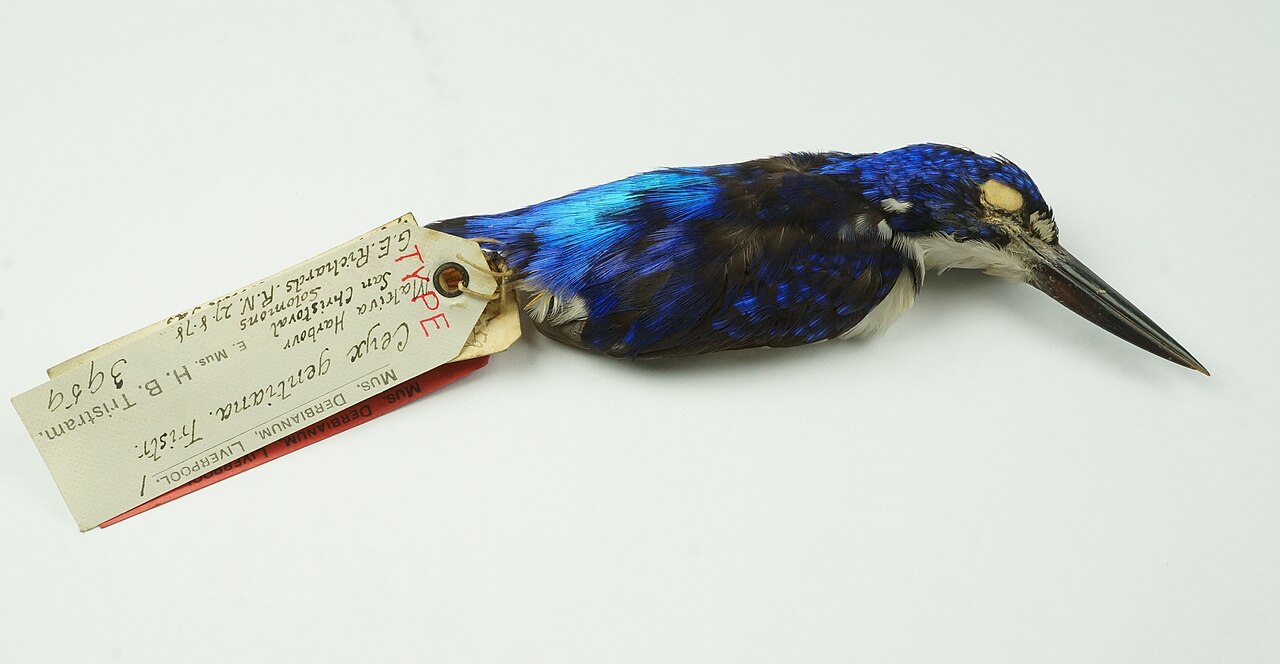
The Makira dwarf kingfisher is a species of bird in the family Alcedinidae that is endemic to Makira Island. Its natural habitat is subtropical or tropical moist lowland forests.
Region
Southwest Pacific (Solomon Islands)
Typical Environment
Endemic to Makira Island, where it inhabits primary and mature secondary lowland rainforest. It favors dark, humid interiors of forest, especially along small streams, shaded gullies, and ravines with dense understory. The species generally avoids open edges and heavily disturbed areas. It perches quietly a few meters above the ground and makes short sallies to the leaf-litter or low vegetation to seize prey.
Altitude Range
Sea level to 800 m
Climate Zone
Tropical
Ease of Keeping
Beginner friendly: 1/5
The Makira dwarf kingfisher is a tiny forest kingfisher that hunts insects from low perches rather than fishing. It was formerly treated as part of the variable dwarf-kingfisher complex before being recognized as a distinct island endemic. It is highly dependent on intact lowland forest and shaded stream margins, making it sensitive to logging and habitat fragmentation.

Temperament
solitary and territorial
Flight Pattern
short rapid wingbeats between low perches
Social Behavior
Typically encountered singly or in pairs within defended stretches of forested stream. Nests are likely excavated in earthen banks, rotting logs, or similar soft substrates, with both adults participating in excavation and incubation. Clutch size is small, and young are fed by both parents with captured invertebrates.
Migratory Pattern
Resident
Song Description
A series of thin, high-pitched whistled notes, often given from a shaded perch along a stream. Calls can be a sharp, squeaky seep or tseet, repeated at intervals and carrying softly through dense forest.
Plumage
Glossy ultramarine-blue to violet-blue upperparts with a purplish crown wash, contrasting rufous-orange underparts and flanks. A neat white throat patch stands out against the rich orange face and breast. The rump and mantle can appear bright cobalt in good light, and the wings are dark with blue edging.
Diet
Feeds mainly on insects such as beetles, grasshoppers, mantises, and spiders, and occasionally takes small frogs or lizards. It hunts by sit-and-wait from low, shaded perches, darting to the ground or foliage to snatch prey. Prey is often subdued by beating it against a perch before swallowing.
Preferred Environment
Shaded stream margins, leaf-littered gullies, and dense understory inside mature lowland rainforest. Often forages within a few meters of the ground where cover is thick.


