

The long-legged buzzard is a bird of prey found widely in several parts of Eurasia and in North Africa. This species ranges from Southeastern Europe down to East Africa to the northern part of the Indian subcontinent. The long-legged buzzard is a member of the genus Buteo, being one of the larger species therein. This species is simultaneously considered relatively powerful and aggressive for its taxonomic group as well as a relatively sluggish raptor overall. Like most buzzards, it prefers small mammals such as rodents, including gerbils, ground squirrels, voles and rats, also taking reptiles, birds and insects as well as carrion. Adaptable to a variety of habitats, long-legged buzzards may nest on a variety of surfaces, including rocks, cliffs and trees. It is a typical buzzard in its reproductive biology. The long-legged buzzard is widely distributed and appears to be quite stable in population. Therefore, it is considered as Least Concern by the IUCN.
Region
Eurasia and North Africa
Typical Environment
Occurs from the Balkans and Turkey through the Caucasus, the Levant, and Iran to Central Asia, with outposts in North Africa and parts of the Indian subcontinent. Prefers open steppe, semi-desert, rocky hills, and sparsely wooded farmland. Frequently nests on cliffs, rock outcrops, escarpments, or large trees, and will also use human structures. Wintering birds move south into the Middle East, North Africa, and the northern Indian subcontinent where prey is more abundant.
Altitude Range
Sea level to 3000 m
Climate Zone
Arid
Ease of Keeping
Beginner friendly: 1/5
The long-legged buzzard is a large Buteo of open, often arid landscapes, ranging from Southeastern Europe across the Middle East to Central Asia and North Africa. Its plumage is highly variable, from very pale to rich rufous, which can cause confusion with other buzzards. It often hunts from poles or low perches but also soars to scan for prey, showing dark carpal patches on otherwise pale underwings. Despite being a relatively sluggish flier at times, it is powerful and can take sizable prey for a buzzard.


A wintering bird near Jaisalmer in Rajasthan, India

Illustration by Keulemans, 1874

A typical pale long-legged buzzard as seen from below.

A long-legged buzzard perching in a spruce in Turkey.

A long-legged buzzard of the smaller North African subspecies, B. r. cirtensis.
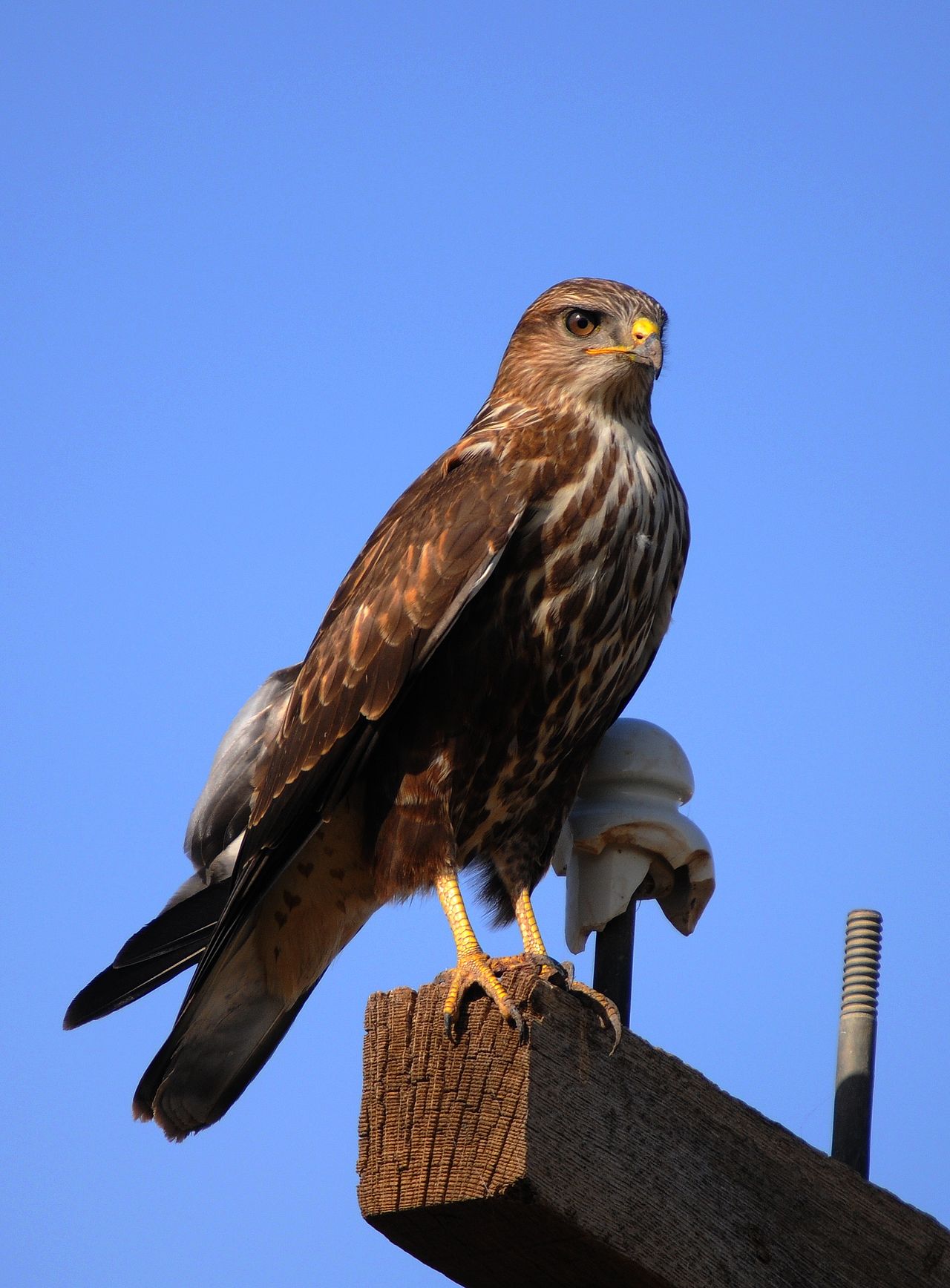
A long-legged buzzard perched on a utility pole.
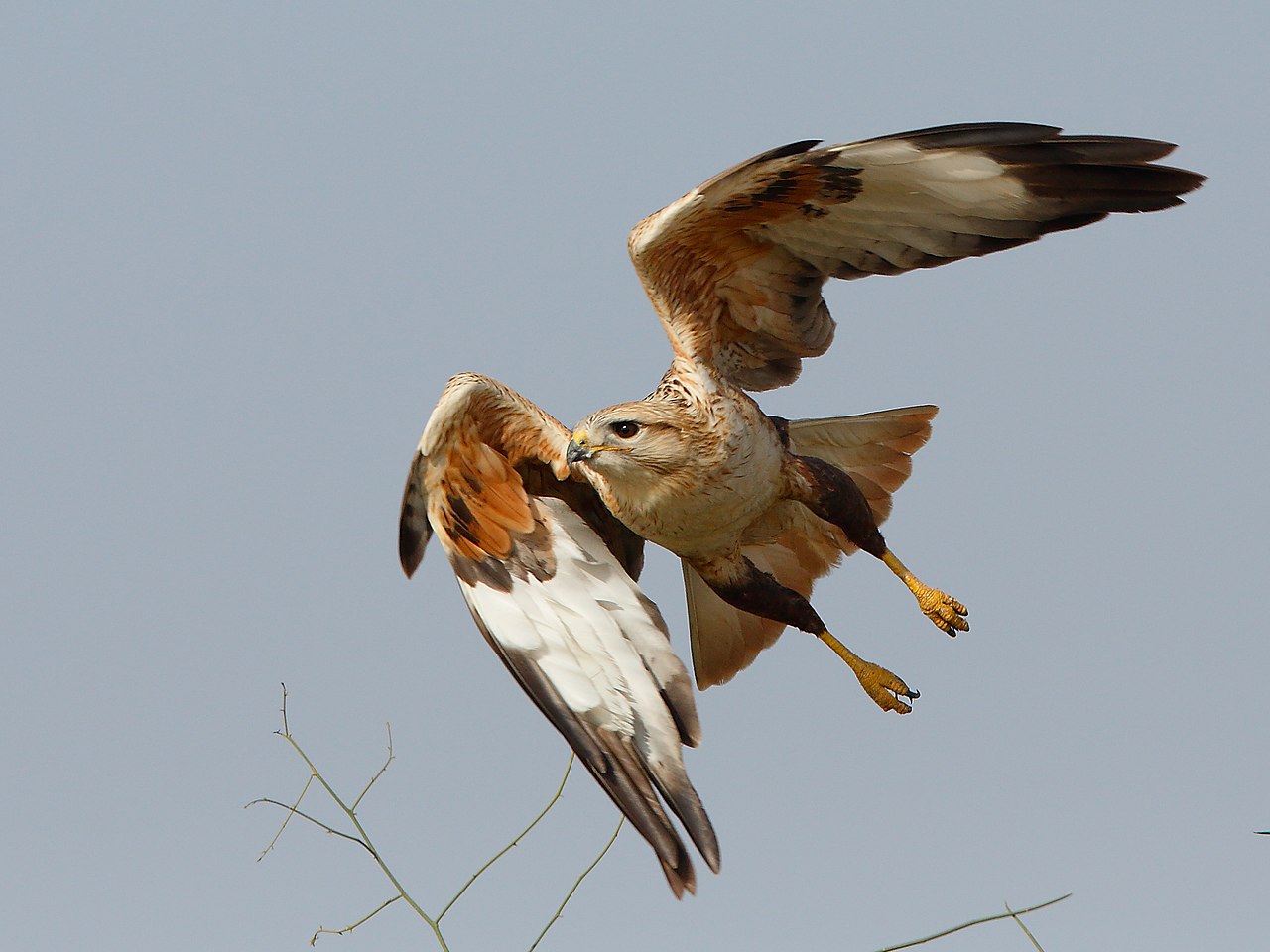
A long-legged buzzard taking flight.

Terrestrial small mammals such as greater mole-rats are often the primary prey of long-legged buzzard.

A crow flies into mob a long-legged buzzard.
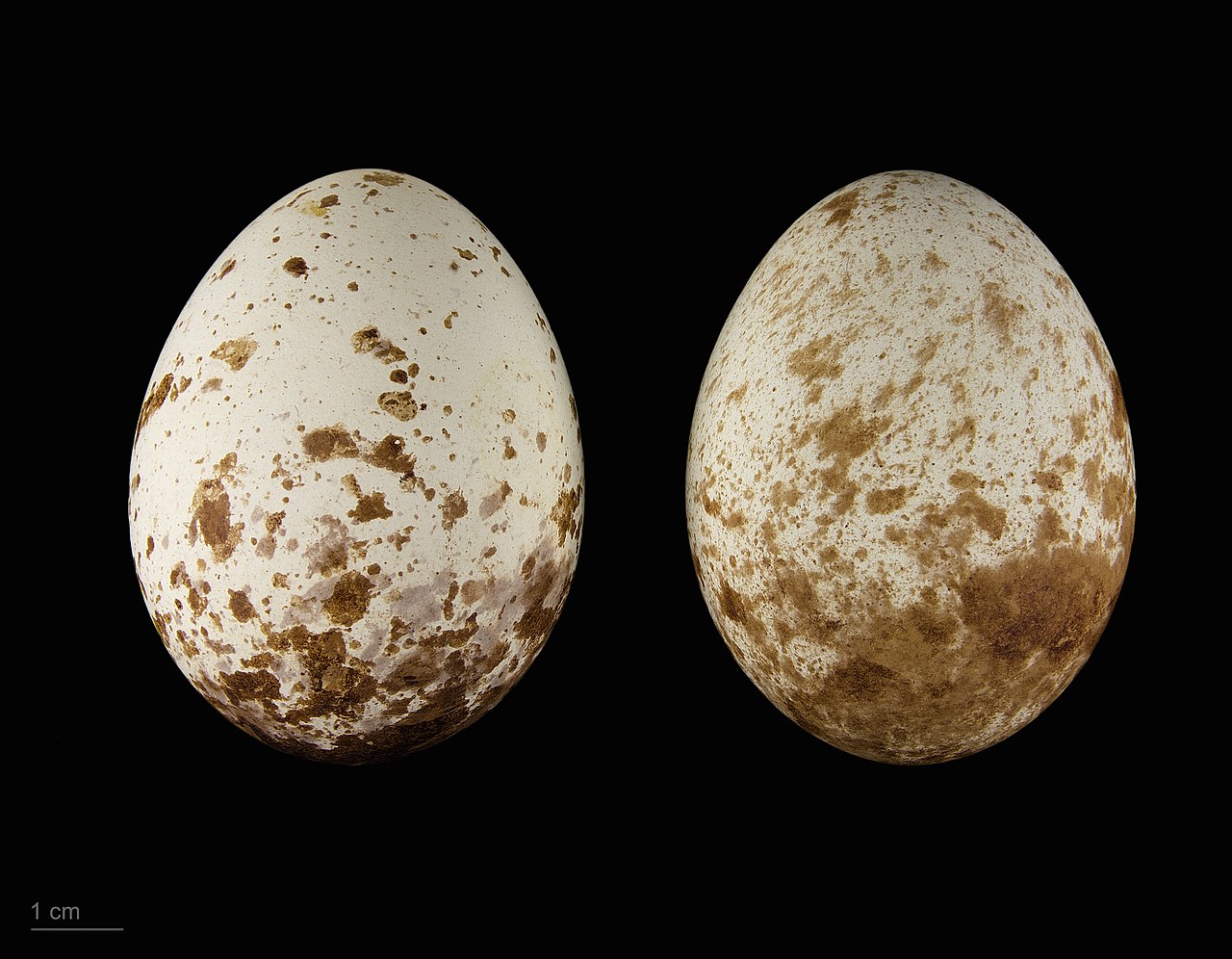
Buteo rufinus cirtensis - MHNT

An apparent adult male tends to the chicks in a long-legged buzzard nest.

A perched long-legged buzzard.
Temperament
solitary and territorial
Flight Pattern
soaring glider with steady, deep wingbeats
Social Behavior
Usually seen alone or in pairs, maintaining territories during the breeding season. Builds large stick nests on cliffs or tall trees; clutch typically 2–4 eggs and both parents care for the young. Monogamous pairs often reuse and refurbish the same nest site across years.
Migratory Pattern
Partial migrant
Song Description
Calls are typical Buteo mewing notes, a drawn-out, slightly plaintive 'pee-ah' or 'kwee-ee', given in flight or near the nest. Vocal activity increases during courtship and territorial interactions.
Plumage
Variable; typically pale sandy to rufous overall with contrasty dark carpal patches and a paler head and underwing coverts. Tail often rufous or pale with a darker subterminal band; underparts may show a faint or patchy belly band. Long, mostly bare tarsi give a lanky look; wings are broad with slightly pointed tips when spread.
Diet
Primarily takes small mammals such as gerbils, voles, ground squirrels, and rats. Also preys on reptiles including lizards and snakes, along with small birds and large insects. Will scavenge carrion opportunistically, especially in winter or during food shortages.
Preferred Environment
Hunts over open steppe, semi-desert, scrub, and agricultural mosaics, often from a perch or while soaring. Frequently uses utility poles, fence posts, and rocky knolls as vantage points.


