

The long-eared owl, also known as the northern long-eared owl or, more informally, as the lesser horned owl or cat owl, is a medium-sized species of owl with an extensive breeding range. The genus name, Asio, is Latin for "horned owl", and the specific epithet, otus, is derived from Greek and refers to a small eared owl. The species breeds in many areas through Europe and the Palearctic, as well as in North America. This species is a part of the larger grouping of owls known as typical owls, of the family Strigidae, which contains most extant species of owl.
Region
Holarctic (Europe, Asia, North America)
Typical Environment
They occupy a wide range of habitats with a mix of woodland for roosting and open areas for hunting. Typical sites include conifer plantations, mixed forests, shelterbelts, riparian groves, and shrublands adjacent to meadows, fields, and marsh edges. They avoid dense, unbroken forest and treeless expanses, favoring ecotones and hedgerows. During winter they select dense evergreens or thickets for concealed day roosts, sometimes near human settlements.
Altitude Range
Sea level to 2500 m
Climate Zone
Temperate
Ease of Keeping
Beginner friendly: 1/5
Long-eared owls are named for their prominent ear tufts, which are used for camouflage and signaling, not for hearing. They often roost communally in dense conifers during winter, sometimes in groups of a dozen or more birds. Silent flight and acute hearing allow them to hunt small mammals efficiently over open ground.


Long-eared owl at Seedskadee National Wildlife Refuge (Wyoming)

Close-up of the head.

A composite of images of long-eared owl for identification from the Crossley ID Guide Britain and Ireland.

Long-eared owls from the nominate race in Europe are often quite ochre in hue.

Close up of the long-eared owls relatively large ears.

In most parts of the range, such as here in California, long-eared owls favor stands of conifers adjacent to openings.

Young long-eared owls in Ukraine

Long-eared owls are usually strictly nocturnal birds.

Long-eared owls frequently move south in winter but often stay near cold temperate areas that may hold snow so long as prey remains.

A communal roost of long-eared owls.

Long-eared Owl

The talons of a long-eared owl.

Pellets of long-eared owls.

Small rodents such as common voles are the most important food for long-eared owls.

Birds such as house sparrows are often taken by long-eared owls in Europe, especially near cities and city roosts.
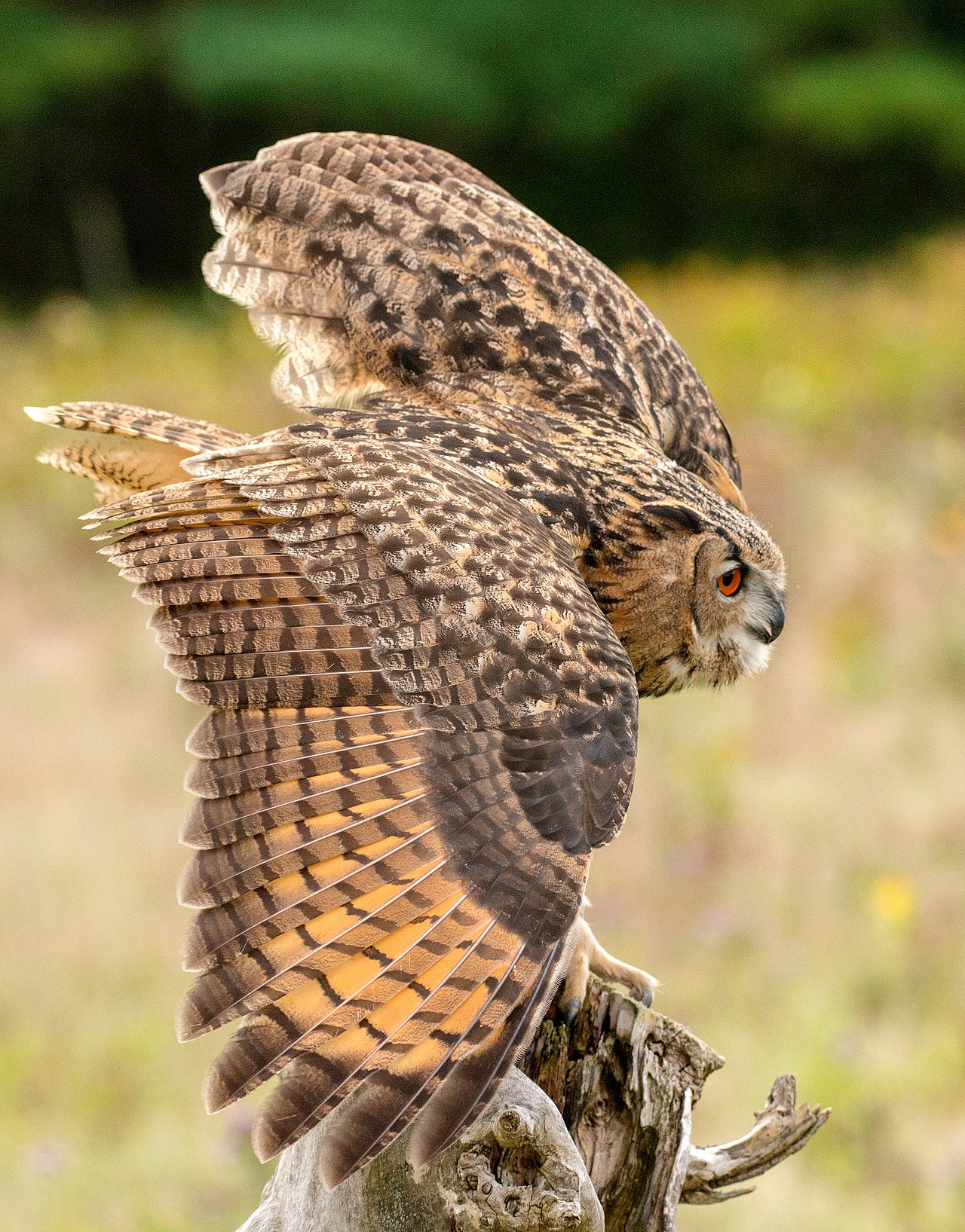
Larger owls, especially the Eurasian eagle-owl, and diurnal raptors can be serious predators of long-eared owls as well as competitors for food.

A young long-eared owl after it has moved to branches near the nest.
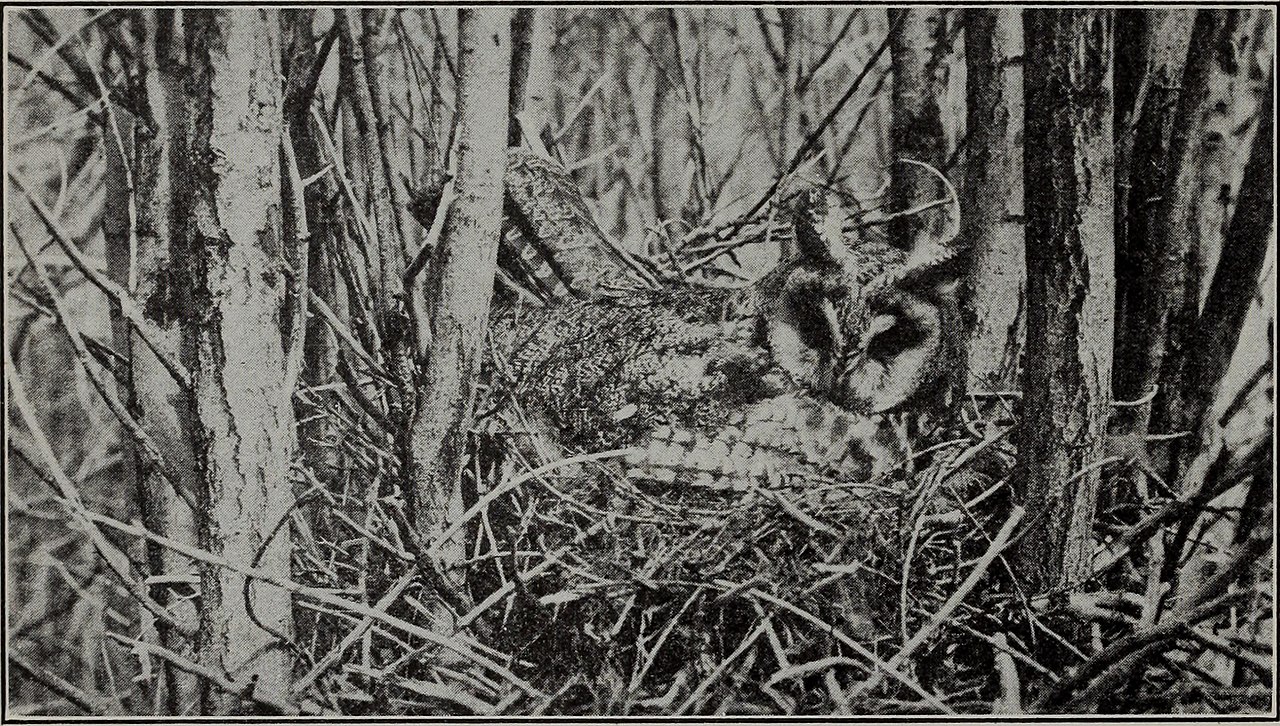
An old photo of a mother long-eared owl sitting on her nest.

A picture of a rare ground nest in England.

A young long-eared owl engaging in a threat display.

Eggs, Collection Museum Wiesbaden

Long-eared Owl on a Bare Treebranch, print by Ohara Koson. Japan, 1900-1930
Temperament
secretive and nocturnal
Flight Pattern
silent flier with buoyant strokes and short glides
Social Behavior
Outside the breeding season they may roost communally in dense conifers or thickets. Breeding pairs are largely monogamous and use old stick nests of corvids or other raptors rather than building their own. Clutches typically contain 4–6 eggs, with the female incubating while the male provides food.
Migratory Pattern
Partial migrant
Song Description
The male gives a series of low, resonant hoots spaced several seconds apart, often at night from a concealed perch. Wing claps and soft whistles may accompany displays, while contact and alarm calls include catlike mews and barks.
Plumage
Mottled and streaked brown with buff and black, providing excellent camouflage; dense feathering down the legs. Rounded facial disc with contrasting darker central area and pale borders.
Diet
Primarily preys on small mammals, especially voles and mice; also takes shrews and occasionally small birds, bats, and large insects. Hunts by low, coursing flights over open ground and by pouncing from perches. Prey is swallowed whole when possible, with indigestible parts later regurgitated as pellets.
Preferred Environment
Hunts along field margins, grasslands, marsh edges, and clearings adjacent to woodlands. Often uses fence posts, hedgerows, or low tree branches as vantage perches. Roosts by day in dense conifers or thorny thickets that provide cover.


