

Lichtenstein's sandgrouse is a species of bird in the Pteroclidae family, which is named after Martin Lichtenstein. They are nomadic, mostly nocturnal birds, which drink before dawn and after dusk.
Region
North Africa and the Middle East
Typical Environment
Found in arid and semi-arid regions including deserts, gravel plains, and rocky wadis. It frequents sparsely vegetated areas with scattered shrubs and grasses, often far from permanent cover. The species relies on access to waterholes and will travel considerable distances to drink. It occurs locally across parts of northeastern Africa and the Arabian Peninsula, extending into the Levant.
Altitude Range
Sea level to 2000 m
Climate Zone
Arid
Ease of Keeping
Beginner friendly: 1/5
Lichtenstein's sandgrouse is a desert specialist named after the naturalist Martin Lichtenstein. It is chiefly crepuscular to nocturnal, flying to waterholes before dawn and after dusk. Like other sandgrouse, males have specially adapted belly feathers that absorb and carry water to chicks. Its cryptic plumage makes it difficult to spot on gravel plains and wadis.

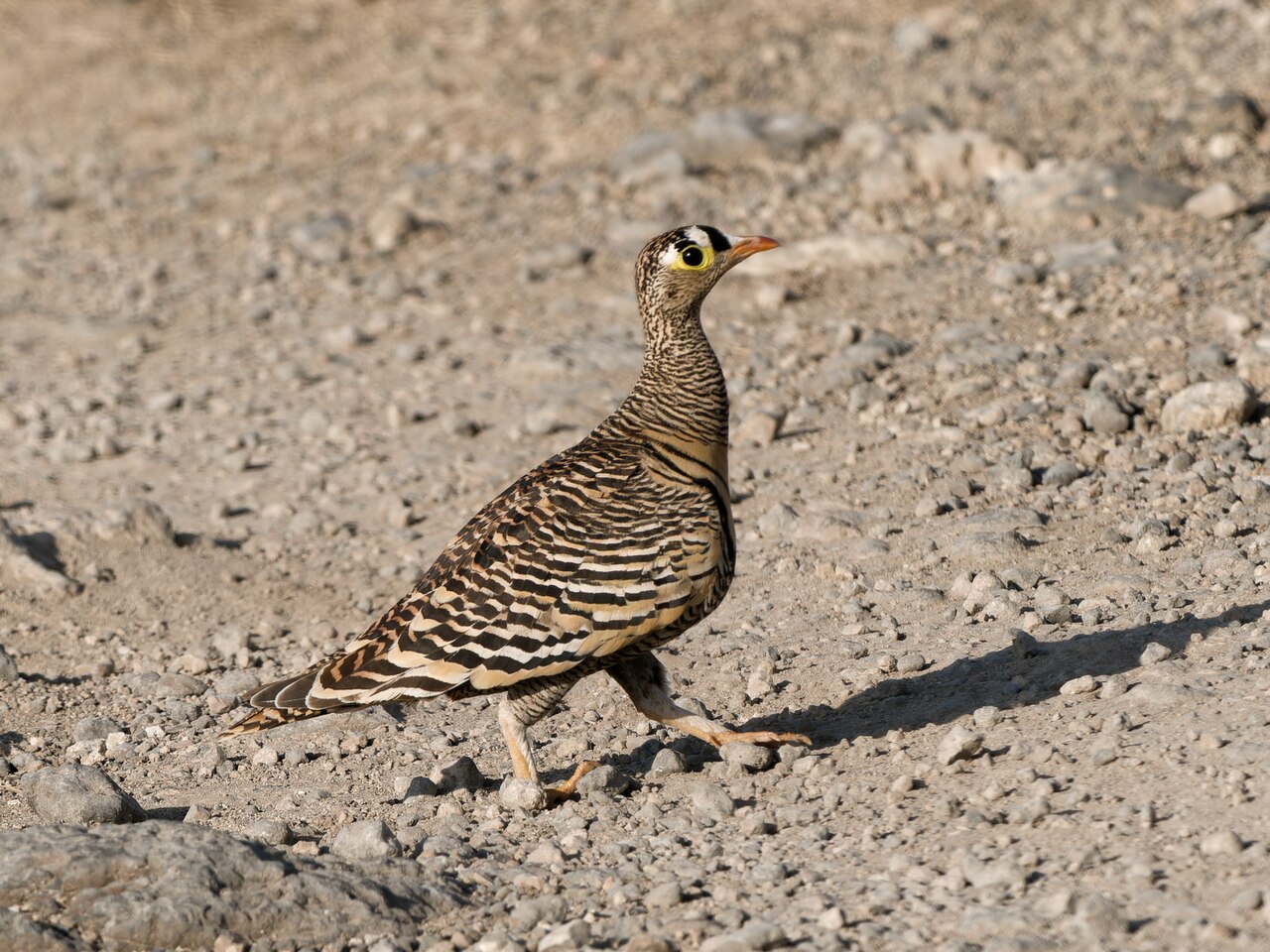
Lichtenstein's sandgrouse

P. l. sukensis ♂,♀P. l. lichtensteinii ♂,♀Journal für Ornithologie
Temperament
shy and wary
Flight Pattern
short rapid wingbeats with fast, direct flight
Social Behavior
Usually seen in pairs or small parties, forming larger groups at waterholes. Ground-nesting in a shallow scrape, typically with 2–3 eggs. Pairs maintain close contact, and adults lead chicks to feeding areas shortly after hatching.
Migratory Pattern
Partial migrant
Song Description
Vocalizations are low, rolling and far-carrying, often heard in twilight or at night near waterholes. Calls include repeated, guttural notes and soft cooing exchanges between flock members.
Plumage
Finely mottled and barred sandy-brown plumage that blends with stony deserts; dense, soft belly feathers adapted for holding water.
Diet
Primarily seeds of desert grasses and shrubs, supplemented by buds and green shoots when available. It will also take fallen grains and occasionally small invertebrates. Foraging is mostly on the ground, picking items individually with quick, deliberate movements.
Preferred Environment
Open gravel and stony deserts, sparsely vegetated plains, and wadis with scattered shrubs. Often feeds within a few kilometers of known water sources, especially in prolonged dry spells.


