
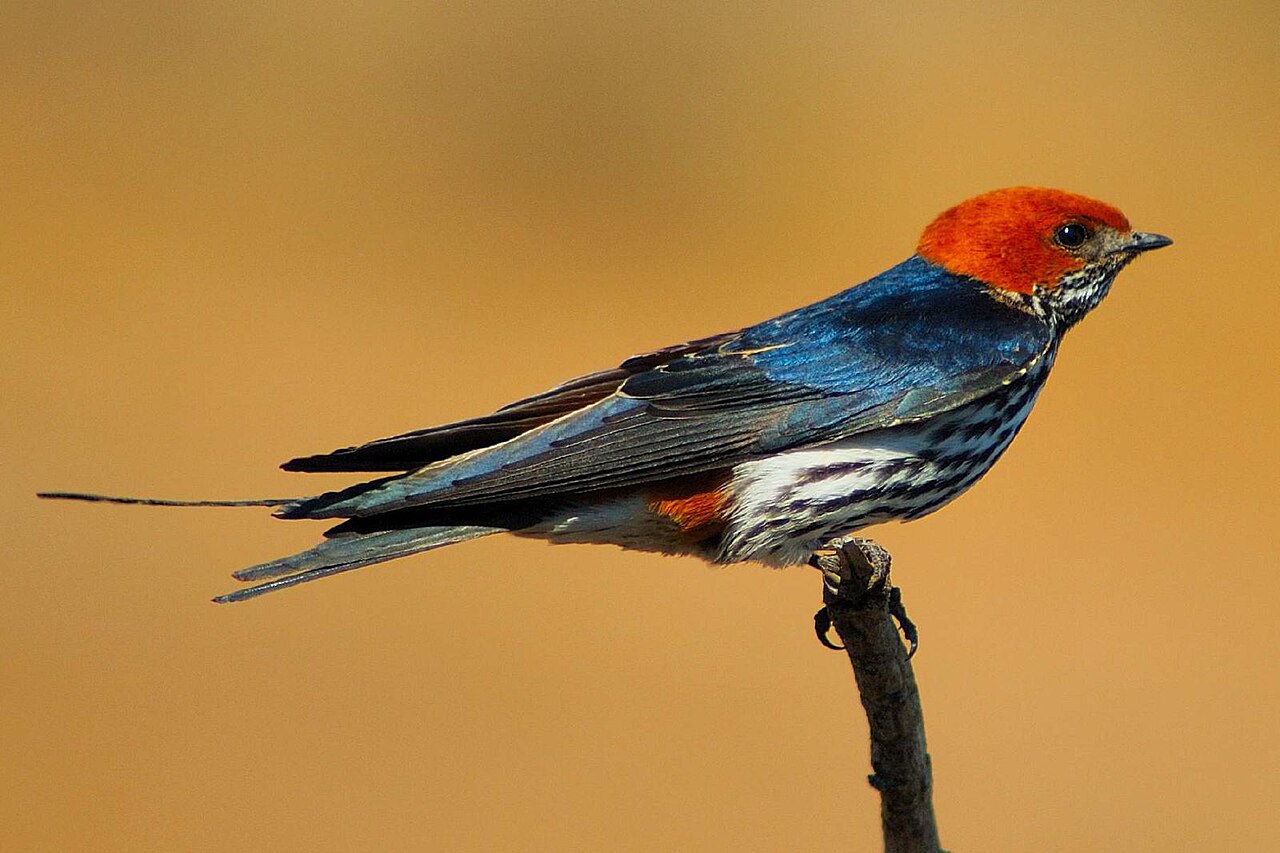
The lesser striped swallow is a large swallow. It breeds in Sub-Saharan Africa from Sierra Leone and southern Sudan south into eastern South Africa. It is partially migratory with South African birds wintering further north. West African birds leave the north of the breeding range in the dry season.
Region
Sub-Saharan Africa
Typical Environment
Occurs widely from West Africa across the Sahel and savannas to East and southern Africa, including the Rift Valley and eastern South Africa. Common in open woodland, savanna, farmland, and around villages and towns where nesting sites are available. Frequently uses bridges, culverts, and building eaves for nest placement. Often forages over grasslands, wetlands, and along forest edges, taking advantage of insect swarms after rains.
Altitude Range
Sea level to 3000 m
Climate Zone
Tropical
Ease of Keeping
Beginner friendly: 1/5
This elegant swallow often builds gourd-shaped mud nests on cliffs and human structures such as buildings and bridges. It is partially migratory, with southern populations moving northward after breeding while others remain resident. Pairs frequently reuse and refurbish old nests, and they gather mud at puddles to construct new ones. Their agility in flight makes them effective hunters of aerial insects over open country.


H. a. unitatis in flight in KwaZulu-Natal


Temperament
social and active
Flight Pattern
strong flier with swift, agile swoops and glides
Social Behavior
Often seen in pairs or small groups, sometimes forming loose colonies around suitable nesting sites. Nests are enclosed mud structures with side entrances, attached to vertical surfaces. Pairs are largely monogamous and may reuse nests across seasons while defending a small area around the nest. They readily associate with humans where structures provide stable nesting ledges.
Migratory Pattern
Partial migrant
Song Description
A soft, twittering series of chirps and trills delivered in flight and from perches near the nest. Calls include sharp chips during aerial chases and gentle conversational twitters between mates.
Plumage
Glossy blue-black upperparts with pale streaking, rufous crown and nape, and a warm buff to whitish underside finely streaked dark. The rump is rufous, and the long tail streamers show small white spots.
Diet
Feeds almost entirely on flying insects, including flies, beetles, ants, termites, and small wasps. Captures prey on the wing with quick, agile maneuvers, often over open fields and water. Takes advantage of termite and ant alate emergences after rain, when birds may gather in numbers. Occasionally picks insects from surfaces during low passes.
Preferred Environment
Forages over open savanna, pastures, and croplands, and along lakeshores, rivers, and wetlands where insect abundance is high. Frequently hunts around livestock and human settlements where flying insects concentrate. Uses airspace from just above ground to treetop level, expanding higher during swarms.


