

The lesser black-backed gull is a large gull that breeds on the Atlantic and Arctic coasts of Europe. It is migratory, wintering from the British Isles south to West Africa. However, it has increased dramatically in North America, especially along the east coast. Formerly just a winter visitor to North America, it now occurs in large numbers some winters and birds are recorded year-round. However, there is serious concern about decline in many parts of its range. The species is on the UK Amber List because the UK is home to 40 per cent of the European population and more than half of these are found at fewer than ten breeding sites.
Region
Western Palearctic and North Atlantic
Typical Environment
Breeds widely along Atlantic coasts and inland lakes of northern and western Europe, including the British Isles, Scandinavia, and the Baltic region. Winters along coasts from the British Isles and Iberia to North and West Africa, and in smaller numbers around the Mediterranean. Increasingly recorded year-round and breeding in urban areas, nesting on rooftops and man-made structures. Regular in North America, especially along the Atlantic coast in winter, with some local breeding and overwintering populations established. Uses a variety of habitats from rocky islands and sea cliffs to estuaries, harbors, reservoirs, and landfills.
Altitude Range
Sea level to 1500 m
Climate Zone
Temperate
Ease of Keeping
Beginner friendly: 1/5
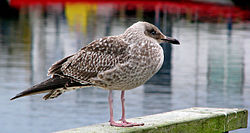
A medium-large gull of the North Atlantic, the lesser black-backed gull breeds from Iceland and Britain across northern Europe and winters south to the Mediterranean and West Africa. It shows striking yellow legs and a dark slate-gray to blackish back, helping separate it from the paler herring gull. Several subspecies vary in mantle darkness and migratory behavior. In the UK it is Amber-listed due to concentrated breeding at few sites despite a large proportion of the European population.


Eggs, collection Museum Wiesbaden




Temperament
bold and opportunistic
Flight Pattern
strong flier with steady wingbeats and buoyant glides
Social Behavior
Breeds colonially on coastal islands, cliffs, and increasingly on rooftops in towns and ports. Typically forms long-term pair bonds; both sexes share nest building, incubation, and chick rearing. Outside the breeding season, gathers in large flocks at feeding sites and communal roosts.
Migratory Pattern
Seasonal migrant
Song Description
Loud, laughing series of cackles and yelps, often delivered in volleys during displays. Also gives harsh scolding calls and shorter mewing notes in flight and at colonies.
Plumage
Clean white head and underparts with a dark slate-gray to blackish mantle and upperwings; black wing tips with white mirrors; crisp contrast between dark back and white body.
Diet
Highly opportunistic, taking fish (caught or stolen), marine invertebrates, insects, small mammals, eggs and chicks of other birds, and carrion. Frequently scavenges at fishing ports and follows trawlers for discards. Will forage at landfills, fields, and shorelines for human refuse and natural prey. Capable of surface-dipping, shallow plunges, and kleptoparasitism.
Preferred Environment
Feeds along coasts, estuaries, harbors, and beaches, as well as inland lakes, reservoirs, and rivers. Regular at landfills, agricultural fields, and urban areas where food is abundant. Often forages in mixed flocks with other gull species.


