
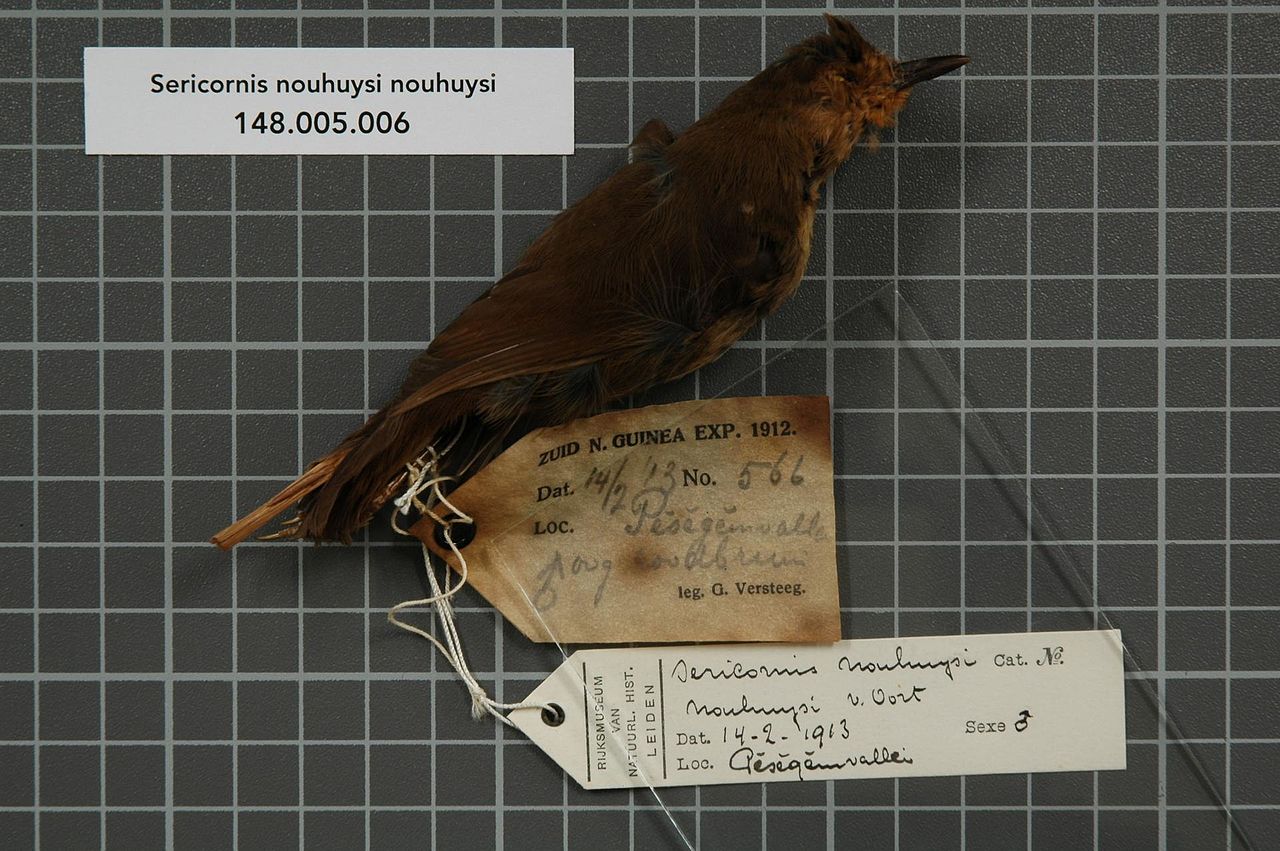
The large scrubwren is a bird species. Placed in the family Pardalotidae in the Sibley-Ahlquist taxonomy, this has met with opposition and indeed is now known to be wrong; they rather belong to the independent family Acanthizidae.
Region
New Guinea Highlands
Typical Environment
Occurs throughout montane rainforests of the Central Range and adjacent highlands of New Guinea, spanning both Papua New Guinea and Indonesian Papua. It favors dense, moss-laden understory, forest edges, and thickets, including bamboo and tree-fern gullies. The species uses both primary and mature secondary forest and can persist in shrubby clearings near forest. It forages from the ground to the lower midstory, especially in shaded, humid microhabitats.
Altitude Range
1600–3500 m
Climate Zone
Highland
Ease of Keeping
Beginner friendly: 1/5
The large scrubwren is a New Guinea highland songbird in the family Acanthizidae, a placement that corrected earlier classifications that grouped scrubwrens with pardalotes. It is a shy understory specialist that forages methodically through mossy tangles and leaf litter. Pairs or small family groups often keep in quiet contact with thin calls and may join mixed-species flocks. It builds a domed, mossy nest low in dense vegetation.

Temperament
shy and skulking
Flight Pattern
short rapid wingbeats, low and direct through dense cover
Social Behavior
Usually in pairs or small family parties that maintain contact with soft calls. Often participates in mixed-species foraging flocks with other understory birds. Nests are domed structures of moss and plant fibers placed low in dense vegetation; cooperative assistance by offspring may occur.
Migratory Pattern
Resident
Song Description
Song is a thin, high-pitched series of trills and tsee notes, delivered from concealed perches. Calls include soft chips and contact notes used to keep groups together.
Plumage
Dull brown-olive upperparts with a slightly warmer brown mantle and wings; underparts buffy to gray-buff with a paler throat that can appear lightly mottled. The crown and nape are plain; the face shows a subtle pale supercilium and dusky ear coverts. Plumage is soft and diffuse, aiding camouflage in shaded understory.
Diet
Primarily feeds on small arthropods, including insects, spiders, and their larvae. It gleans from leaves, twigs, moss, and bark, and also probes leaf litter and epiphytes. Occasional small seeds or berries may be taken opportunistically but form a minor part of the diet.
Preferred Environment
Forages in dense understory of mossy montane forest, along forest edges, and in bamboo or tree-fern thickets. Often stays within a meter or two of the ground, moving methodically through shaded, humid microhabitats.


