
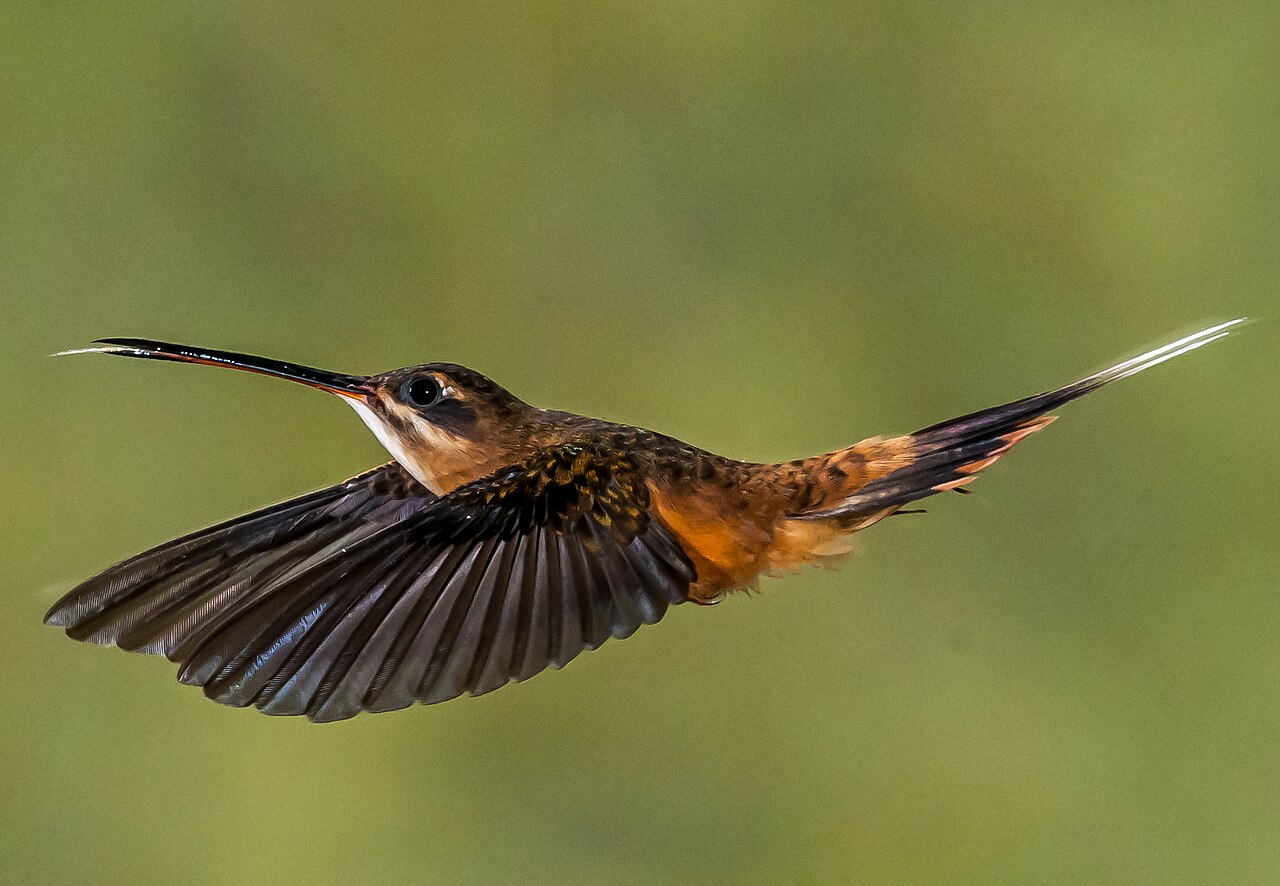
Koepcke's hermit is a species of hummingbird in the family Trochilidae. It is endemic to Peru.
Region
Upper Amazon basin and eastern Andean foothills of Peru
Typical Environment
Primarily found on the east Andean slopes and adjacent upper Amazonian lowlands in central and northeastern Peru. It frequents the shaded understory of humid evergreen forest, river-edge thickets, and secondary growth with abundant heliconias and gingers. The species is most often near streams, ravines, and forest edges where flowering plants are concentrated. It tolerates some disturbance if floral resources remain available.
Altitude Range
200–1100 m
Climate Zone
Tropical
Ease of Keeping
Beginner friendly: 1/5
Named in honor of the ornithologist Maria Koepcke, this hermit is a Peruvian endemic hummingbird of humid foothill forests. Like many hermits, it follows traplines—regular feeding routes between flowering plants—rather than defending a single nectar patch. Males often sing from low perches and may gather in loose leks. It supplements nectar with tiny arthropods for protein.


Temperament
solitary and secretive
Flight Pattern
short rapid wingbeats with agile hovering
Social Behavior
Usually encountered singly as it follows traplines through the understory. Males may sing from low, shaded perches and sometimes participate in loose leks. The nest is a small cup attached beneath a broad leaf or slender drooping support over a protected spot, with two tiny white eggs.
Migratory Pattern
Resident
Song Description
Song is a series of thin, high, slightly buzzy notes repeated persistently from a concealed perch. Calls include sharp tsee or tik notes given in flight or while foraging.
Plumage
Typical hermit pattern with dusky olive-brown upperparts and buffy to grayish underparts, accented by a pale throat and strong facial stripes. Tail shows narrow central feathers and outer rectrices with pale tips. Feathers appear soft with a slightly velvety sheen in good light.
Diet
Feeds primarily on nectar from tubular flowers such as Heliconia, Costus, and other understory blossoms. It follows a trapline, visiting the same sequence of flowers repeatedly to maximize nectar intake. Small arthropods, including gnats and spiders, are taken by gleaning or aerial hawking to provide essential proteins.
Preferred Environment
Forages in dense, shaded understory and along forest edges, especially near streams and clearings where flowering plants are concentrated. Frequently visits flowering thickets, ravines, and secondary growth with abundant heliconias.


