

The Kentish plover is a small wader of the family Charadriidae that breeds on the shores of saline lakes, lagoons, and coasts, populating sand dunes, marshes, semi-arid desert, and tundra. Both male and female birds have pale plumages with a white underside, grey/brown back, dark legs and a dark bill; however, additionally the male birds also exhibit very dark incomplete breast bands, and dark markings either side of their head, therefore the Kentish plover is regarded as sexually dimorphic.
Region
Palearctic coasts and inland saline basins
Typical Environment
Breeds patchily from Atlantic coasts of Europe across the Mediterranean, North Africa, and through Central and East Asia to coastal China and Japan, with many birds wintering farther south. Occupies open sandy beaches, coastal lagoons, salt pans, and mudflats, as well as inland shores of saline and alkaline lakes. Prefers sparsely vegetated flats with shell or pebble cover for camouflage. Outside the breeding season it gathers on broad tidal flats and protected bays.
Altitude Range
Sea level to 1500 m
Climate Zone
Temperate
Ease of Keeping
Beginner friendly: 2/5
The Kentish plover is a small shorebird of open sandy and saline habitats and shows clear sexual dimorphism, with males displaying darker head markings and a more distinct partial breast band. Many New World populations formerly treated within this species are now split as the Snowy Plover. Nests are simple scrapes on open ground, and adults often perform distraction displays to lure predators away. Human disturbance and coastal development can significantly impact breeding success.


Kentish plover.
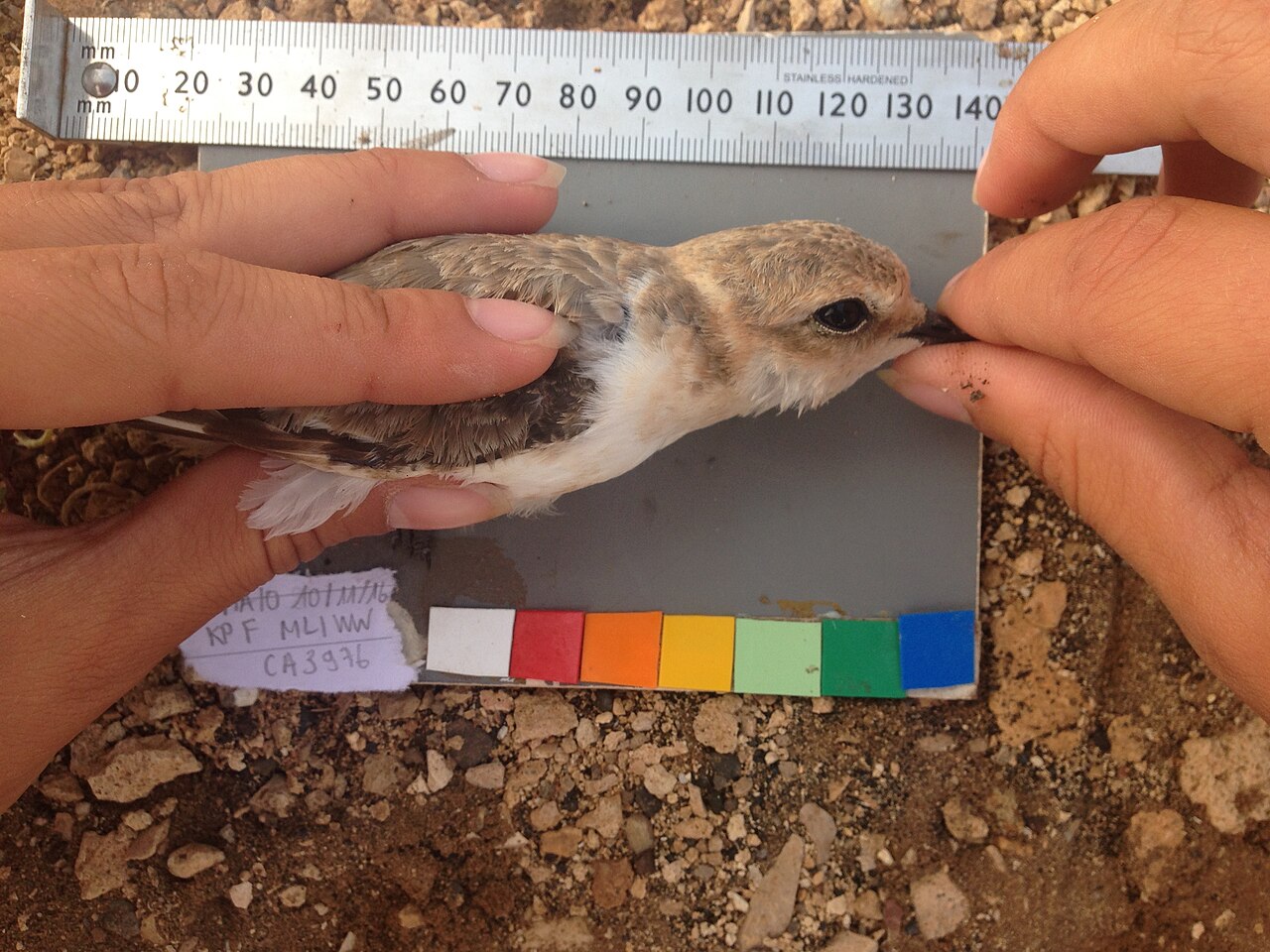
A female adult Kentish plover

A male Kentish plover

A male in breeding plumage, Narara, Jamnagar, India

Kentish plover nest

A Kentish plover chick hatching in Maio, Cape Verde, 2016

Salina do Porto Ingles, the habitat of Kentish plovers in Maio, Cape Verde
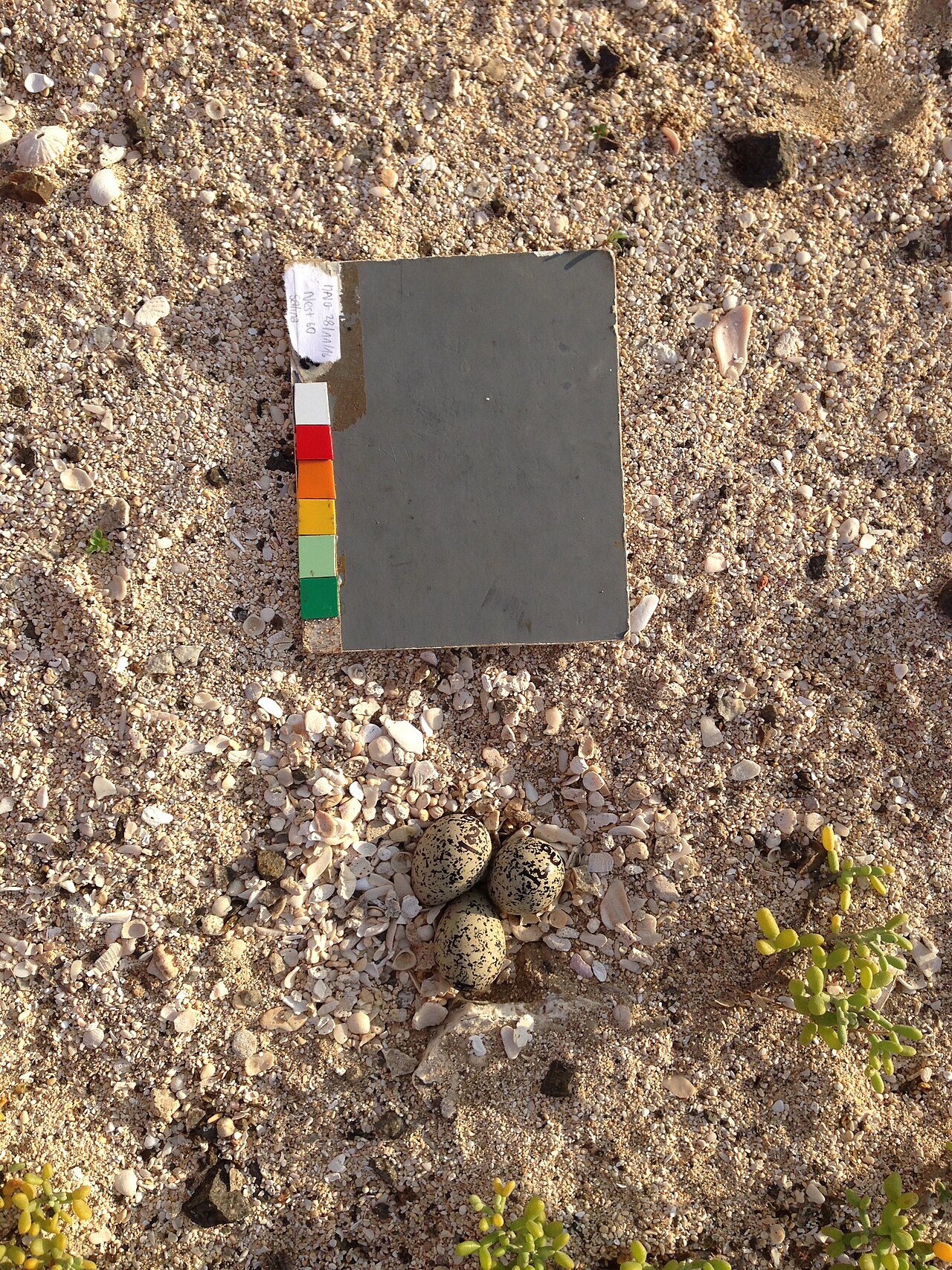
A Kentish plover nest, with a standard grey card

A Kentish plover chick

A Kentish plover chick hatching, along with its sibling and an egg
Temperament
wary but loosely social
Flight Pattern
fast low flight with rapid shallow wingbeats
Social Behavior
Often breeds in loose colonies on open ground, with both sexes incubating and tending the downy, precocial chicks. Mating systems can be flexible, including serial polygyny or polyandry in some populations. Nests are shallow scrapes lined with small shells or pebbles. Outside the breeding season, forms small to medium-sized flocks on suitable shores.
Migratory Pattern
Partial migrant
Song Description
Vocalizations are soft and thin, with a plaintive tu-it or peeping calls used in contact and alarm. Courtship includes quiet trills and repeated piping notes, especially at dawn and dusk.
Plumage
Pale sandy-brown upperparts with white underparts; fine, smooth feathering suited to sandy environments. Males show a darker mask with blackish lores and ear-coverts and an incomplete dark breast band; females are duller with brownish markings and a weaker breast band.
Diet
Feeds mainly on small invertebrates, including insects, marine worms, small crustaceans, and mollusks. Uses a run-stop-peck foraging style, visually picking prey from the surface or just below it. Will probe lightly in moist sand or mud and glean along tidal wrack lines. Diet shifts with habitat, taking more terrestrial insects at inland saline lakes.
Preferred Environment
Forages on open, flat substrates such as wet sand, mudflats, the edges of saline lagoons, and salt pans. In inland sites it works the gently sloping shores of alkaline lakes and seepage areas. Often feeds near the waterline where wave action concentrates invertebrates.


