

The kea is a species of large parrot in the family Strigopidae that is endemic to the forested and alpine regions of the South Island of New Zealand. About 48 cm (19 in) long, it is mostly olive-green, with brilliant orange under its wings, and has a large, narrow, curved, grey-brown upper beak. Its omnivorous diet consists mainly of roots, leaves, berries, nectar, and insects, but also includes carrion. It was once killed for bounty due to concern by sheep farmers that it attacked livestock, especially sheep. The kea is now uncommon, and received absolute protection under the Wildlife Act in 1986.
Region
Southern Alps, New Zealand
Typical Environment
Kea occupy alpine and subalpine zones of the South Island, using tussock grasslands, scrub, herbfields, scree slopes, and forest edges. They descend into beech and podocarp forests in winter and occasionally to valley floors and coastal settlements. Birds frequently forage around ski fields, huts, and roads in mountain passes. Nests are placed in cavities among rocks, under tree roots, or in earth burrows with sheltered entrances.
Altitude Range
Sea level to 2000 m
Climate Zone
Highland
Ease of Keeping
Beginner friendly: 1/5
The kea is the world’s only alpine parrot and is famed for its intelligence and mischievous curiosity, often investigating cars, backpacks, and ski gear. Historically persecuted for alleged attacks on sheep, it is now fully protected in New Zealand. Major threats include lead poisoning from human structures, predation by introduced mammals, and conflict around human settlements.


Kea sign at Arthur's Pass
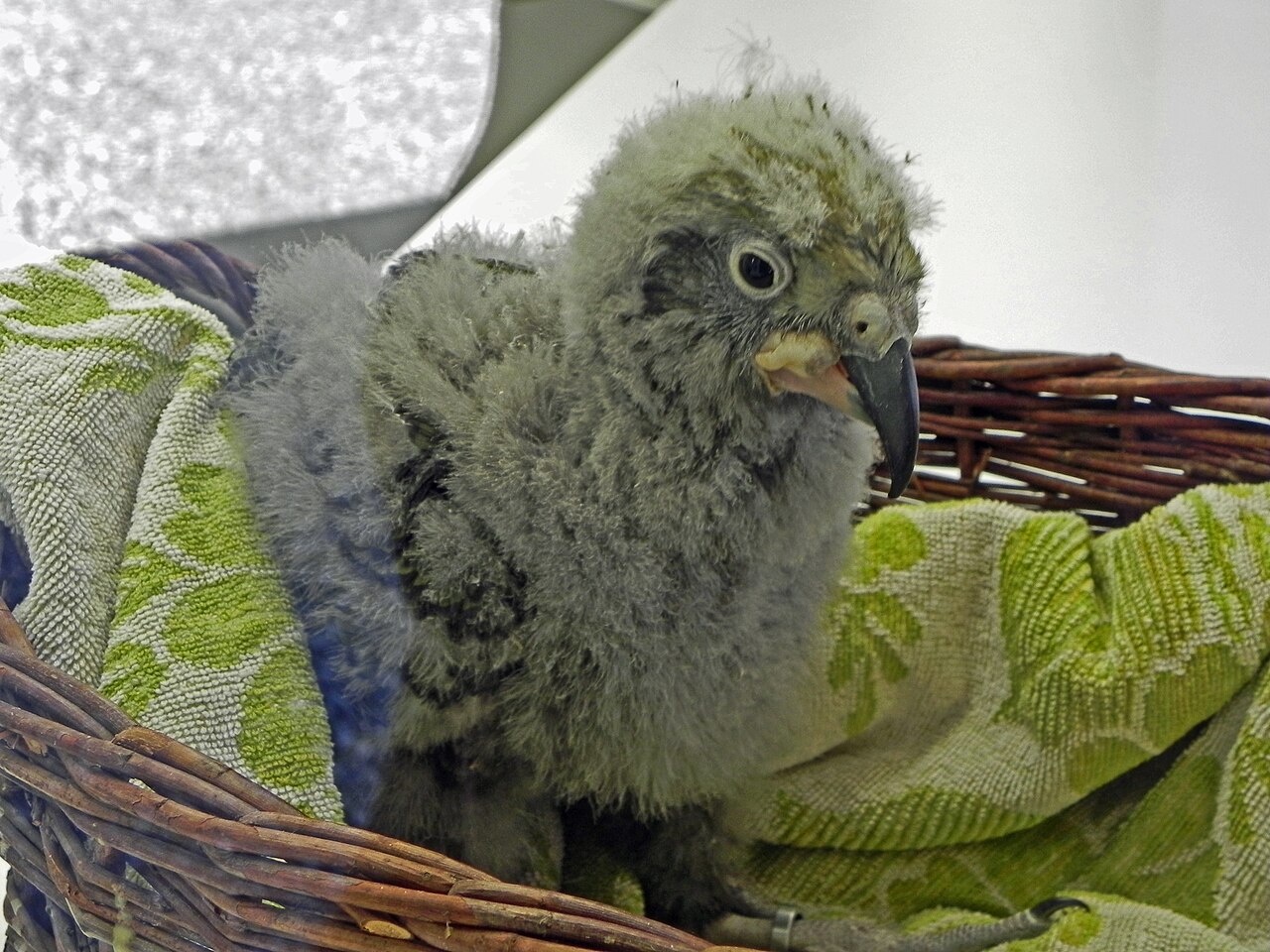
Kea chick, Weltvogelpark Walsrode, Germany

Sheep, suspected to have been killed by kea in July 1907

Kea damaging a parked car

Kea investigating tourists

At Arthur's Pass, Canterbury
Temperament
highly curious and social
Flight Pattern
strong flier with soaring glides and agile maneuvering
Social Behavior
Kea form loose flocks and complex social groups with playful interactions and cooperative problem-solving. Pairs are typically monogamous; nests are in cavities or burrows with 2–5 eggs, and both parents invest heavily in care. Juveniles often gather in groups and may roam widely.
Migratory Pattern
Resident
Song Description
The most characteristic call is a loud, ringing “kee-aa” scream that carries across valleys. They also produce whistles, warbles, and soft growls during close social interactions.
Plumage
Mostly olive-green with dark edging that creates a scalloped look; vivid orange-red underwings and rump; bluish outer flight feathers.
Diet
An opportunistic omnivore, the kea eats roots, leaves, berries, seeds, and nectar. It also consumes insects, larvae, and carrion, and will scavenge around human activity for food scraps. Using its strong, dexterous bill and feet, it probes soil, flips stones, and pries bark to access hidden foods.
Preferred Environment
Feeding commonly occurs on the ground in alpine herbfields and tussock, along forest edges, and around alpine infrastructure such as huts and ski areas. Birds also forage in subalpine forests and river flats, especially in winter.


