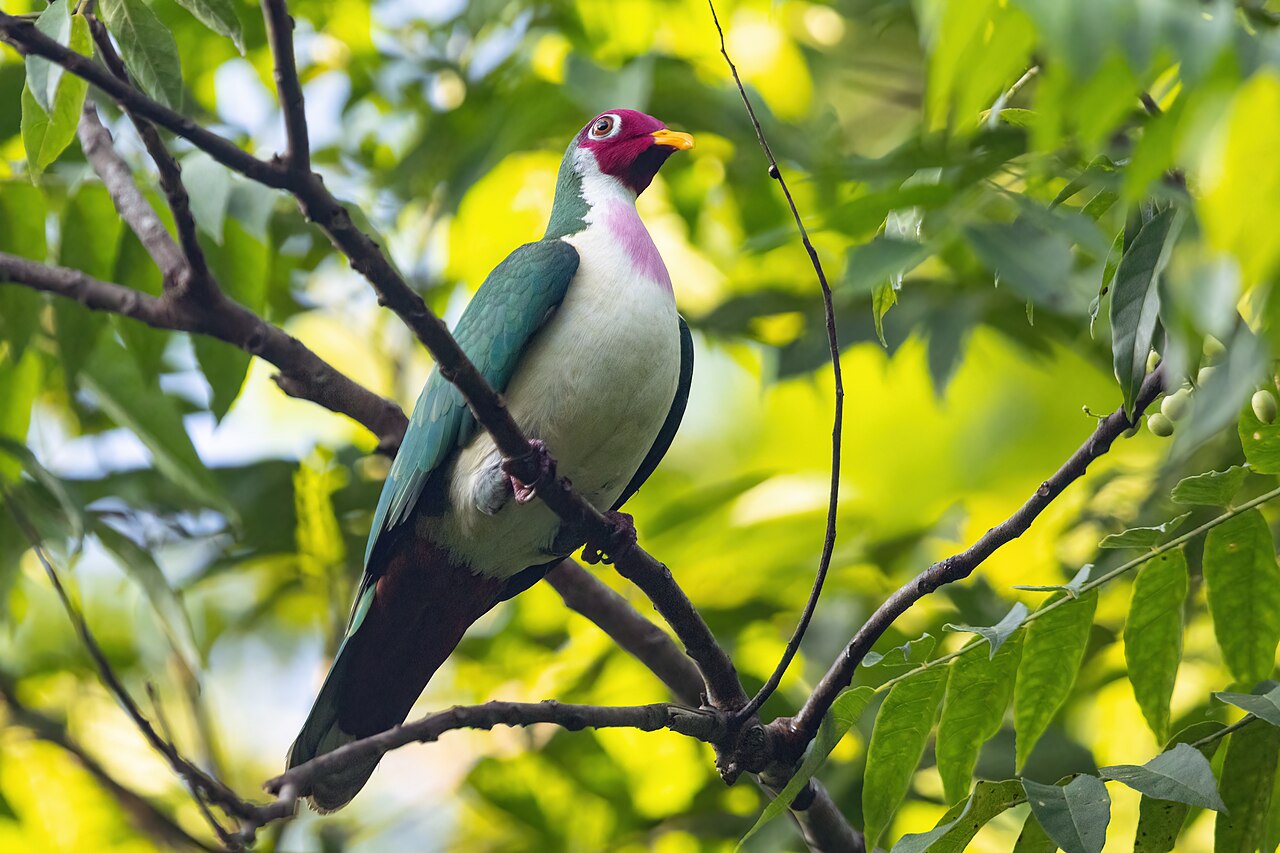
The jambandu indigobird is a species of bird in the family Viduidae. It is also known as the goldbreast indigobird. It is found in Benin, Burkina Faso, Cameroon, Central African Republic, Ghana, Guinea, Ivory Coast, Liberia, Nigeria, Sierra Leone, South Sudan and Togo. Its habitat is savannah and brush.
Region
West and Central Africa
Typical Environment
Occurs patchily from coastal West Africa east through the savannas of Benin, Togo, Ghana, Ivory Coast, Liberia, Sierra Leone, Guinea and Nigeria, extending into Cameroon, Central African Republic, South Sudan and parts of Burkina Faso. It favors open savanna, shrubland, and lightly wooded country, often near villages, farms, and along riverine thickets. The species avoids dense closed-canopy forest but uses edges and secondary growth. Outside the breeding season it can gather in small groups at seeding grasses and water points.
Altitude Range
0–1500 m
Climate Zone
Tropical
Ease of Keeping
Beginner friendly: 1/5
The Jambandu (goldbreast) indigobird is a brood parasite of small estrildid finches, laying its eggs in the host’s nest. Males famously mimic the songs and calls of their specific host species, which helps attract appropriate mates and ensures their young are fed by the correct foster parents. Breeding males show a glossy indigo sheen with a warm golden wash on the breast in good light. They are most often seen in open savannas and scrub near human settlements.
Temperament
solitary and territorial
Flight Pattern
short rapid wingbeats with bounding, undulating flight
Social Behavior
A brood parasite that does not build its own nest, it lays eggs in the nests of firefinches and other estrildids. Males hold small song perches near host territories and court multiple females; females covertly visit host nests to lay. Outside breeding, birds may form loose foraging groups at abundant seed sources.
Migratory Pattern
Resident
Song Description
Male song is a fast series of chips, buzzes, and rattles interwoven with strikingly accurate imitations of its host finch’s calls and song phrases. Song is delivered from exposed perches and during short display flights.
Plumage
Breeding males are glossy blue-black to indigo with a subtle golden wash across the lower breast; non-breeding males and females are warm brown with fine streaking and paler underparts.
Diet
Primarily takes small grass and weed seeds plucked from seed heads or gleaned on the ground. It also consumes spilled grain around farms and compounds. Insects, especially small beetles and flying termites, are taken opportunistically and may increase during breeding to provide protein.
Preferred Environment
Feeds in open grassy savannas, fallow fields, roadsides, and the edges of cultivation. Often forages near human habitation where grasses and crop residues provide abundant seed.