

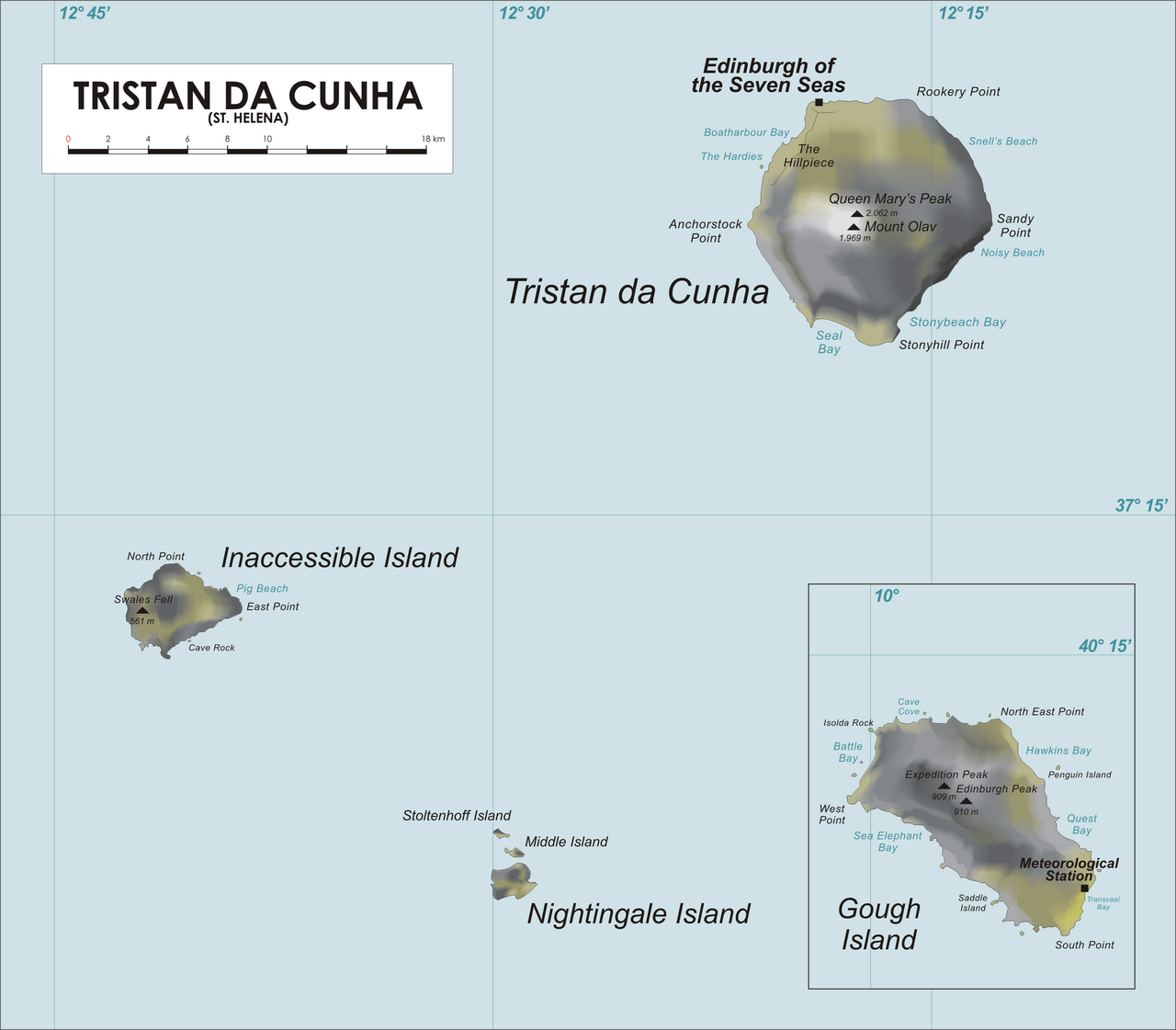
The Inaccessible Island rail, or Inaccessible rail, is a small bird species of the rail family, Rallidae. Endemic to Inaccessible Island in the Tristan Archipelago in the isolated south Atlantic, it is the smallest extant flightless bird in the world. The species was formally described by physician Percy Lowe in 1923 but had first come to the attention of scientists 50 years earlier. The Inaccessible Island rail's taxonomic affinities and origin were a long-standing mystery; in 2018 its closest relative was identified as the South American dot-winged crake, and it was decided that both species are best classified in the genus Laterallus.
Region
South Atlantic Ocean (Tristan da Cunha archipelago)
Typical Environment
Occurs only on Inaccessible Island, using a mosaic of dense tussock grassland, fern-bush, wet heath, and coastal scrub. It keeps close to thick ground vegetation and litter where it can slip through cover and avoid exposure. Birds are found from shoreline tussock to the island’s interior plateaus and slopes. They often forage around seabird colonies where invertebrates are abundant. The entire global range is within the island’s roughly 14 km² area.
Altitude Range
Sea level to 450 m
Climate Zone
Temperate
Ease of Keeping
Beginner friendly: 1/5
The Inaccessible Island rail is the smallest extant flightless bird on Earth. Confined to Inaccessible Island in the Tristan da Cunha group, it has adapted to dense ground cover and runs rather than flies. Genetic work links it most closely to the South American dot-winged crake, supporting its placement in the genus Laterallus. Its isolation makes it highly vulnerable to invasive predators, which fortunately are absent from the island.


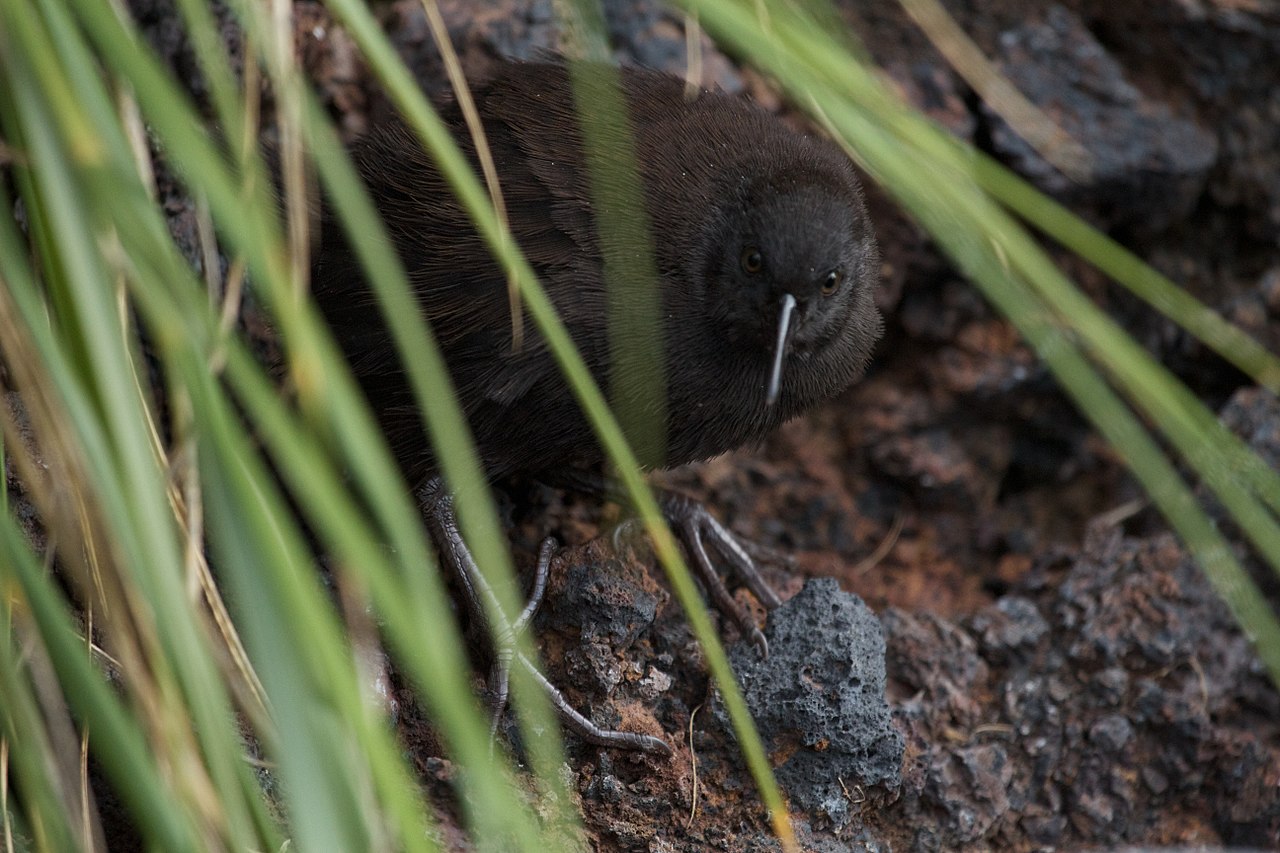
Inaccessible Island rail

Inaccessible Island rail, showing the small flightless wings

Tussock grass lowlands and steep cliffs from the shore of Inaccessible Island
Inaccessible Island rails forage under tussock grass.
Inaccessible Island rails often nest in tussock grass.

Tristan thrushes prey on rail chicks.

A study skin of the Inaccessible Island rail
Temperament
shy but inquisitive
Flight Pattern
flightless; runs swiftly through dense cover
Social Behavior
Usually seen singly or in pairs and believed to form monogamous pairs during breeding. Nests are concealed in thick vegetation, with a small clutch and both adults sharing duties. Territorial calling and duetting help maintain pair bonds and spacing.
Migratory Pattern
Resident
Song Description
A series of high, thin peeps and trills interspersed with soft squeaks; calls carry through dense vegetation. Pairs often duet, producing alternating notes that sound like quick, piping chatter.
Plumage
Overall sooty to dark brown with finer, darker barring on the flanks and undertail; plumage appears uniformly dusky in the field.
Diet
Feeds mainly on small invertebrates including insects, spiders, amphipods, and other ground-dwelling arthropods. It also takes small snails and occasionally seeds or plant matter. Foraging is mostly by probing and pecking in leaf litter and among grass bases.
Preferred Environment
Dense tussock, fern-bush, and wet heath with thick litter layers. Frequently forages along the edges of paths, seepages, and around seabird colonies where prey is plentiful.


