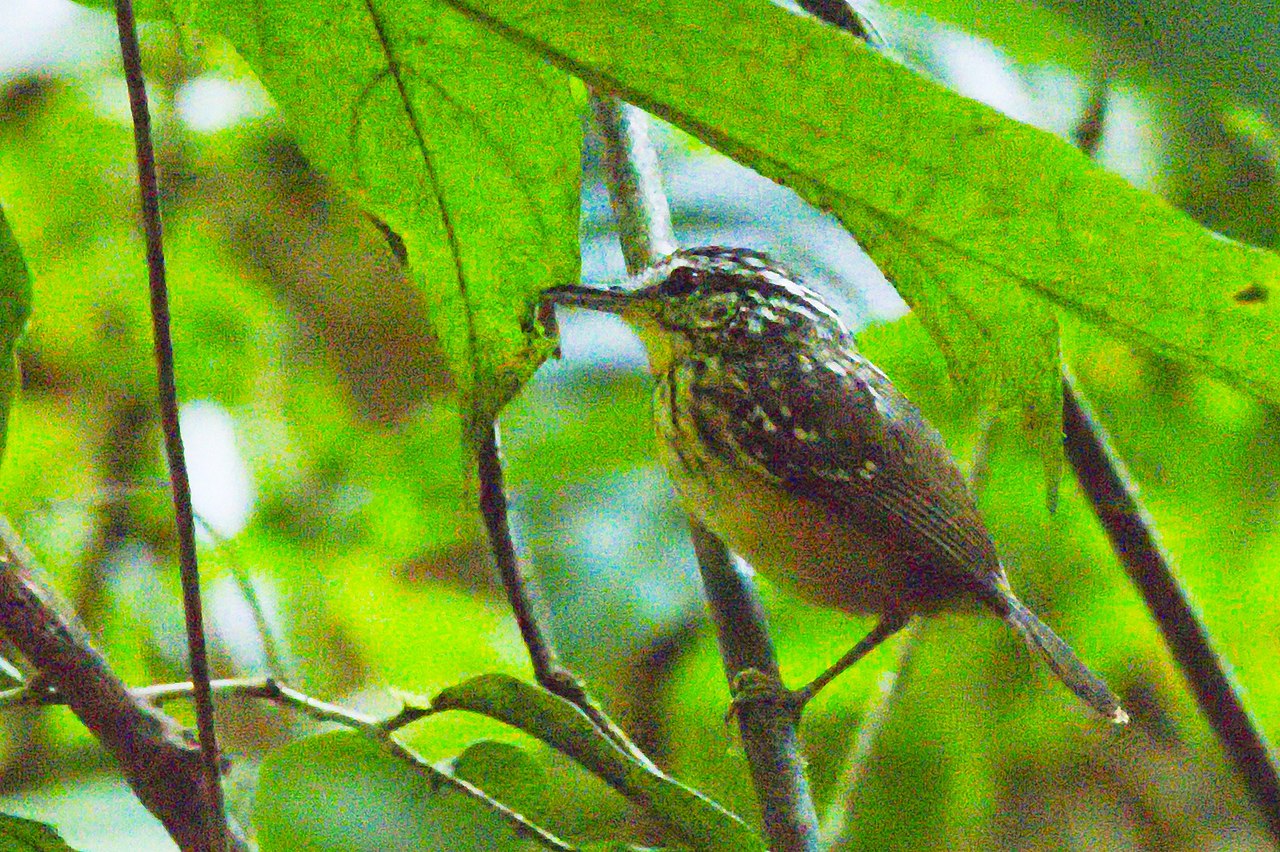
The Imeri warbling antbird or Imeri antwarbler, is a species of bird in subfamily Thamnophilinae of family Thamnophilidae, the "typical antbirds". It is found in Brazil, Colombia, and Venezuela.
Region
Northern Amazon Basin / Western Guiana Shield
Typical Environment
Occurs in the Imeri region spanning northwestern Brazil (upper Rio Negro), southern Venezuela, and southeastern Colombia. It inhabits humid lowland terra firme forest and white-sand (campinarana) forest with dense understory. Favours vine tangles, thickets, and edges near small streams or treefalls where cover is abundant. Present in both primary and lightly disturbed secondary forest when sufficient understory structure remains. Typically forages within a few meters of the ground.
Altitude Range
0–900 m
Climate Zone
Tropical
Ease of Keeping
Beginner friendly: 1/5
Part of the former Warbling Antbird complex, the Imeri warbling antbird was split based on vocal and plumage differences. It is a shy understory specialist that often travels in pairs and sometimes joins mixed-species flocks. Pairs frequently duet, and their clear whistled songs are key for identification in dense forest. It is closely associated with the Imeri region on the western Guiana Shield.


Temperament
skulking and territorial
Flight Pattern
short rapid wingbeats
Social Behavior
Usually found in pairs that maintain small territories year-round. Frequently accompanies mixed-species flocks through the understory but remains within dense cover. Builds a small, well-hidden cup nest low in vegetation; both parents participate in care.
Migratory Pattern
Resident
Song Description
A series of clear, whistled notes that may accelerate or rise in pitch, often delivered as antiphonal duets between mates. Calls include sharp chips and soft contact notes to keep pairs coordinated in dense foliage.
Plumage
Compact antbird with smooth, fine-textured plumage; male shows gray upperparts with a black mask and throat, clean buffy to yellowish underparts, and bold white wing bars. Female is browner above with buffy underparts and a reduced or absent black throat, retaining the white wing bars. Both sexes have plain tails and subtle rufous tones on the flanks.
Diet
Primarily takes small arthropods such as insects and spiders, gleaned from leaves, stems, and vine tangles. Makes short sallies to snatch prey flushed from foliage. Occasionally attends army-ant swarms to capture fleeing insects but is not an obligate follower.
Preferred Environment
Feeds in dense understory of terra firme and white-sand forests, typically 0.5–3 m above ground. Often forages along shady stream margins, treefall gaps, and thickets where prey is concentrated.