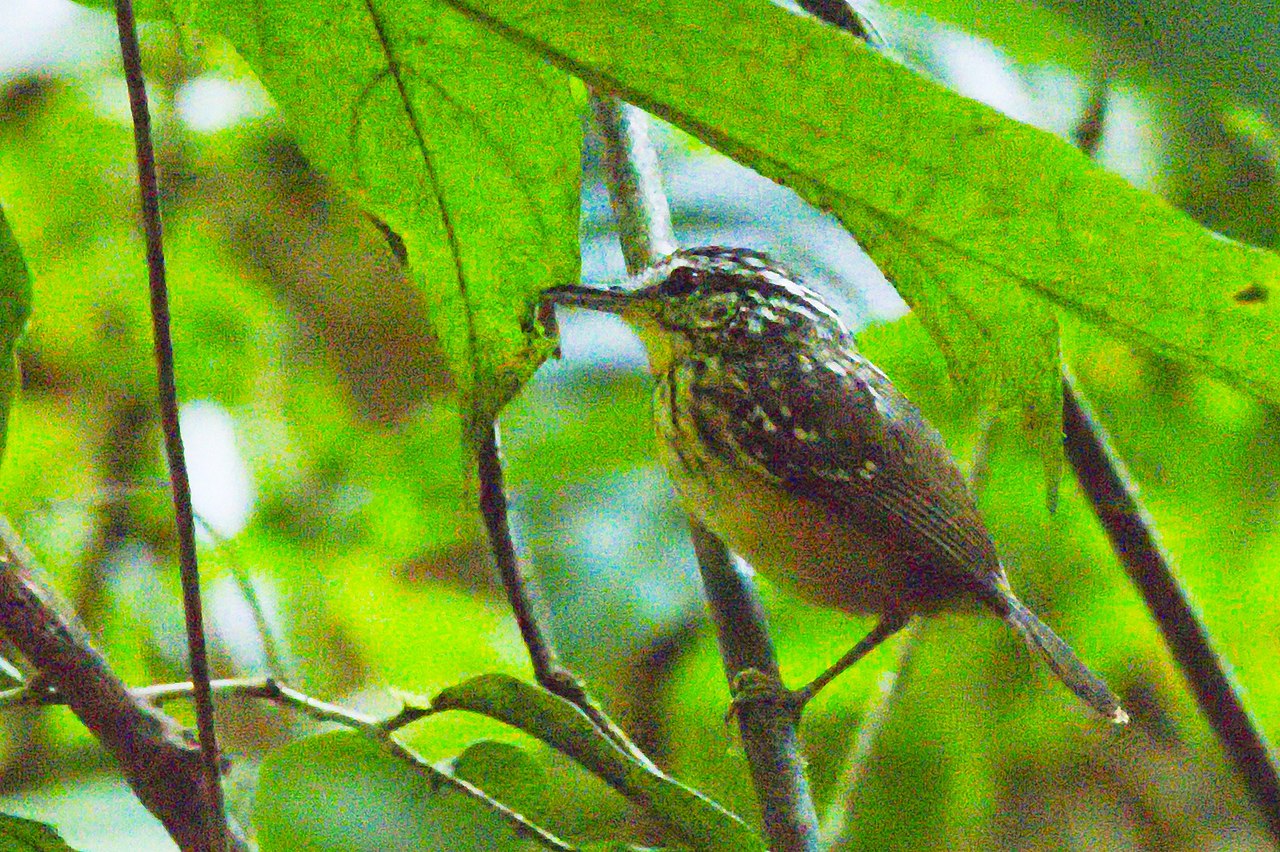
Ihering's antwren is a species of bird in subfamily Thamnophilinae of family Thamnophilidae, the "typical antbirds". It is found in Bolivia, Brazil, and Peru.
Region
Western Amazon Basin
Typical Environment
Occurs in the lowland rainforests of Bolivia, Brazil, and Peru, mainly within the western and southwestern Amazon Basin. It inhabits terra firme and seasonally flooded (várzea) forests, favoring dense understory and vine tangles. The species is most often found in the lower to mid-story, occasionally moving into the lower canopy. It also uses edges of mature forest and well-developed secondary growth. Local presence can be patchy, tracking suitable dense understory structure.
Altitude Range
Sea level to 800 m
Climate Zone
Tropical
Ease of Keeping
Beginner friendly: 1/5
Named for the naturalist Hermann von Ihering, Ihering's antwren is a small Amazonian antbird that forages nimbly through the lower to mid-forest layers. It frequently joins mixed-species flocks, which helps it find hidden arthropod prey. Though widespread in the western Amazon, it can be inconspicuous due to its quiet, high-pitched calls and restless movements.


Temperament
social and active
Flight Pattern
short rapid wingbeats
Social Behavior
Typically travels in pairs or small family groups and regularly joins mixed-species foraging flocks in the understory. Nests are small cups placed low in dense vegetation, and both parents participate in incubation and chick rearing. Territoriality is moderate and often relaxed when moving with mixed flocks.
Migratory Pattern
Resident
Song Description
Gives a thin, high-pitched series of notes that can sound insect-like and easily blends into forest background noise. Calls include short chips and soft trills delivered from the understory. Song is usually brief and repeated at intervals while foraging.
Plumage
Small antwren with neat, fine-textured plumage; typically shows clean, contrasting wingbars and subtle barring or mottling on the underparts depending on sex and age. Males tend toward grayish tones with dusky accents, while females are warmer brown to buff with paler underparts.
Diet
Primarily consumes small arthropods such as insects and spiders. It gleans prey from leaves, twigs, and vine tangles, and occasionally hover-gleans to pick items from suspended foliage. It may probe curled leaves and dead leaf clusters where insects hide. The species sometimes attends small army-ant activity but is not an obligate ant-follower.
Preferred Environment
Feeds in dense understory and lower mid-story of humid forest, especially in vine-rich patches and along forest edges or streamside thickets. Often forages while moving with mixed-species flocks, exploiting disturbed insects flushed by other birds.