

The horned lark or shore lark is a species of lark in the family Alaudidae found across the northern hemisphere. It is known as "horned lark" in North America and "shore lark" in Europe.
Region
Holarctic (Northern Hemisphere)
Typical Environment
This species occupies open, sparsely vegetated landscapes across North America, Europe, and Asia. It frequents tundra, alpine meadows, prairies, steppe, agricultural fields, coastal dunes, and semi-desert plains. Forested habitats are generally avoided in favor of bare ground or short vegetation where it can forage and nest. Many northern and high-altitude populations migrate south or downslope in winter, while others remain resident in milder areas.
Altitude Range
Sea level to 4500 m
Climate Zone
Temperate
Ease of Keeping
Beginner friendly: 1/5
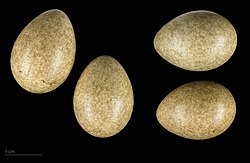
Horned larks are named for the tiny black feather tufts on the male’s head that resemble horns. Also called the shore lark in Europe, they thrive in wide-open habitats from beaches and fields to alpine tundra and deserts. They nest on the ground in shallow scrapes and rely on camouflage to avoid predators.



Temperament
wary on the ground but gregarious outside the breeding season
Flight Pattern
short rapid wingbeats with low, undulating flight; males perform fluttering song-flights
Social Behavior
Pairs form during the breeding season, with males displaying and singing in flight over territories. Nests are shallow ground scrapes lined with fine materials, often placed near a clump of vegetation or small stone for concealment. Outside breeding, birds gather in loose flocks that can number dozens to hundreds, especially in winter feeding areas.
Migratory Pattern
Partial migrant
Song Description
A high, tinkling series of thin, musical notes, often delivered in sustained song-flights. Calls include soft tsee and tink sounds used for contact within flocks and between mates.
Plumage
Sandy-brown upperparts with fine streaking, pale underparts, and a contrasting black breast band and facial mask. Males show small, erectable black feather 'horns' and brighter yellow on the face and throat; females are duller with reduced contrast.
Diet
Horned larks feed primarily on seeds and small grains from grasses and weeds outside the breeding season. During spring and summer they take more invertebrates, including beetles, caterpillars, ants, and spiders, which provide protein for growing chicks. They pick food from bare ground and low vegetation, often moving in small groups across open terrain.
Preferred Environment
They forage on sparsely vegetated ground such as stubble fields, overgrazed pastures, shorelines, airfields, and alpine flats. Patches of bare soil, gravel, or short turf are favored for ease of movement and visibility. In winter they often concentrate along plowed fields and windswept ridges where snow cover is minimal.


