
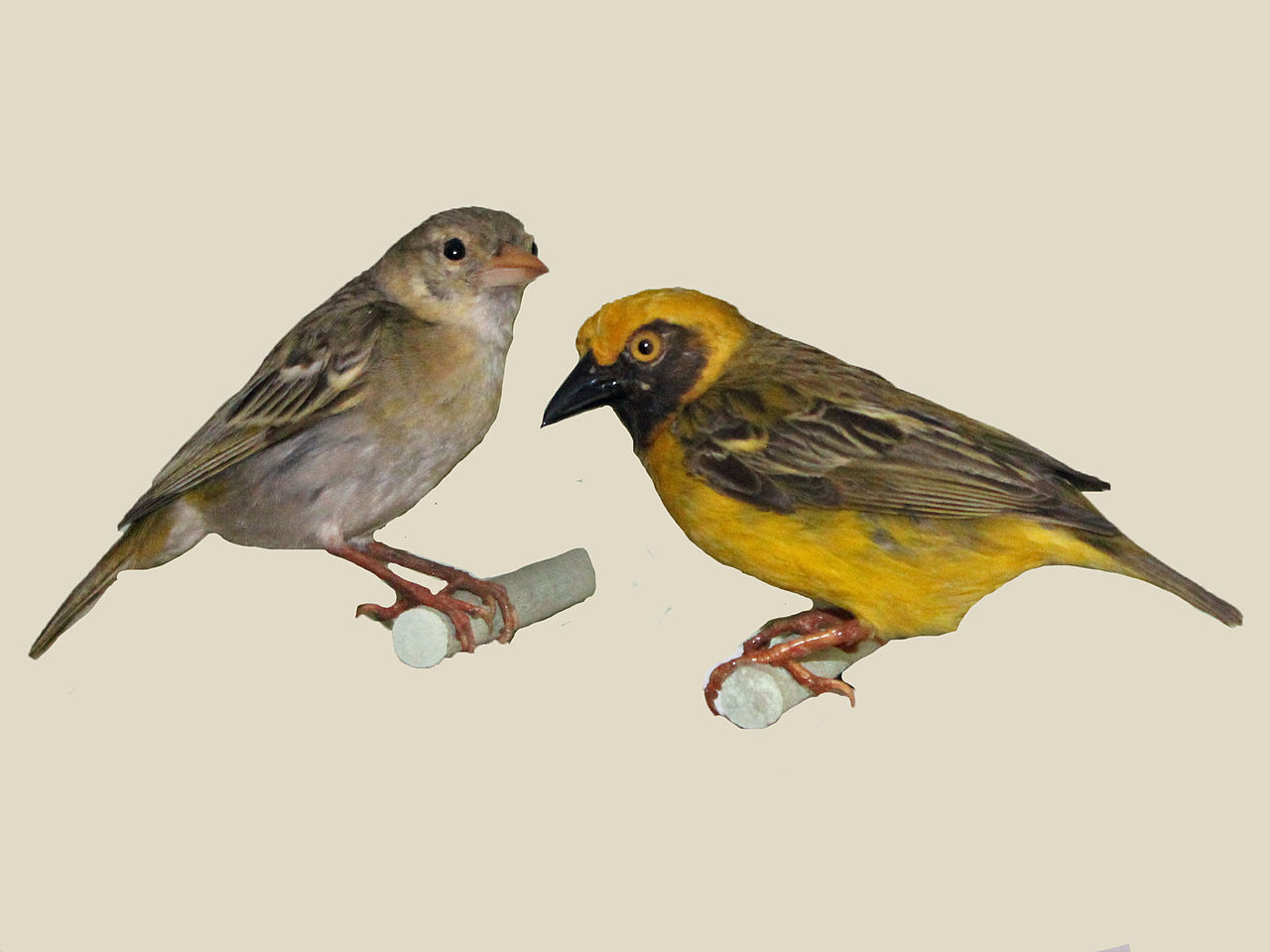
Heuglin's masked weaver is a species of bird in the weaver family, Ploceidae. It is found in Senegal, Gambia and Mali to Ivory Coast and east to Uganda and western Kenya.
Region
Sahel and Sudanian savannas of West to East Africa
Typical Environment
Occurs from Senegal, Gambia, and Mali east through Ivory Coast and across the savanna belt to Uganda and western Kenya. It favors open woodland, wooded savanna, riparian thickets, and edges of wetlands. Frequently found near villages, cultivation, and in parks where suitable nesting trees occur. Breeds in colonies near water, including along rivers, lakes, and dams.
Altitude Range
Sea level to 2000 m
Climate Zone
Tropical
Ease of Keeping
Beginner friendly: 2/5
Heuglin's masked weaver is a colonial breeder whose males weave intricate, hanging nests from strips of grass and palm leaves, often over water. Males display near their nests with wing fluttering and rapid chatter to attract females and may mate with multiple partners. The species readily exploits human-modified landscapes, including gardens and farmland. It can be locally abundant where suitable trees and reeds are available.

Temperament
social and active
Flight Pattern
short rapid wingbeats
Social Behavior
Highly colonial during the breeding season, with males constructing multiple woven nests suspended from branches or reeds, often over water. Polygynous mating is common, and females inspect and line selected nests. Nests are defended vigorously against rivals and predators.
Migratory Pattern
Resident
Song Description
A busy series of harsh chatters, sharp chups, and sizzling trills delivered from near the nest. Males vocalize persistently during display flights and while hanging beneath the nest.
Plumage
Breeding males show bright yellow underparts with an extensive black facial mask and throat, and olive to yellow-olive, streaked upperparts. Females and non-breeding males are duller, with olive-brown upperparts, faint streaking, and paler yellowish underparts. The plumage is sleek with a contrasting mask that is diagnostic among weavers in its range.
Diet
Takes a mix of grass seeds, grains, and a variety of insects such as beetles, caterpillars, and termites, especially during the breeding season. Also consumes flower nectar and small fruits on occasion. Nestlings are fed predominantly soft-bodied insects to meet protein needs.
Preferred Environment
Forages in grassy savannas, along bushy riverbanks, and around farmland and villages. Gleans from seed heads, low shrubs, and the ground, and may join mixed-species flocks outside the breeding season.


