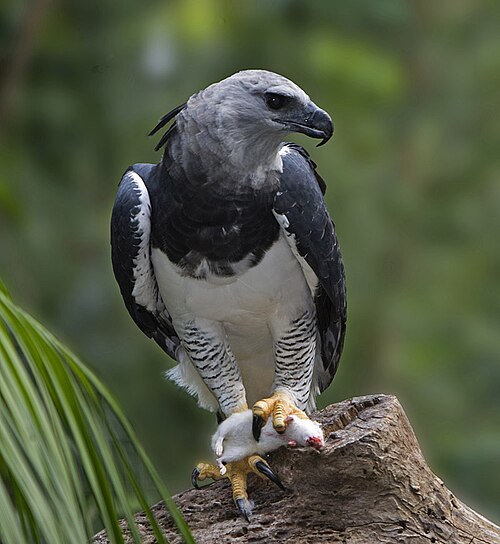
The harlequin antbird is a species of bird in subfamily Thamnophilinae of family Thamnophilidae, the "typical antbirds". It is endemic to Brazil.
Region
Amazon Basin
Typical Environment
Occurs in lowland terra firme rainforest of the central Brazilian Amazon, favoring mature, undisturbed forest with dense understory. It keeps close to the forest floor and mid-understory, tracking columns of army ants through shadowy gullies and ridges. It avoids open edges and heavily degraded habitats. Protected forest tracts and continuous canopy are important for its persistence.
Altitude Range
Sea level to 600 m
Climate Zone
Tropical
Ease of Keeping
Beginner friendly: 1/5
The harlequin antbird is an obligate army-ant follower, snatching insects and other arthropods that fleeing swarms flush from the leaf litter. Males and females look markedly different, giving rise to the 'harlequin' name due to the male’s striking patterning. It keeps to dense understory, making it more often heard than seen. Habitat loss in the Brazilian Amazon is its primary threat.


Temperament
secretive and territorial
Flight Pattern
short rapid wingbeats
Social Behavior
Usually found in pairs or small family groups within a home range, closely attending army-ant swarms. Pairs maintain territories and communicate with duet-like calls. Nesting is thought to be a simple cup placed low in dense vegetation, with biparental care typical of antbirds.
Migratory Pattern
Resident
Song Description
A series of sharp, piping whistles that accelerate slightly, often delivered as a duet. It also gives dry scolds and chatter around ant swarms.
Plumage
Male shows bold contrasting patterning with dark base color and pale spotting/barring; female is more uniformly warm rufous to cinnamon with subtler markings. Both have dense, sleek body feathers suited to moving through understory.
Diet
Primarily small arthropods such as beetles, spiders, cockroaches, and orthopterans taken from the ground and low vegetation. It captures prey flushed by army ants, occasionally taking small vertebrates if available. Foraging is mostly by quick hops and short sallies to the leaf litter.
Preferred Environment
Follows active columns of army ants within intact understory, especially in shaded, humid forest interiors. Avoids open areas and selectively logged tracts where ant swarms are less frequent or cover is sparse.