

The grey grasswren is a passerine bird in the Australasian wren family, Maluridae. It is found on arid inland floodplains of Australia where it is endemic. The grey grasswren is a rarely seen elusive bird that was first sighted in 1921 but not taxonomically described until 1968. Its greyish coloration and very long tail distinguish it from all other grasswrens. While some recent research has been conducted, there still remain many gaps in the knowledge about the ecology of this cryptic bird.
Region
Arid inland Australia
Typical Environment
Occurs patchily on inland floodplains and channel networks where dense lignum (Muehlenbeckia florulenta), canegrass, and chenopod shrublands dominate. It favors tangled, flood-influenced vegetation along dry or ephemeral creeks and lake margins. After major rains, birds may expand into freshly vegetated areas; during dry periods they retreat to residual thickets. The species avoids open ground, keeping close to low, dense cover.
Altitude Range
50–300 m
Climate Zone
Arid
Ease of Keeping
Beginner friendly: 1/5
An elusive, ground-dwelling grasswren of Australia’s arid floodplains, first seen in 1921 but not formally described until 1968. It keeps to dense lignum and canegrass where it runs mouse-like rather than flying. Its long, graduated tail and fine grey streaking set it apart from other grasswrens. Populations can fluctuate with flooding and drought, and the species remains poorly studied due to its cryptic habits.

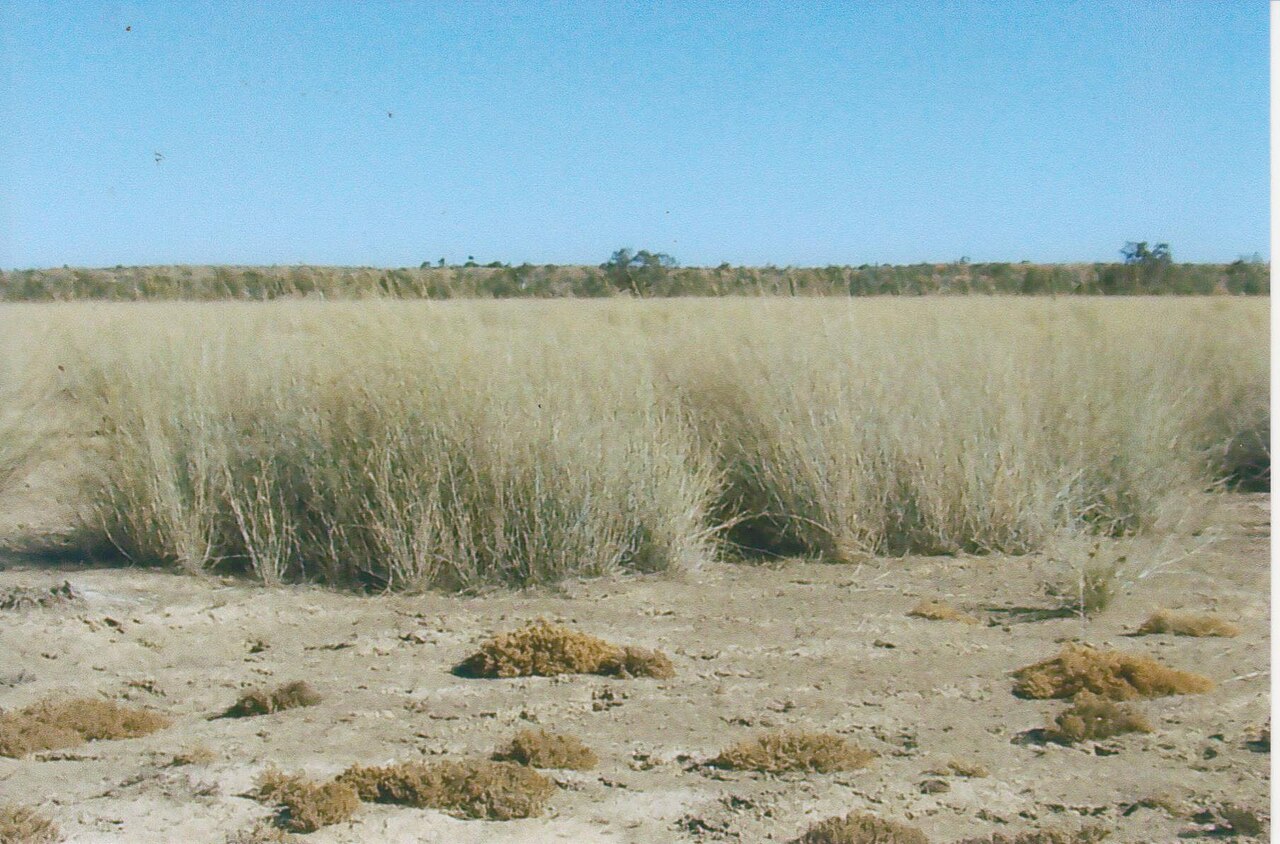
Grey grasswren habitat
Temperament
secretive and skulking
Flight Pattern
short rapid wingbeats, low and direct between patches of cover
Social Behavior
Usually seen in pairs or small family groups that maintain territories in dense shrubs. Nests are well hidden low in vegetation, with both adults involved in care. Breeding often coincides with periods following rainfall when resources increase.
Migratory Pattern
Resident
Song Description
Song is a thin, tinkling series of high-pitched trills and whistles delivered from within cover. Calls include soft ticking notes and sharper scolds when disturbed.
Plumage
Fine grey to grey-brown streaking over upperparts with paler underparts and buffy flanks; texture soft and close with a notably long, graduated tail.
Diet
Primarily takes small arthropods such as beetles, ants, spiders, and caterpillars gleaned from low shrubs and ground litter. It occasionally supplements its diet with small seeds, especially in drier periods. Foraging is methodical, moving mouse-like through dense cover and probing into litter and twiggy tangles.
Preferred Environment
Feeds within dense lignum, canegrass, and chenopod shrubs along flood channels, lake margins, and swales. Rarely ventures into open areas, preferring continuous low cover.


