
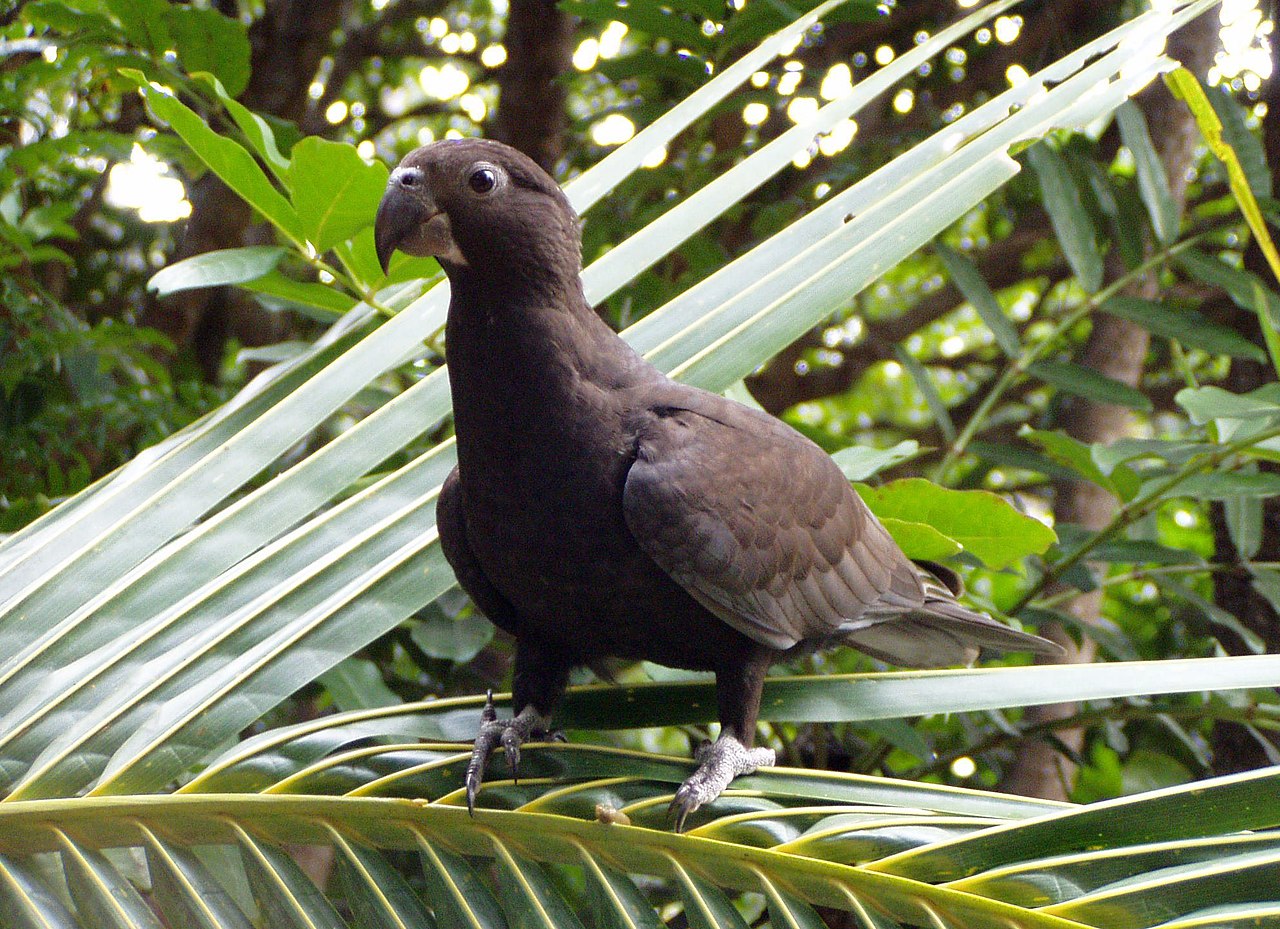
The greater vasa parrot is one of two species of vasa parrot, the other being the lesser vasa parrot. The greater vasa parrot can be found throughout Madagascar and the Comoros.
Region
Southwest Indian Ocean islands (Madagascar and Comoros)
Typical Environment
Occurs widely across Madagascar and the Comoros, inhabiting humid rainforests, dry deciduous forests, and transitional woodlands. It is common along forest edges, in secondary growth, and frequents plantations and agroforestry mosaics. The species tolerates habitat disturbance and may be seen near villages and cultivated areas. It uses mangroves and coastal scrub locally and forages at fruiting trees across a variety of habitats.
Altitude Range
Sea level to 1500 m
Climate Zone
Tropical
Ease of Keeping
Beginner friendly: 2/5
The greater vasa parrot is one of two vasa parrots, the other being the lesser vasa parrot. Unusually for parrots, females may shed head feathers in the breeding season and the bill can turn yellow. They have a slender, long-necked silhouette and are highly adaptable, using both intact forests and human-modified landscapes.


Temperament
alert and social
Flight Pattern
strong flier with direct flight and occasional glides
Social Behavior
Outside the breeding season it often gathers in small flocks and uses communal roosts. Breeding is typically in tree cavities, with pairs or small groups around suitable nest sites. The species shows unusual breeding traits among parrots, including female-dominant behavior during courtship. Nesting is timed to local food availability.
Migratory Pattern
Resident
Song Description
Vocalizations are varied but generally harsh, including croaks, grating calls, and squeaky notes. Contact calls carry well over the canopy, while softer chatter is used at close range around roosts and nest sites.
Plumage
Overall sooty to brownish-black plumage with a slight sheen; plumage can appear paler brown when worn. During breeding, females may show bare patches on the head and a lighter overall tone. Feathers are sleek, giving a slender, long-necked look.
Diet
Feeds on a wide range of fruits, seeds, and nuts, including figs and other native tree fruits. It also takes buds, flowers, and occasionally nectar. Opportunistically, it may consume insects and other invertebrates, especially during the breeding season. It will visit cultivated crops and fruiting trees near settlements.
Preferred Environment
Most foraging occurs in the mid to upper canopy at fruiting or seeding trees. Along edges and in secondary growth it exploits pioneer species and plantation trees. It may descend to lower strata or the ground to pick fallen fruit when available.


