

The greater prairie-chicken or pinnated grouse, sometimes called a boomer, is a large bird in the grouse family. This North American species was once abundant but has become extremely rare or extirpated over much of its range due to habitat loss, natural disasters, and overhunting. Conservation measures are underway to ensure the sustainability of existing small populations. One of the most famous aspects of these creatures is the mating ritual called booming.
Region
Central North America (Great Plains and Midwest)
Typical Environment
Occurs in remnant and restored tallgrass and mixed-grass prairies from parts of Kansas, Nebraska, South Dakota, and North Dakota to Minnesota, Wisconsin, Iowa, Illinois, and Colorado, with reintroduced and isolated populations in some states. Historically ranged farther east into the Great Lakes and Atlantic coastal plains, where it has been extirpated. Prefers large, contiguous grasslands with a mosaic of grasses and forbs, minimal woody cover, and nearby open sites for lekking. Cropland edges and native rangeland are used when cover and food are available.
Altitude Range
Sea level to 1800 m
Climate Zone
Continental
Ease of Keeping
Beginner friendly: 1/5
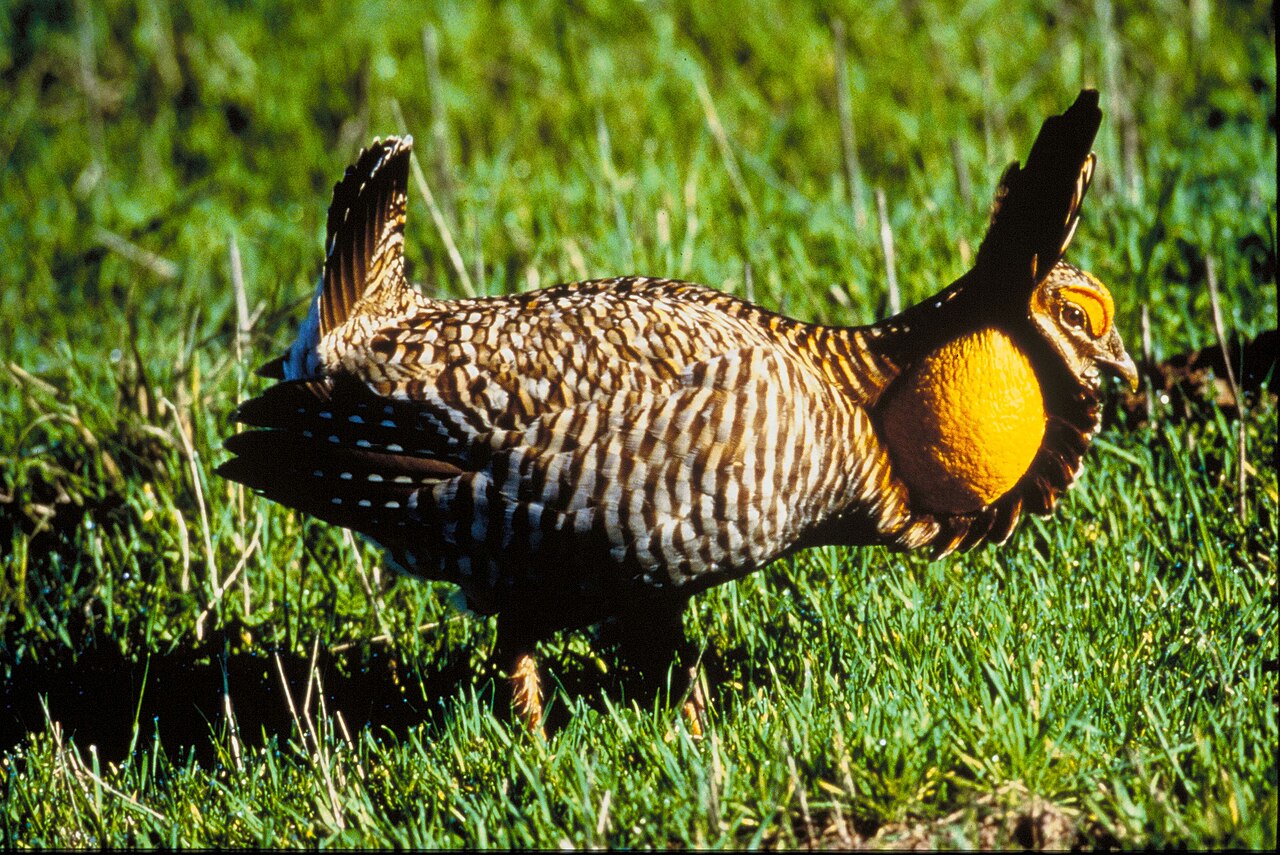
Famous for its spring lek displays, males inflate bright orange neck sacs and produce low, resonant 'booming' calls while raising long neck feathers (pinnae). The species depends on large, open prairies with diverse grasses and forbs; loss and fragmentation of this habitat have driven major declines. It is considered an indicator of healthy tallgrass prairie ecosystems, and conservation includes prairie restoration, controlled burns, and woody encroachment removal.


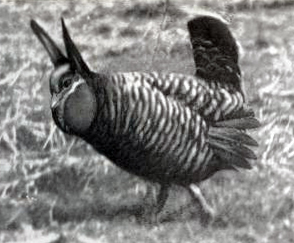


Tetrao cupido drawn by T. W. Wood for second edition of Darwin's The Descent of Man, 1874
Temperament
wary and alert; males highly competitive on leks
Flight Pattern
short rapid wingbeats with brief glides
Social Behavior
Forms traditional leks in spring where males display and compete for mates; mating system is strongly polygynous. Nests are shallow ground scrapes in dense grass; only the female incubates and rears chicks. Outside breeding, birds often form small flocks, especially in winter.
Migratory Pattern
Resident
Song Description
Males produce deep, resonant ‘booming’ notes that carry over long distances, accompanied by cackles, coos, and foot-stomping. Alarm calls are sharp clucks and cackles; females give soft clucks to chicks.
Plumage
Boldly barred brown, buff, and black with a short, rounded tail; males have elongated neck 'pinnae' feathers.
Diet
Eats seeds, leaves, buds, and waste grain, complemented by insects such as grasshoppers and beetles. Chicks rely heavily on protein-rich insects during the first weeks. In winter it shifts to buds, seeds, and agricultural grains when available, while in summer it consumes more green plant material and invertebrates.
Preferred Environment
Forages on the ground in native prairie, lightly grazed rangeland, and agricultural field margins with nearby cover. Uses areas with diverse forbs for insect availability and taller grasses for escape and roosting.


