

The greater rhea is a species of flightless bird native to eastern South America. Other names for the greater rhea include the grey, common, or American rhea; ema (Portuguese); or ñandú. One of two species in the genus Rhea, in the family Rheidae, it inhabits a variety of open areas, such as grasslands, savanna or grassy wetlands. Weighing 20–27 kilograms (44–60 lb), the greater rhea is the largest native bird in the Americas. In the wild, the greater rhea has a life expectancy of 10.5 years. It is also notable for its reproductive habits, and for the fact that a population has established itself in Northern Germany in recent years. The species is listed as Near Threatened by the IUCN.
Region
Eastern South America
Typical Environment
Occurs across open landscapes of Argentina, Bolivia, Brazil, Paraguay, and Uruguay, especially the Pampas, Cerrado, and Pantanal. It favors grasslands, savannas, shrubby steppe, and seasonally flooded wetlands, and readily forages in agricultural fields. The species avoids dense forests but uses tall grasses and low shrubs for cover and nesting. Introduced populations exist locally outside its native range, including northern Germany.
Altitude Range
Sea level to 1500 m
Climate Zone
Subtropical
Ease of Keeping
Beginner friendly: 2/5
The greater rhea is the largest native bird in the Americas and is flightless but a powerful runner, capable of speeds around 60 km/h. Males build the nest, incubate large clutches contributed by multiple females, and rear the chicks alone. A self-sustaining introduced population has established in northern Germany. They can adapt to agricultural landscapes, which sometimes brings them into conflict with farmers.




Greater rhea, closeup, Cricket St Thomas Wildlife Park (Somerset, England)

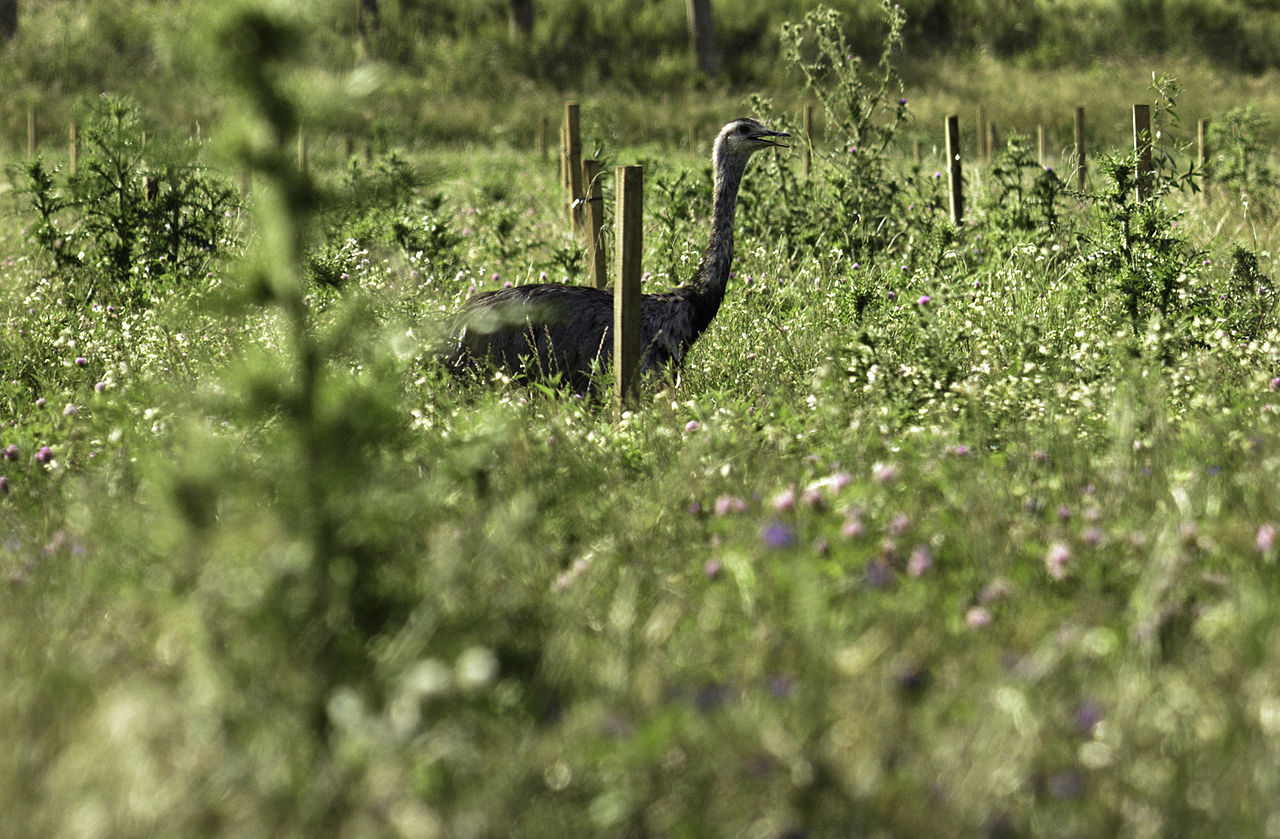
Wild greater rhea (probably R. a. albescens) in habitat, Goya Department, Corrientes Province, Argentina

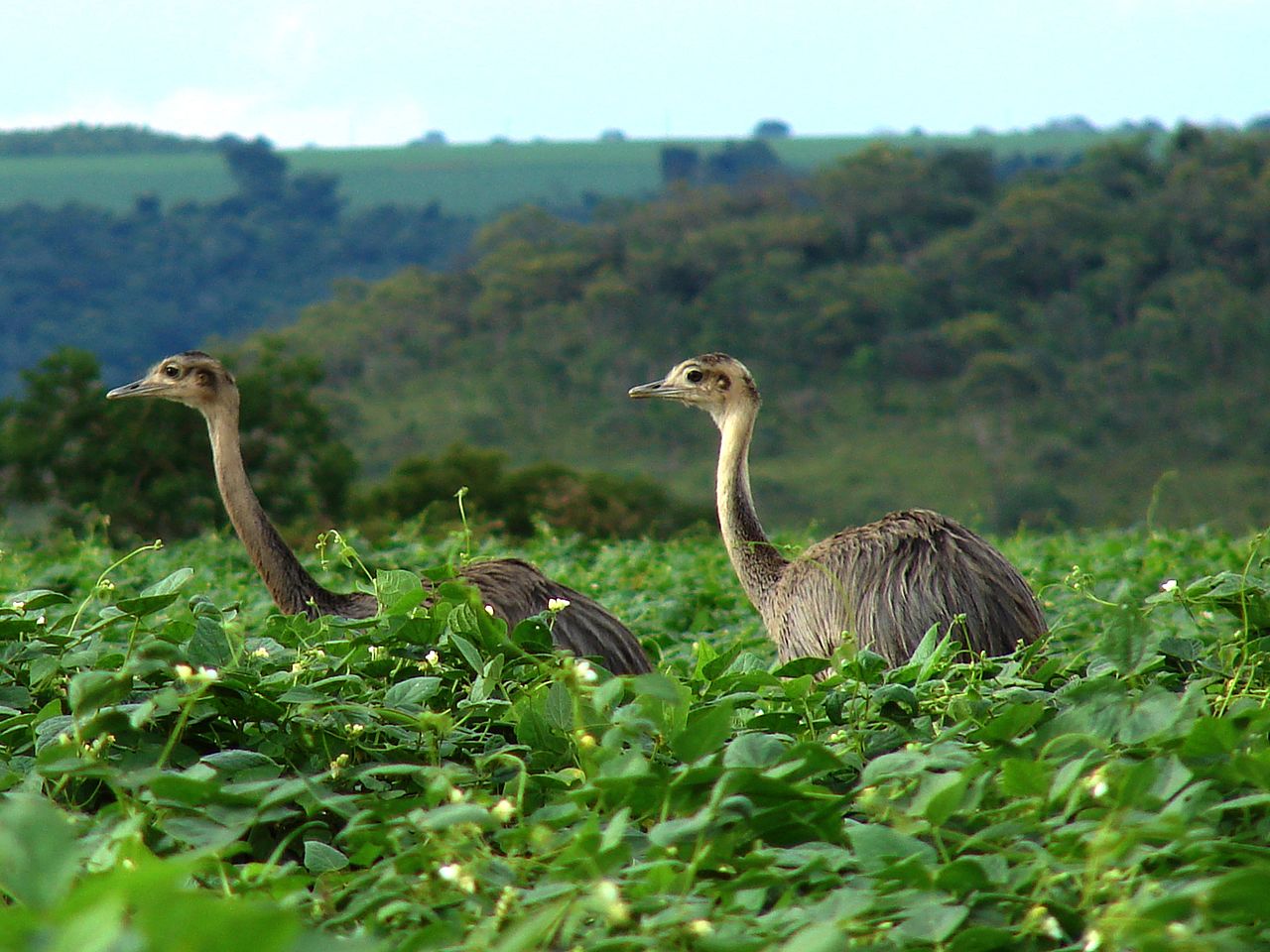
Feral greater rhea in cereal field in Mecklenburg-Vorpommern, Germany. The species normally uses such monocultures to hide rather than to feed on the plants.

Egg, Collection Museum Wiesbaden, Germany

Two-month-old greater rhea in Tierpark Hagenbeck with hatchling at its feet

A flock in Lenschow, Mecklenburg-Vorpommern

Rhea feet next to human hands
Temperament
wary but social
Flight Pattern
flightless; powerful runner using wings for balance
Social Behavior
Outside the breeding season they form loose flocks that roam widely in open country. During breeding, males establish territories, build ground nests, and attract multiple females whose eggs they incubate. The male alone guards and leads the brood after hatching.
Migratory Pattern
Resident
Song Description
Generally quiet, but males produce deep booming calls during the breeding season to advertise and defend territories. Both sexes can hiss or grunt when alarmed or threatened.
Plumage
Shaggy, loose feathers with a mottled grey-brown appearance and paler underparts; lacks true tail feathers.
Diet
Primarily consumes green vegetation, grasses, leaves, and seeds. Also takes fruits and agricultural crops when available. Supplements the diet with insects, small vertebrates, and other invertebrates, making it an opportunistic omnivore. Swallows small pebbles to aid in grinding plant matter in the gizzard.
Preferred Environment
Feeds in open grasslands, pastures, and croplands, often at field edges and along wetland margins. Forages by walking steadily and picking items from the ground and low vegetation.


