

The great frigatebird is a large seabird in the frigatebird family. There are major nesting populations in the tropical Pacific Ocean, such as Hawaii and the Galápagos Islands; in the Indian Ocean, colonies can be found in the Seychelles and Mauritius, and there is a tiny population in the South Atlantic, mostly on and around St. Helena and Boatswain Bird Island.
Region
Tropical Indo-Pacific and South Atlantic
Typical Environment
Breeds on remote tropical islands across the Pacific (e.g., Hawaii, Galápagos), Indian Ocean (Seychelles, Mauritius), and a small presence in the South Atlantic (St. Helena area). Outside the breeding season, birds roam widely over warm oceanic waters. They favor pelagic zones with convergence lines and upwellings that concentrate prey at the surface. Nesting colonies are typically on low coral islands or vegetated islets with shrubs or trees for perching.
Altitude Range
Sea level to 2500 m
Climate Zone
Tropical
Ease of Keeping
Beginner friendly: 1/5
Male great frigatebirds inflate a striking red throat pouch during courtship displays, drumming it to attract females. They are master aerialists that can soar for days and rarely land on the water because their feathers are not well waterproofed. They often steal prey from other seabirds (kleptoparasitism) and snatch fish and squid from the ocean surface.


Male, showing feathers on gular sac

Chick, Genovesa Island, Ecuador

An immature great frigatebird performing a surface snatch on a sooty tern chick dropped by another bird

Male collecting twigs for the nest
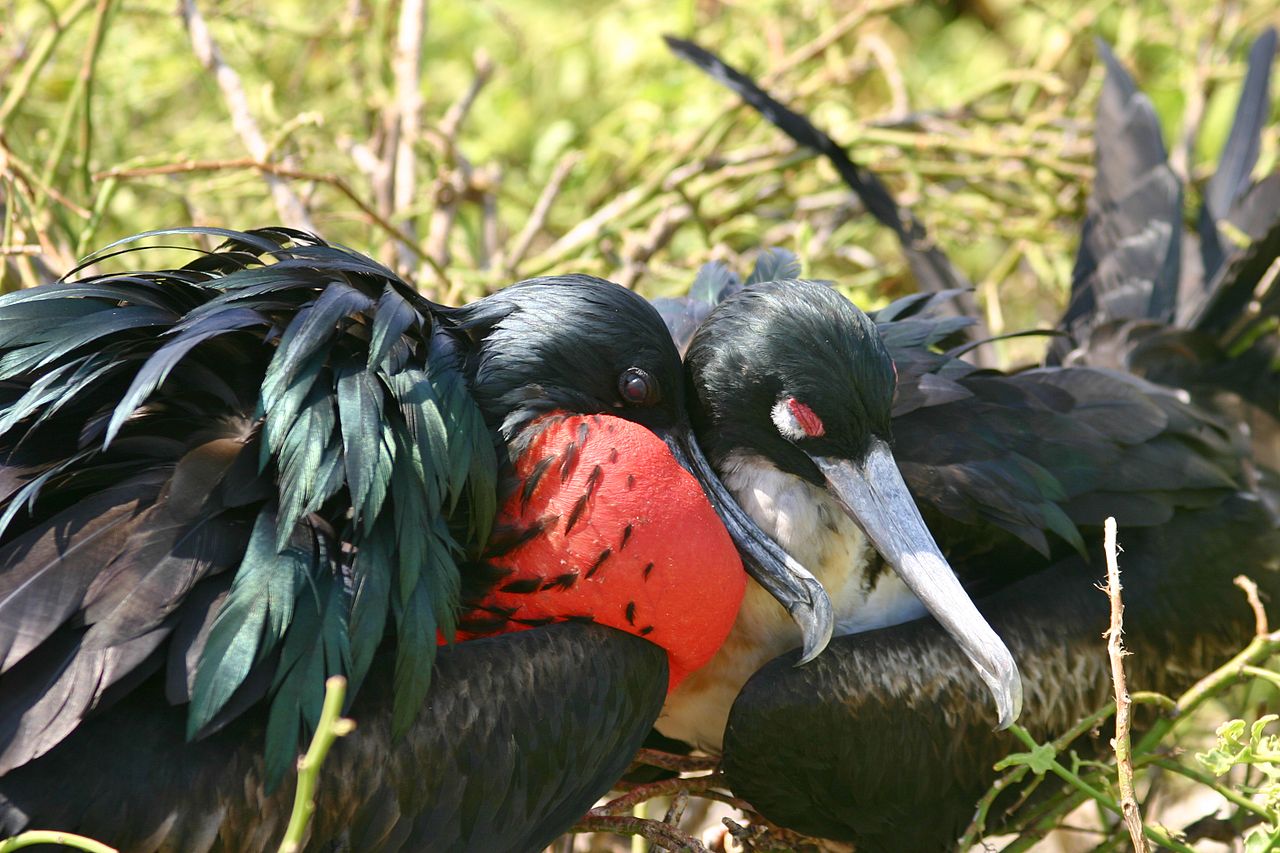
Breeding pair

Chick begging from female parent

Fregata minor - MHNT


Temperament
social and active, assertive around food sources
Flight Pattern
soaring glider with effortless, buoyant flight
Social Behavior
Strongly colonial breeder on remote islands, nesting in trees, shrubs, or low vegetation. Males display by inflating the red throat pouch and calling to passing females; pairs raise a single chick with prolonged parental care lasting many months. They may roost communally and gather over productive waters.
Migratory Pattern
Partial migrant
Song Description
Vocalizations include rattles, drumming sounds produced with the gular pouch, and clacking of bills during displays. Generally quiet at sea, becoming more vocal at colonies during courtship and nesting.
Plumage
Glossy black to black-brown plumage with long, narrow wings and a deeply forked tail; females show extensive white on the breast and lower neck.
Diet
Consumes flying fish, squid, and other small pelagic prey taken from the surface, often captured on the wing. Frequently engages in kleptoparasitism, harassing boobies and terns to force them to drop or regurgitate prey. Will also take offal and occasionally turtle hatchlings or seabird chicks near colonies.
Preferred Environment
Feeds over warm, open ocean, especially along current fronts, slicks, and areas of upwelling where prey is concentrated. Often associates with schools of tuna or dolphins that drive prey to the surface.


