

The great crested grebe is a member of the grebe family of water birds. The bird is characterised by its distinctive appearance, featuring striking black, orange-brown, and white plumage, and elaborate courtship display that involves synchronised dances and displays.
Region
Eurasia and Africa
Typical Environment
The great crested grebe occupies large freshwater lakes, reservoirs, gravel pits, and slow-flowing rivers with ample open water and fringe vegetation. It breeds widely across temperate Europe and Asia, with resident and wintering populations extending into North Africa and parts of sub-Saharan Africa. Many northern breeders move to ice-free lowland waters or sheltered coastal bays in winter. Outside the breeding season it can be found on estuaries and inshore seas, especially where waters are calm. It avoids very small ponds and prefers areas that allow long underwater pursuit dives.
Altitude Range
0–2500 m
Climate Zone
Temperate
Ease of Keeping
Beginner friendly: 1/5
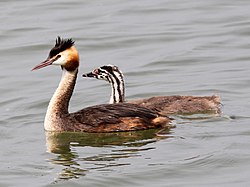
Famed for its elaborate 'weed dance,' pairs rise breast-to-breast while presenting aquatic plants during courtship. They build floating nests anchored in emergent vegetation, and parents often carry striped chicks on their backs. Once heavily persecuted for their ornate breeding plumage, conservation measures helped populations recover in parts of Europe.






A great crested grebe head in the coat of arms of Kauvatsa, Finland



Temperament
solitary and territorial
Flight Pattern
rapid wingbeats, low over water; capable of sustained migratory flights
Social Behavior
Breeding pairs defend territories vigorously on lakes and marshes. Courtship involves synchronized displays, head-shaking, and the iconic weed dance. They build floating nests among reeds, and both adults incubate and later carry chicks on their backs for warmth and protection.
Migratory Pattern
Partial migrant
Song Description
Vocalizations include loud rolling barks and grating trills, often heard during courtship and territorial disputes. Calls carry over water and can sound like harsh 'kraah' or 'krrr' notes, interspersed with growls and chatter.
Plumage
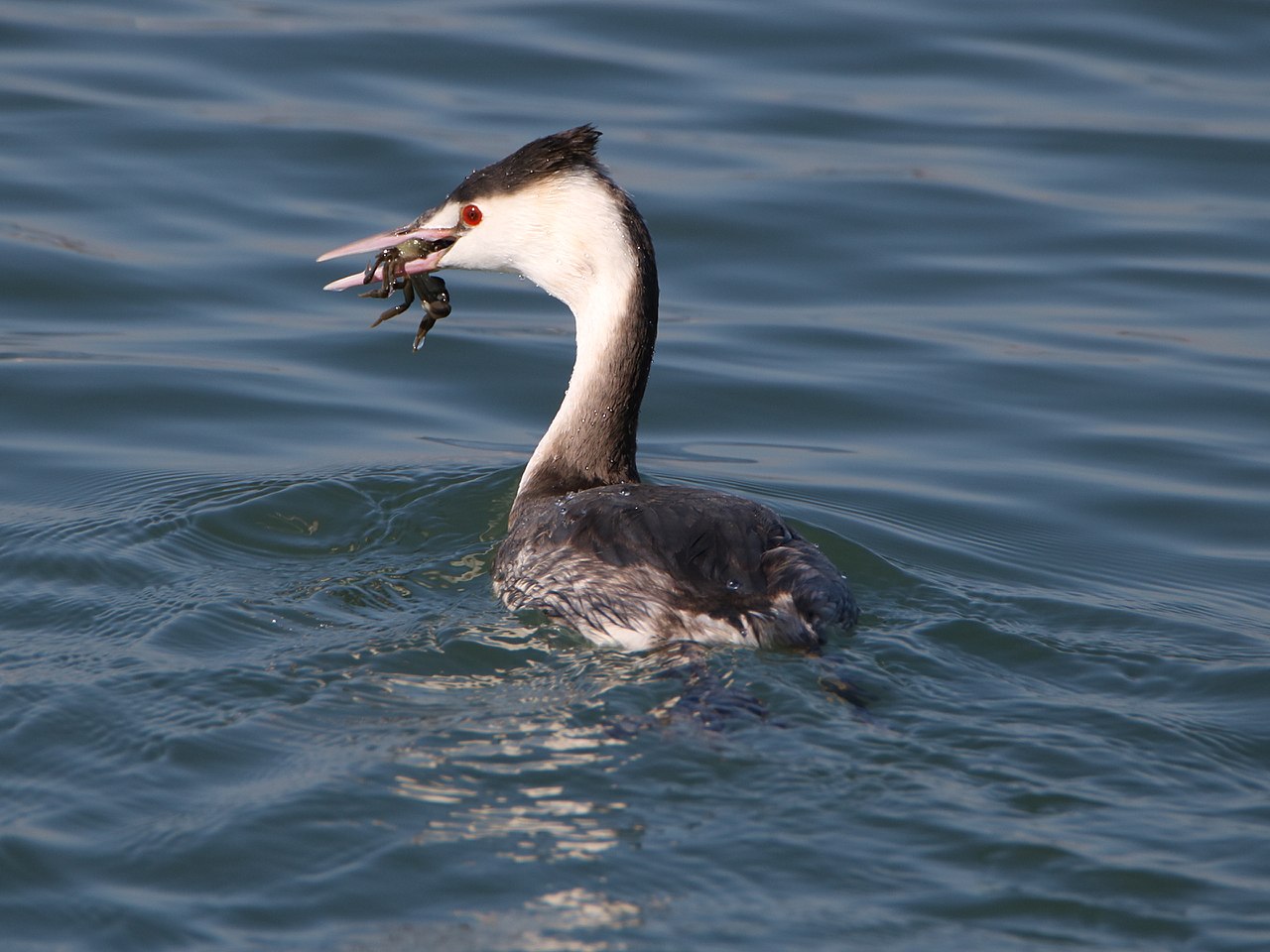
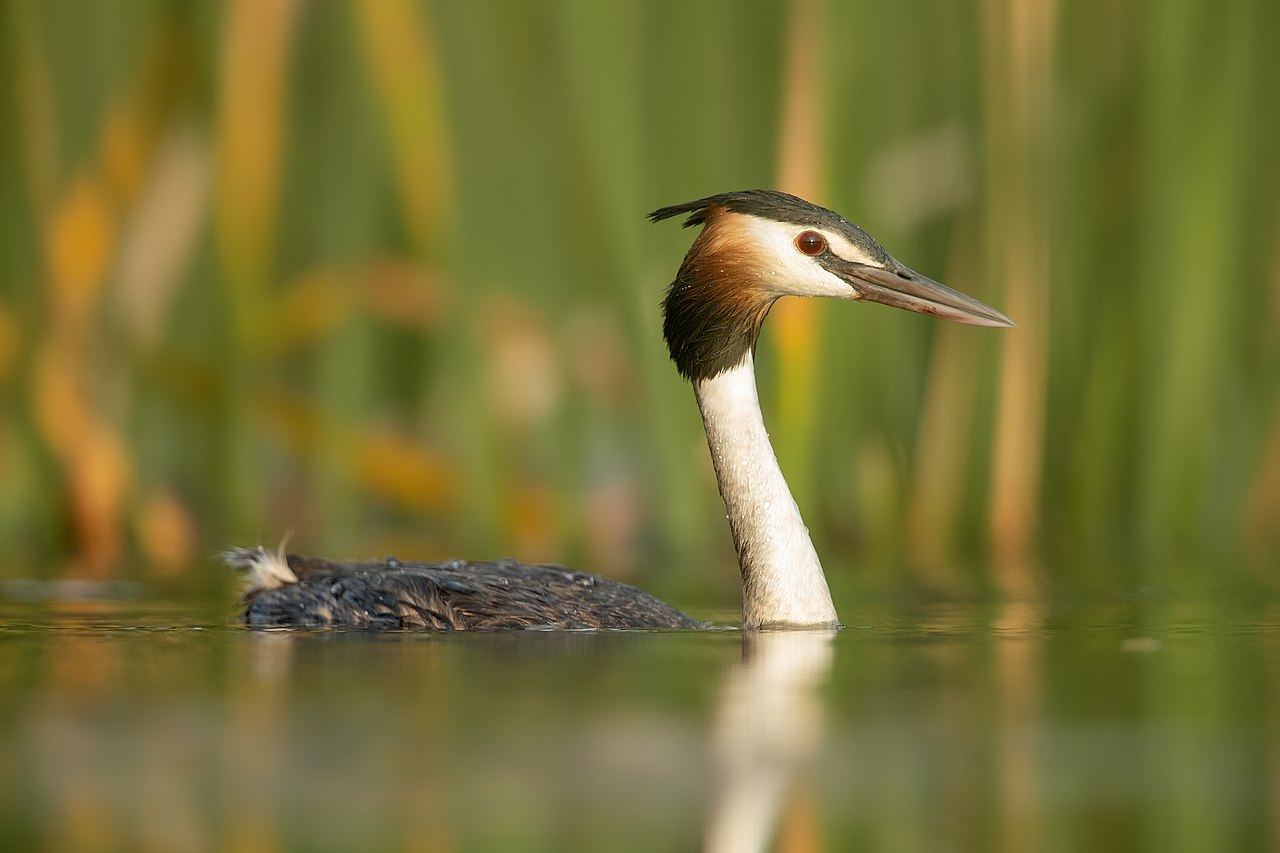
Sleek waterbird with long neck, silky white throat and underparts, and dark brown-grey upperparts. In breeding plumage shows a dramatic black double crest and chestnut ruff; nonbreeding birds are plainer with a whitish face and reduced head plumes. Feathers lie tight to the body, aiding streamlined diving.
Diet
Primarily feeds on small to medium fish, which it captures by pursuit diving. It also takes aquatic insects, crustaceans, and occasionally amphibians. Chicks are initially fed small invertebrates before transitioning to fish as they grow. Prey is swallowed whole, often head-first.
Preferred Environment
Forages on open water near vegetated margins that provide cover and access to fish-rich zones. It dives from a low, buoyant posture and can stay submerged for extended chases, surfacing quietly at a distance.


