

The golden eagle is a bird of prey living in the Northern Hemisphere. It is the most widely distributed species of eagle. Like all eagles, it belongs to the family Accipitridae. They are one of the best-known birds of prey in the Northern Hemisphere. These birds are dark brown, with lighter golden-brown plumage on their napes. Immature eagles of this species typically have white on the tail and often have white markings on the wings. Golden eagles use their agility and speed combined with powerful feet and large, sharp talons to hunt a variety of prey, mainly hares, rabbits, and marmots and other ground squirrels.
Region
Holarctic
Typical Environment
Found across North America, Europe, North Africa, and much of temperate Asia. Prefers open or semi-open landscapes including mountains, plateaus, steppe, shrublands, and tundra edges. Often nests on cliffs but will also use large trees or human-made structures where suitable. Avoids dense forests and heavily urbanized areas, favoring broad vistas for hunting.
Altitude Range
Sea level to 4000 m
Climate Zone
Temperate
Ease of Keeping
Beginner friendly: 1/5
The golden eagle is one of the most widely distributed eagles, ranging across much of the Northern Hemisphere. It is renowned for powerful flight, keen eyesight, and formidable talons used to subdue medium-sized mammals. Pairs often remain together for years and reuse massive stick nests on cliffs or tall trees. It is a cultural icon in many regions and is legally protected in numerous countries.


Wintering eagle of the nominate subspecies in Finland

A captive Aquila chrysaetos canadensis shows the typical rusty coloration of the subspecies.

Aquila chrysaetos homeyeri – MHNT

The foot and talons of a golden eagle

Subadult, showing white in tail and dark neck
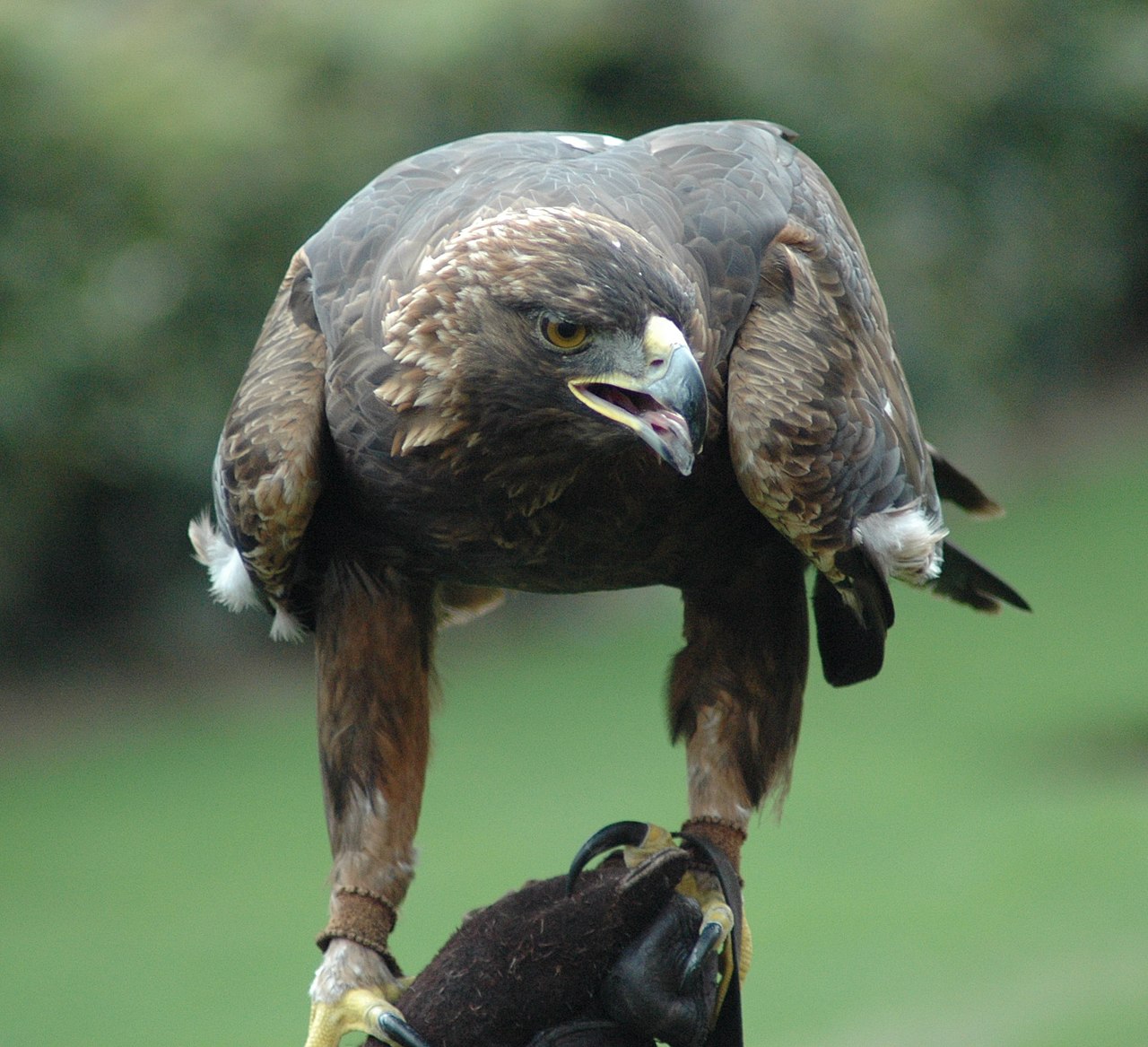
Captive adult of the North American subspecies Aquila chrysaetos canadensis
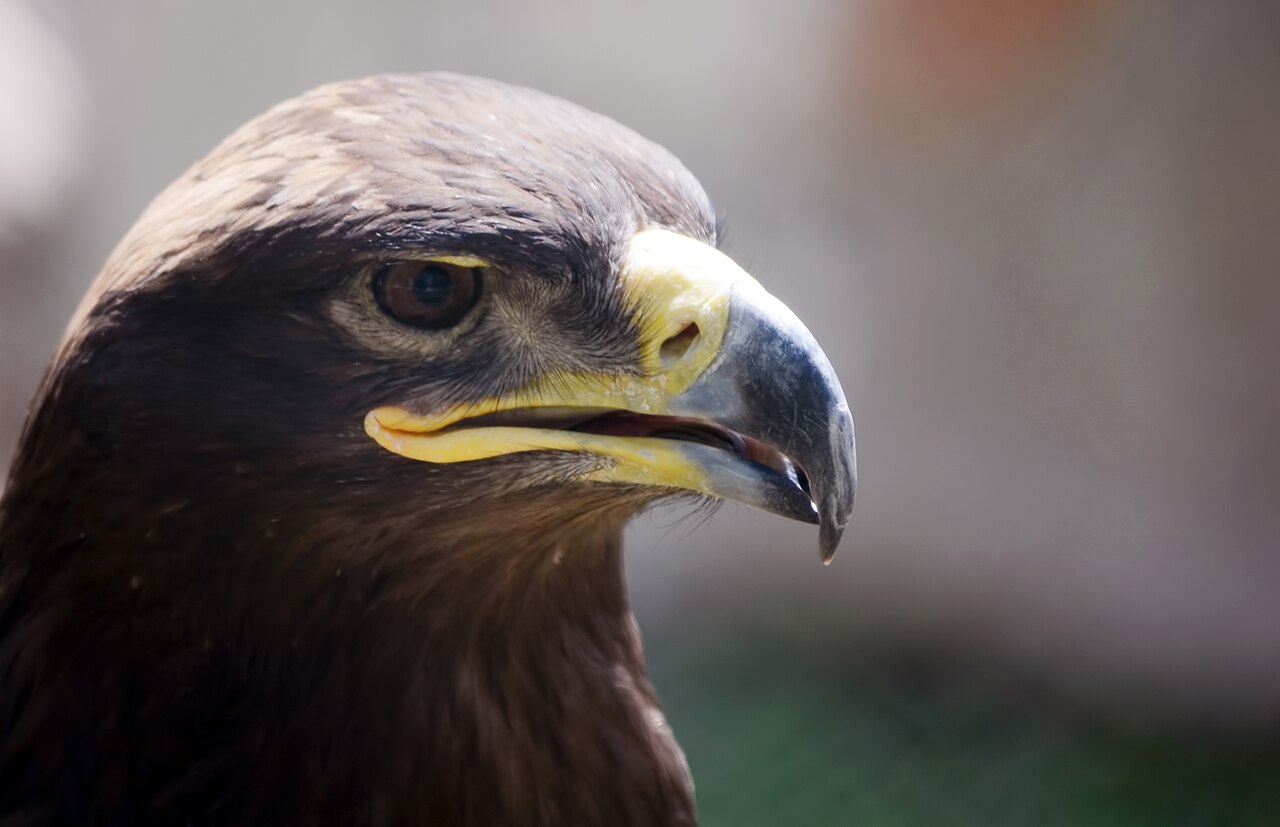
Golden eagles are often silent.

In flight

Golden eagle flying in dihedral with food

Golden eagles are readily distinguished by their brown plumage, paler than most other Aquila, and pale nape patch.

Beinn Mhor on the Isle of Mull, Scotland is typical golden eagle habitat: rugged and mountainous.

An adult flying above Himalayan mountains from Shingba Rhododendron Sanctuary in Sikkim, India

Portrait of a golden eagle near the Alps

In Spain, golden eagles such as this one in the Province of Ávila are sedentary.

Two golden eagles in an aerial conflict over their home ranges, the upper bird clearly a juvenile.

Eyrie (in hollow at left center) in the Valley of the Siagne de la Pare, Alpes-Maritimes, France

Aquila chrysaetos - MHNT

1870s illustration of burkut falconers in Kazakhstan

Unofficial banner of the Roman Empire featuring the Senatus Populusque Romanus, as well as the golden eagle.

In flight in Czech Republic
Temperament
solitary and territorial
Flight Pattern
soaring glider
Social Behavior
Typically forms long-term monogamous pairs that maintain large territories. Nests are large stick platforms placed on cliffs or tall structures; pairs often reuse and add to them annually. Clutches usually contain 1–3 eggs, and siblicide can occur when food is scarce.
Migratory Pattern
Partial migrant
Song Description
Generally quiet, giving high, thin whistles and yelps, most often near nests or during territorial displays. Vocalizations are less resonant than those of many smaller raptors and are used primarily in pair communication.
Plumage
Dark brown overall with a golden-buff nape and hindneck; fully feathered legs. Juveniles show white patches at the wing bases and a broad white tail base with a dark terminal band.
Diet
Primarily hunts medium-sized mammals such as hares, rabbits, marmots, and ground squirrels. Also takes birds, reptiles, and carrion when available. Capable of tackling foxes and young ungulates on occasion, especially where small mammals are scarce. Hunts using soaring flight and surprise stoops or contour-following approaches.
Preferred Environment
Favors open terrain with updrafts and thermals such as mountain slopes, ridgelines, and broad valleys. Often hunts over grasslands, alpine meadows, and shrub-steppe from elevated perches or while soaring.


