

The glaucous gull is a large gull, the second-largest gull in the world. The genus name is from Latin larus, which appears to have referred to a gull or other large seabird. The specific name hyperboreus is Latin for "northern" from the Ancient Greek Huperboreoi people from the far north "Glaucous" is from Latin glaucus and denotes the grey colour of the gull. An older English name for this species is burgomaster.
Region
Circumpolar Arctic and subarctic coasts
Typical Environment
Breeds along Arctic coasts and islands across North America, Greenland, Iceland, and northern Eurasia. In winter it disperses south along the North Atlantic and North Pacific coasts, regularly reaching the British Isles, the North Sea, northeastern North America, and the northern United States, with some reaching East Asia. It frequents coastal cliffs, rocky shorelines, tundra edges, harbors, estuaries, and refuse sites. Inland occurrences happen along large lakes, river systems, and reservoirs during migration or winter.
Altitude Range
Sea level to 500 m
Climate Zone
Polar
Ease of Keeping
Beginner friendly: 1/5
The glaucous gull is the second-largest gull in the world and is notable for its pale plumage and white, unmarked wingtips. It breeds in the high Arctic and often scavenges around fishing vessels and coastal settlements. Adults have a yellow bill with a red gonys spot, while first-winter birds show a pink bill with a dark tip. It is a bold, opportunistic feeder that can also prey on eggs and chicks of other seabirds.


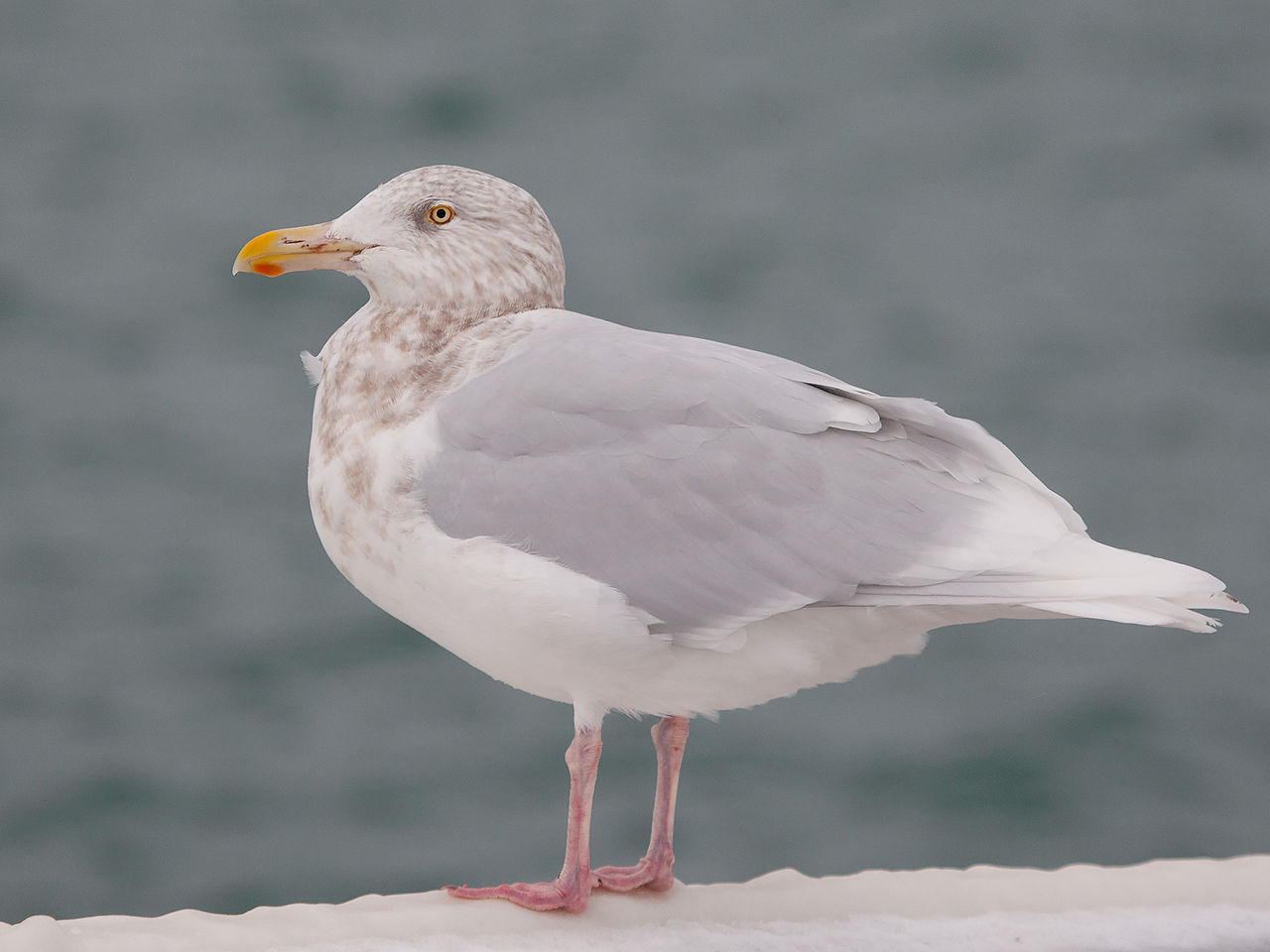
Adult plumage

Immature plumage


Temperament
opportunistic and bold
Flight Pattern
strong flier with steady wingbeats and soaring glides
Social Behavior
Breeds colonially or in loose groups on cliffs, islands, and flat tundra, often near other seabirds. Pairs are generally monogamous and defend territories around the nest. Outside the breeding season it gathers in flocks at rich food sources such as fishing ports and refuse dumps, and engages in kleptoparasitism.
Migratory Pattern
Seasonal migrant
Song Description
Vocalizations are loud and harsh, with repeated laughing and barking notes typical of large gulls. Calls include a resonant kaw-kaw series and a long call used in displays.
Plumage
Adult shows a pale gray mantle with white head, underparts, and unmarked white wingtips; immatures are uniformly pale biscuit-buff to light brown with fine mottling.
Diet
Takes fish, marine invertebrates, carrion, offal, and human refuse. It readily scavenges around fishing vessels and coastal settlements. It also preys on eggs and chicks of seabirds, small mammals, and occasionally other birds, and may steal food from conspecifics or other species.
Preferred Environment
Feeds along shorelines, intertidal flats, harbor fronts, and at sea near trawlers. Also forages at landfills, fish-processing sites, and around coastal colonies during breeding.


