

The freckled duck is a waterfowl species endemic to Australia. The freckled duck has also been referred to as the monkey duck or oatmeal duck. These birds are usually present in mainland Australia, but disperse to coastal and subcostal wetlands in the dry period. During such times it is common for the freckled duck population to congregate in flocks in the same area, giving the impression that they are more common than they really are.
Region
Australia
Typical Environment
Occurs widely across mainland Australia, with core numbers in the interior floodplains and large wetland systems. It favors extensive temporary freshwater lakes and swamps that fill after heavy rains and river flooding. In dry periods, birds disperse broadly and often shift to coastal and subcoastal wetlands, reservoirs, and estuaries. It uses dense emergent vegetation such as lignum and paperbark margins for cover and nesting. Movements are largely nomadic and track water availability rather than fixed seasonal routes.
Altitude Range
Sea level to 1000 m
Climate Zone
Temperate
Ease of Keeping
Beginner friendly: 1/5
The freckled duck is the sole member of its genus (Stictonetta), making it a distinctive Australian waterfowl. Breeding males develop a conspicuous red patch at the base of the bill. It congregates in large flocks on coastal or subcoastal wetlands during inland droughts, which can create the impression of abundance. Despite these irruptions, it depends heavily on the boom‑and‑bust cycles of Australia’s floodplain wetlands.
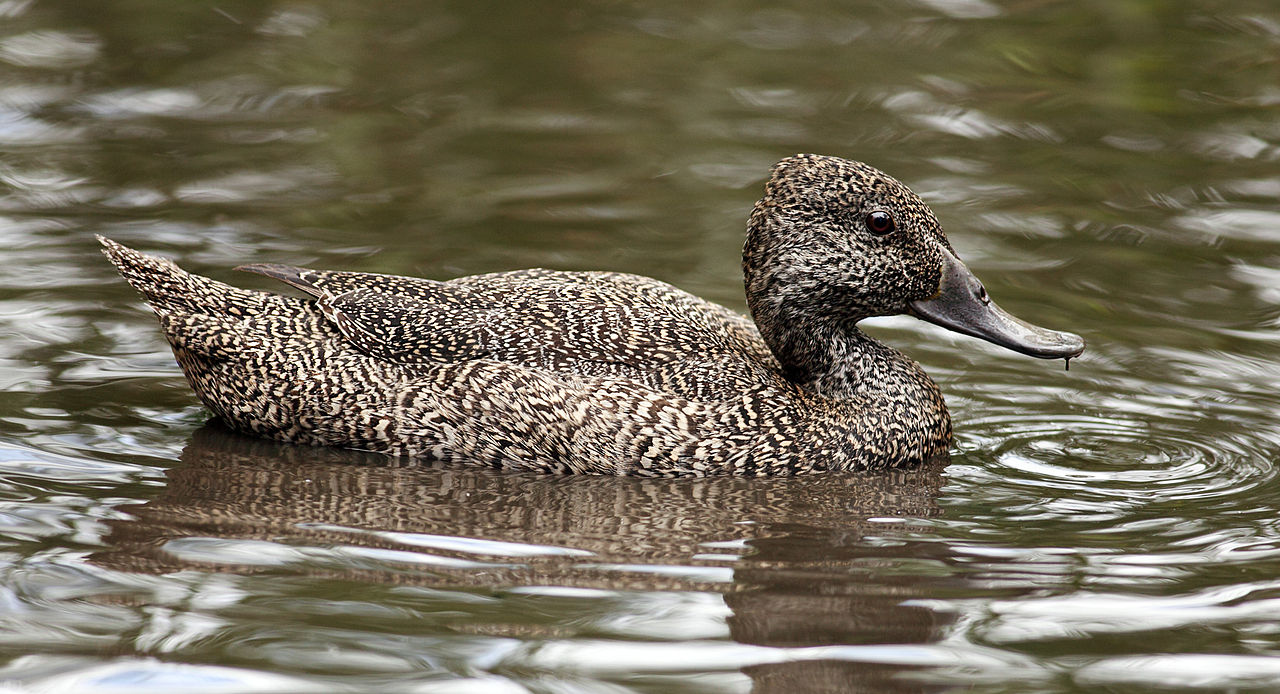


Female at Sylvan Heights Waterfowl Park in Scotland Neck, North Carolina

Illustration from The Birds of Australia (1890) (with Pacific black duck)

Chick at Sylvan Heights Waterfowl Park in Scotland Neck, North Carolina
Temperament
shy and wary
Flight Pattern
direct flight with rapid wingbeats
Social Behavior
Outside the breeding season it often forms sizable flocks, especially when concentrating on remaining water bodies. Pairs form for breeding, and nests are placed low in dense vegetation over or near water. Clutches are moderate to large, and birds may nest semi-colonially where suitable cover is abundant. When wetlands dry, groups disperse widely to locate new feeding and roosting sites.
Migratory Pattern
Partial migrant
Song Description
Generally quiet; males give soft wheezy whistles, particularly in courtship. Females produce low quacks and grunts, with most vocalizations heard at close range.
Plumage
Densely freckled dark brown to grey-brown plumage with fine pale speckling across the body and wings, giving a mottled appearance.
Diet
Feeds on seeds and vegetative parts of aquatic plants, including sedges, grasses, and algae. It also takes small aquatic invertebrates such as insect larvae, crustaceans, and mollusks, especially when plant foods are scarce. Forages by dabbling and upending, filtering water through lamellae along the bill edges.
Preferred Environment
Shallow, vegetated freshwater wetlands, floodplain swamps, and temporary lakes formed after floods. In dry times, it shifts to reservoirs, sewage ponds, estuaries, and sheltered coastal lagoons, often feeding along quiet margins.


