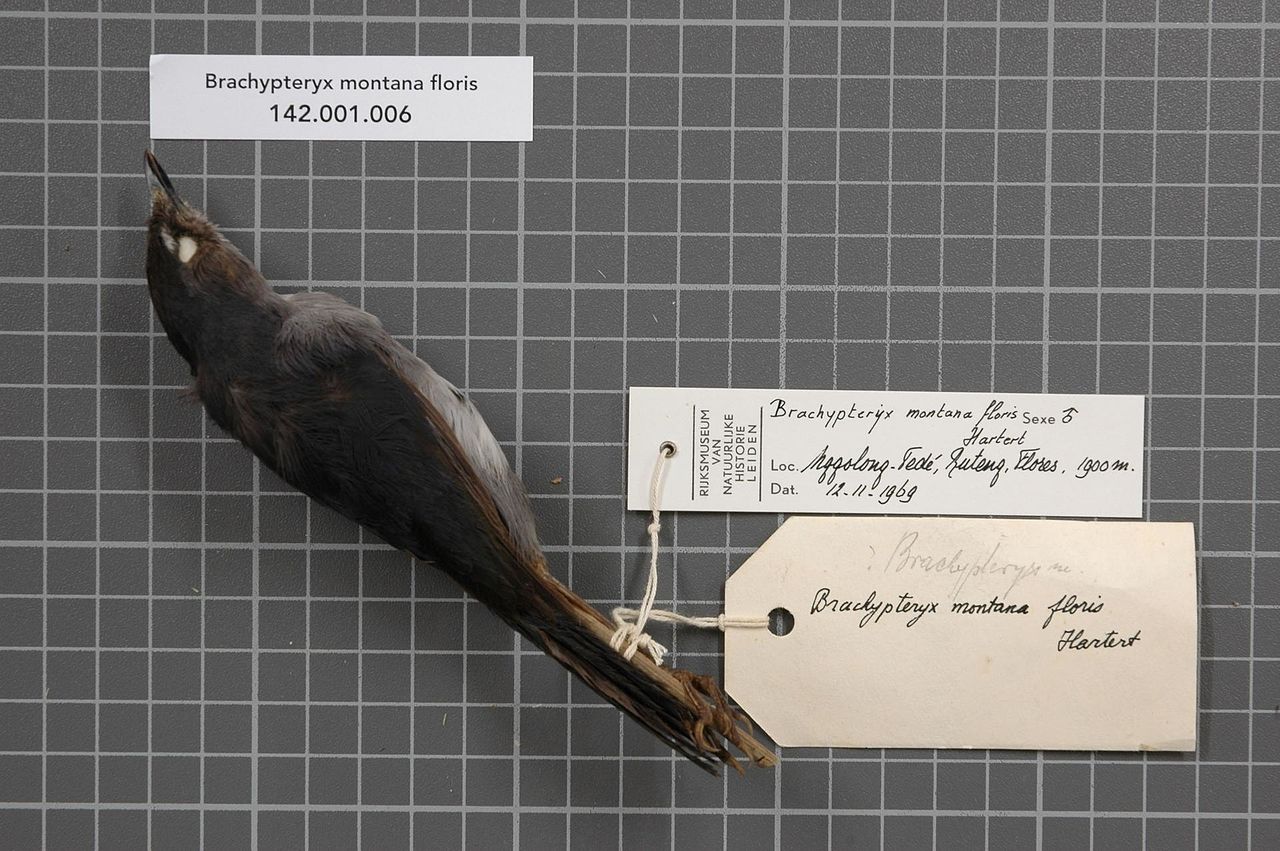
The Flores leaf warbler is a species of Old World warbler in the family Phylloscopidae. It is found on Flores island. It was formerly considered to be conspecific with the Timor leaf warbler.
Region
Lesser Sunda Islands
Typical Environment
Endemic to the island of Flores, where it inhabits forested hills and mountains. It uses primary and secondary evergreen forest, forest edges, and montane mossy habitats, and may venture into shrubby clearings and wooded ravines. The species forages from the understory to mid-canopy, frequently along trails and ridgelines. It is often encountered in mixed-species flocks with other small insectivores. Local density can be high in intact forest but drops in heavily degraded areas.
Altitude Range
unknown
Climate Zone
Tropical
Ease of Keeping
Beginner friendly: 1/5
The Flores leaf warbler is a small, active Old World warbler restricted to the island of Flores in Indonesia. It was formerly treated as conspecific with the Timor leaf warbler but is now recognized as a distinct species based on vocal and genetic differences. It often joins mixed-species flocks and is most easily detected by its sharp, high-pitched calls. Like many leaf warblers, it forages by gleaning tiny prey from foliage.
Temperament
social and active
Flight Pattern
short rapid wingbeats
Social Behavior
Usually found singly or in pairs during the breeding season, becoming more gregarious in mixed-species flocks at other times. Nests are likely cup-shaped and placed low to mid-level in dense vegetation, consistent with congeners. Both parents typically attend to the young.
Migratory Pattern
Resident
Song Description
A quick series of high, thin whistles and trills, delivered in short phrases. Calls include sharp, piercing contact notes that carry through forest understory. Song pace and pitch can vary between individuals.
Plumage
Greenish-olive upperparts with yellowish to pale buff underparts and a clean, well-defined supercilium. Wings are dusky with faint pale edging and sometimes a subtle wingbar. Overall appearance is neat and finely textured, typical of Phylloscopus warblers.
Diet
Feeds primarily on small insects and other arthropods, including caterpillars, beetles, and spiders. It gleans prey from leaves and twigs and occasionally makes short sallies to catch flying insects. Fine bill and agile movements aid in extracting tiny prey from foliage. It may probe into leaf clusters and buds, especially during peak insect emergence.
Preferred Environment
Forages in forest understory and midstory, along edges, and in second growth adjacent to mature forest. Frequently accompanies mixed flocks along forest trails and ridges. Uses shaded, humid microhabitats where small arthropods are abundant.