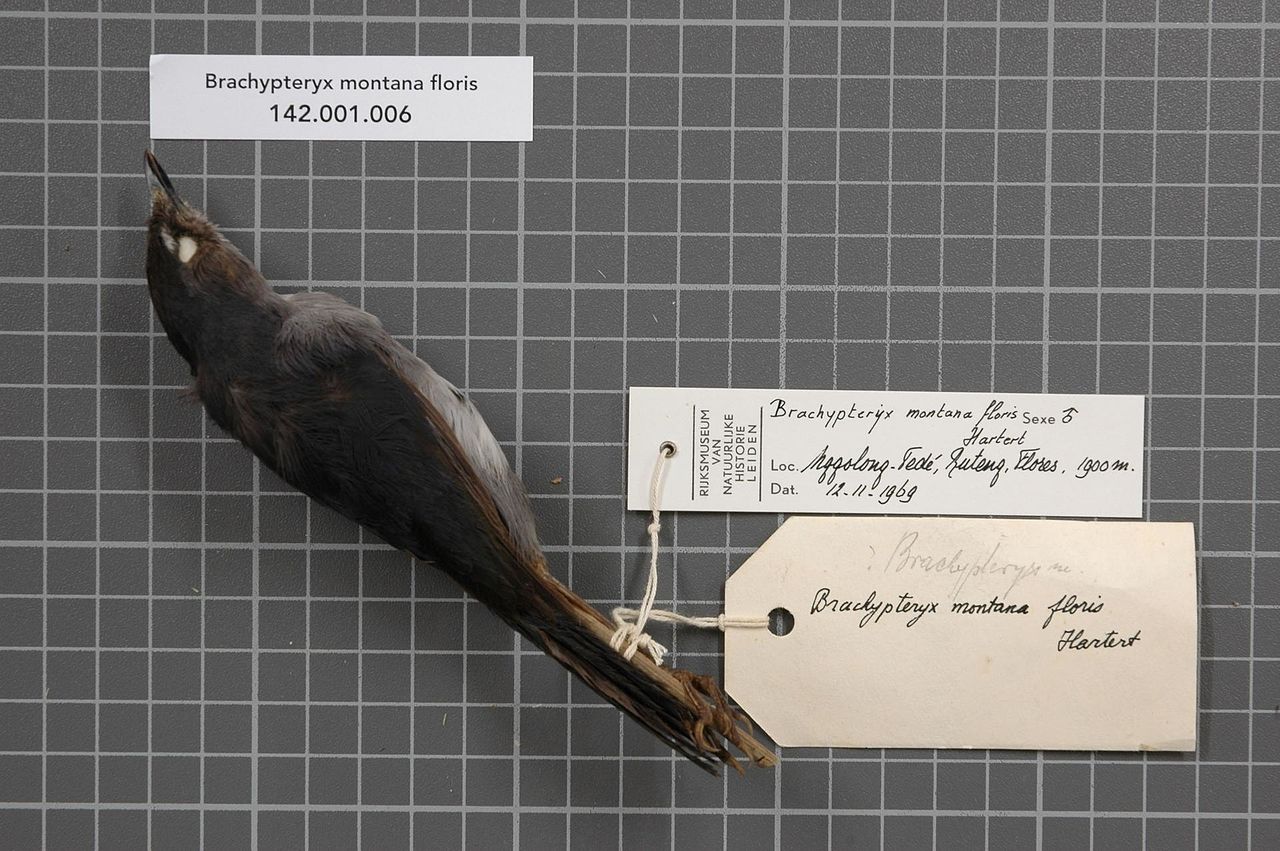
The Flores jungle flycatcher is a passerine bird in the Old World flycatcher family Muscicapidae that is endemic to the Lesser Sunda Islands.
Region
Lesser Sunda Islands (Wallacea)
Typical Environment
Primarily found on Flores and possibly a few adjacent Lesser Sunda islands, inhabiting primary and mature secondary evergreen forests. It favors shaded understory and midstory strata, often near ravines, dense thickets, and along quiet forest trails. The species uses forest edges and selectively logged areas if sufficient cover remains. It is less frequent in open farmland or heavily degraded scrub.
Altitude Range
300–1800 m
Climate Zone
Tropical
Ease of Keeping
Beginner friendly: 1/5
A shy understory insect-eater of the Old World flycatcher family Muscicapidae, it is restricted to the Lesser Sunda Islands, especially Flores. It was historically placed with the 'jungle flycatchers' and has sometimes been shuffled among genera in taxonomic revisions. The species keeps to dim forest interiors where it can be overlooked despite being locally fairly common. Ongoing forest loss on Flores and nearby islands is the main potential threat.

Temperament
solitary and secretive
Flight Pattern
short rapid wingbeats with brief darting sallies
Social Behavior
Typically encountered singly or in pairs, often remaining motionless on low perches before making short foraging sallies. It nests in cup-shaped structures placed low in shrubs, tree forks, or sheltered ledges. Breeding behavior includes quiet, close-range courtship within dense vegetation, and both parents likely contribute to care.
Migratory Pattern
Resident
Song Description
Song is a soft series of thin whistles and subdued trills delivered from concealed perches. Calls include high, sharp tseet notes used as contact calls and low scolds when disturbed.
Plumage
Plain, soft brown upperparts with a paler buffy-gray breast and whitish throat; tail and uppertail-coverts show a warm rufous tone. Underparts are lightly washed buff toward the flanks, with fine, diffuse mottling on the upper breast. Feathers appear matte with minimal gloss, aiding camouflage in dim understory.
Diet
Feeds mainly on small arthropods such as beetles, flies, caterpillars, and spiders. It employs sit-and-wait tactics, sallying from low perches to snatch prey from the air or gleaning from leaves and branches. Occasional ingestion of small berries may occur, especially during lower insect availability.
Preferred Environment
Forages in shaded understory and lower midstory of humid forest, along quiet trails, stream margins, and dense thickets. It prefers microhabitats with ample perches and leaf surfaces for gleaning.