

The fieldfare is a member of the thrush family Turdidae. It breeds in woodland and scrub in northern Europe and across the Palearctic. It is strongly migratory, with many northern birds moving south during the winter. It is a very rare breeder in the British Isles, but winters in large numbers in the United Kingdom, Southern Europe, North Africa and the Middle East. It is omnivorous, eating a wide range of molluscs, insects and earthworms in the summer, and berries, grain and seeds in the winter.
Region
Palearctic
Typical Environment
Breeds widely across northern and central Europe into western and central Siberia, favoring mixed and birch woodlands with nearby open ground. During winter it moves south and west, occurring abundantly across western and southern Europe, North Africa, and the Middle East. It frequents forest edges, clearings, farmland, pastures, hedgerows, orchards, and urban parks. Nests are placed in trees or tall shrubs, often near open foraging areas. Outside the breeding season it gathers in large flocks and roosts communally.
Altitude Range
Sea level to 2000 m
Climate Zone
Temperate
Ease of Keeping
Beginner friendly: 1/5
Fieldfares often form large, noisy winter flocks that roam hedgerows and orchards in search of berries. They frequently stand upright and are notably bold, mobbing predators together during the breeding season. Their rattling “chack-chack” call is a classic sound of winter in much of Europe. They can be seen feeding on fallen fruit in parks and gardens during cold spells.


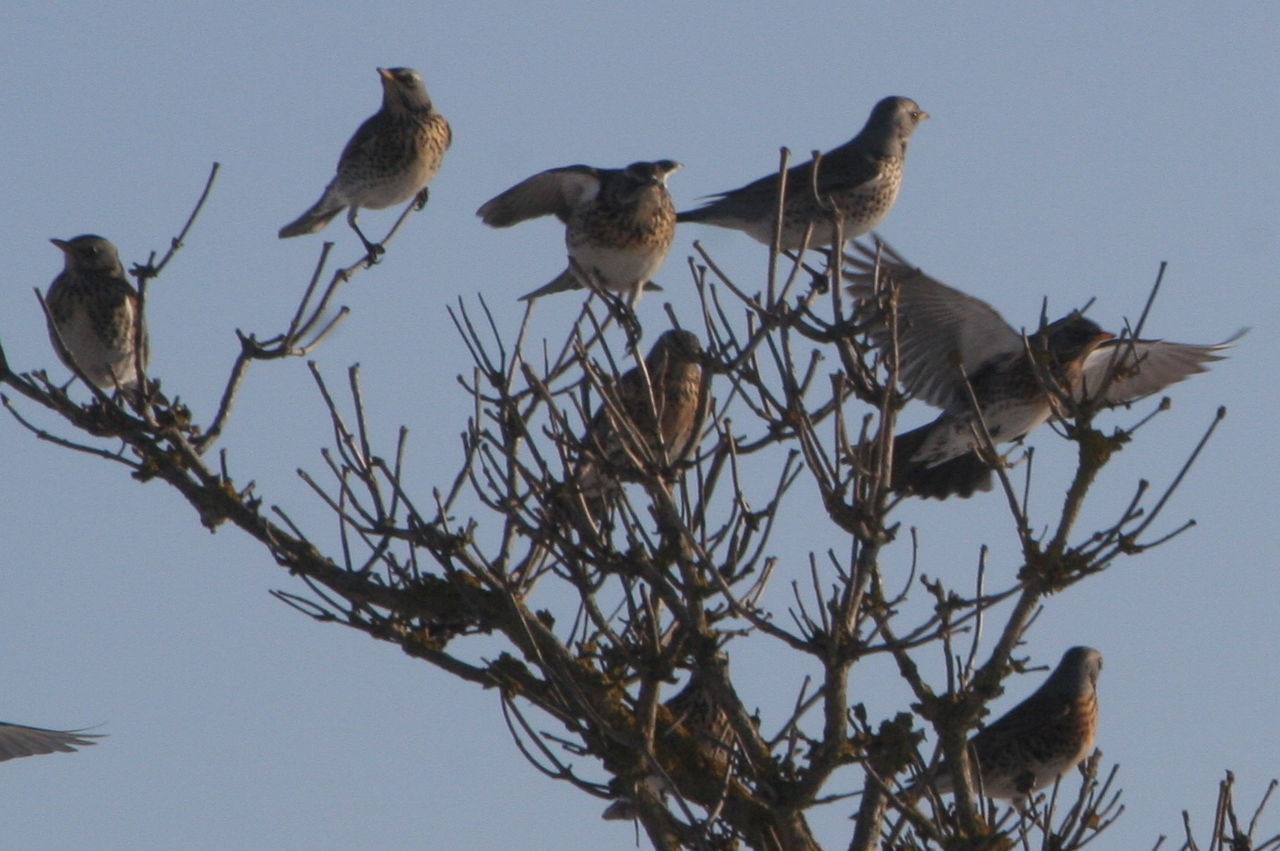
Fieldfares in winter


Temperament
social and active
Flight Pattern
strong flier with short rapid wingbeats
Social Behavior
Breeds in loose colonies or scattered pairs, often cooperating to mob predators near the colony. Builds a cup nest in trees or shrubs; both parents feed the young. Outside the breeding season it forms large, mobile flocks that forage and roost together.
Migratory Pattern
Seasonal migrant
Song Description
Song is a simple, somewhat variable series of chattering and squeaky phrases, less musical than other thrushes. The most familiar vocalization is a loud, rattling 'chack-chack' call, often given in flight or from hedgerows. Alarm calls become harsh and rapid when predators are near.
Plumage
Grey head and rump with a chestnut-brown mantle and back, black tail, and white underparts marked with bold dark arrowhead spots on the breast and flanks.
Diet
In summer it consumes earthworms, beetles, caterpillars, and other insects, as well as molluscs when available. In autumn and winter it switches largely to fruits and berries such as rowan, hawthorn, and juniper, and readily takes fallen apples. It may also eat seeds and grains during cold spells. Flocks often move widely to exploit temporary food sources.
Preferred Environment
Feeds mainly on the ground in pastures, meadows, and field margins, probing for worms and invertebrates. In winter it works hedgerows, orchards, and berry-laden shrubs, and will visit parks and gardens. It often forages in cohesive flocks with sentry birds watching for danger.


