
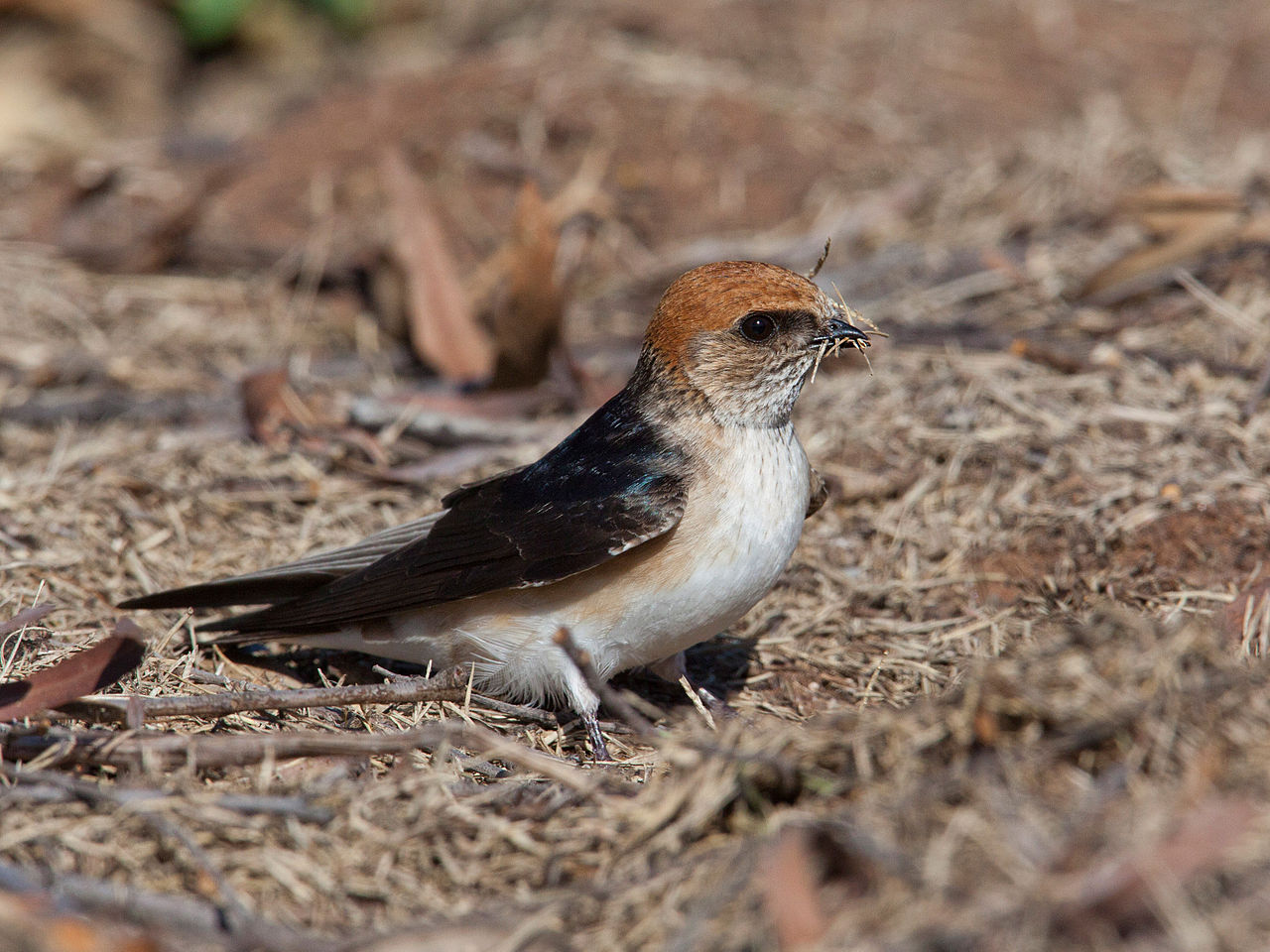
The fairy martin is a member of the swallow family of passerine birds which breeds in Australia. It is migratory wintering through most of Australia, with some birds reaching New Guinea and Indonesia. It is increasingly a wanderer to New Zealand, where it may have bred. This species is frequently placed in the genus Hirundo as Hirundo ariel.
Region
Australasia
Typical Environment
Breeds across much of mainland Australia, favoring open country near water, cliffs, and human structures that provide nesting surfaces. After breeding, it disperses widely across the continent and some birds reach southern New Guinea and eastern Indonesia; it is an occasional visitor to New Zealand. It frequents farmland, grasslands, river gorges, and towns, and readily exploits bridges and culverts for nesting. The species avoids dense forests and prefers open skies for aerial feeding.
Altitude Range
Sea level to 1500 m
Climate Zone
Temperate
Ease of Keeping
Beginner friendly: 1/5
The fairy martin builds distinctive bottle-shaped mud nests with long entrance tunnels, often in large colonies on bridges, culverts, and cliff faces. It is sometimes confused with the tree martin, but the fairy martin shows a rufous crown and a white rump with a short, square tail. Outside the breeding season it forms flocks that roam widely in response to rainfall and insect abundance.


Nests
Temperament
social and active
Flight Pattern
short rapid wingbeats with agile swoops
Social Behavior
Highly colonial nester, often forming large colonies where suitable nesting substrate exists. Pairs are monogamous within a season and may reuse or refurbish old mud nests. Outside breeding, birds gather in flocks and roost communally.
Migratory Pattern
Partial migrant
Song Description
Soft, twittering trills and chirps given in flight and around colonies. Contact calls are rapid, high-pitched notes, with a gentle chatter at the nest.
Plumage
Glossy blue-black upperparts with a rufous forehead and crown, white rump, and clean whitish underparts; tail is short and square with minimal fork.
Diet
Feeds almost entirely on flying insects such as flies, beetles, ants, and termites, caught on the wing. Will exploit swarms, especially after rain, and adjusts foraging height with wind and insect availability. Rarely takes prey from surfaces.
Preferred Environment
Hunts over open water, river corridors, grasslands, and open farmland, as well as around towns and bridges. Often forages near colonies, using updrafts along cliffs and structures.


