

The edible-nest swiftlet, also known as the white-nest swiftlet, is a small bird of the swift family which is found in Southeast Asia. Its opaque and whitish bird nest is made exclusively of solidified saliva and is the main ingredient of bird's nest soup, a delicacy of Chinese cuisine. Germain's swiftlet is now treated as conspecific with this species.
Region
Southeast Asia
Typical Environment
Occurs from southern Thailand and Vietnam through Malaysia, Singapore, Brunei, and the Philippines to much of Indonesia, especially around coastal islands and limestone karst. Breeds in sea caves and inland limestone caves, and increasingly in human-made buildings in towns. Forages widely over coastal forests, mangroves, agricultural land, and urban areas. Generally lowland, with most activity near coasts and archipelagos.
Altitude Range
Sea level to 1500 m
Climate Zone
Tropical
Ease of Keeping
Beginner friendly: 1/5
Also called the white-nest swiftlet, it builds a nest almost entirely from its hardened saliva, harvested for bird’s nest soup. It nests colonially on cave walls and in purpose-built urban 'swiftlet houses'. Like a few other swiftlets, it uses audible clicks for simple echolocation in dark roosts. Overharvesting of nests has caused local declines, leading to management and harvest regulations in many areas.


Couple of swiftlets in nest

In flight
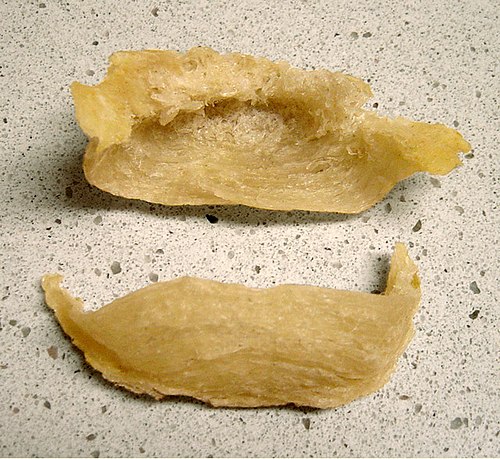
The nest before use in bird's nest soup
Temperament
social and active
Flight Pattern
fast, stiff-winged flight with rapid wingbeats and brief glides
Social Behavior
Highly colonial, nesting in large aggregations on cave ceilings or within specialized buildings. Both parents build the saliva nest and share incubation and chick-rearing duties. Uses simple echolocation clicks to navigate in complete darkness within roosts and nesting sites.
Migratory Pattern
Resident
Song Description
Vocalizations are high, thin twitters and chips in flight. Inside caves it produces sharp, dry clicking notes used for basic echolocation.
Plumage
Sooty to gray-brown overall with slightly paler underparts; smooth, glossy texture with minimal contrast. Tail is short with a shallow fork.
Diet
An aerial insectivore that catches small flying insects such as flies, midges, ants, and beetles on the wing. It often feeds high above the canopy or over open areas, adjusting height with weather and insect availability. During breeding, adults make frequent foraging trips to provision chicks with boluses of insects.
Preferred Environment
Feeds over coastal forests, mangroves, river mouths, open farmland, and urban skylines. Frequently forages along shorelines and above cliff faces near nesting caves.


