

The eastern imperial eagle is a large bird of prey that breeds in southeastern Europe and extensively through West and Central Asia. Most populations are migratory and winter in northeastern Africa, the Middle East and South and East Asia. Like all eagles, the eastern imperial eagle is a member of the family Accipitridae. Furthermore, its feathered legs mark it as a member of the subfamily Aquilinae. It is a large, dark-colored eagle, with a resemblance to other members of the genus Aquila, but it is usually the darkest species in its range. It is an opportunistic predator that mostly selects smallish mammals as prey but also a fairly large proportion of birds, reptile and other prey types, including carrion. Compared to other Aquila eagles, it has a strong preference for the interface of tall woods with plains and other open, relatively flat habitats, including the wooded mosaics of the steppe. Normally, nests are located in large, mature trees and the parents raise around one or two fledglings. The global population is small and declining due to persecution, loss of habitat and prey. It has therefore been IUCN Red Listed as Vulnerable since 1994.
Region
Southeastern Europe to Central Asia
Typical Environment
Breeds from southeastern Europe across the steppe and forest-steppe belt of Western and Central Asia, favoring the interface of tall woodlands with open plains. Frequently occupies agricultural mosaics, riverine forests, and steppe with scattered large trees for nesting. Avoids dense continuous forests and very rugged high mountains. In winter it disperses to the Middle East, northeastern Africa, the Indian Subcontinent, and East Asia, using wetlands, open farmland, and semi-desert.
Altitude Range
Sea level to 2000 m
Climate Zone
Continental
Ease of Keeping
Beginner friendly: 1/5
The eastern imperial eagle is a large Aquila eagle with feathered legs and a striking pale-golden nape. Juveniles show prominent white shoulder patches that fade with age, aiding identification. Major threats include habitat loss, persecution, and electrocution on powerlines; conservation actions focus on securing nest trees and safer power infrastructure.


Closeup of an adult imperial eagle.

An eastern imperial eagle, probably an older subadult, in flight showing their characteristic flat, relatively narrow wings.

An adult imperial eagle in Hong Kong.

A captive adult eastern imperial eagle sharing an aviary with a smaller cousin, the lesser spotted eagle.
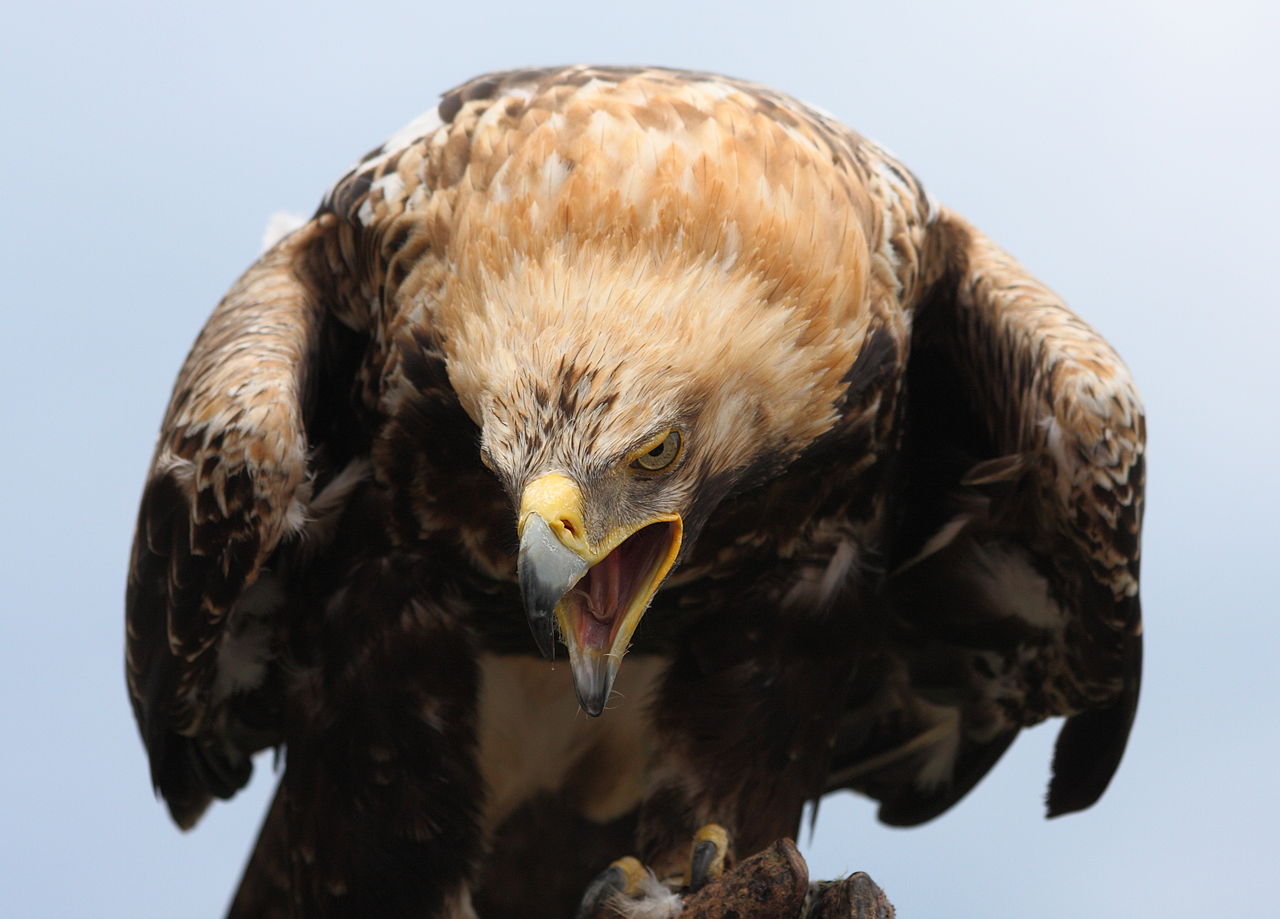
A probable older subadult eastern imperial eagle in a captive falconry centre.

A juvenile photographed from helicopter. Eastern imperial eagles prefer the interface of woods and open areas and can tolerate agriculture and development so long as prey sources remain.

A wintering imperial eagle in Little Rann of Kutch, Gujarat, India.

When wintering, eastern imperial eagles are partial to relatively open habitats.
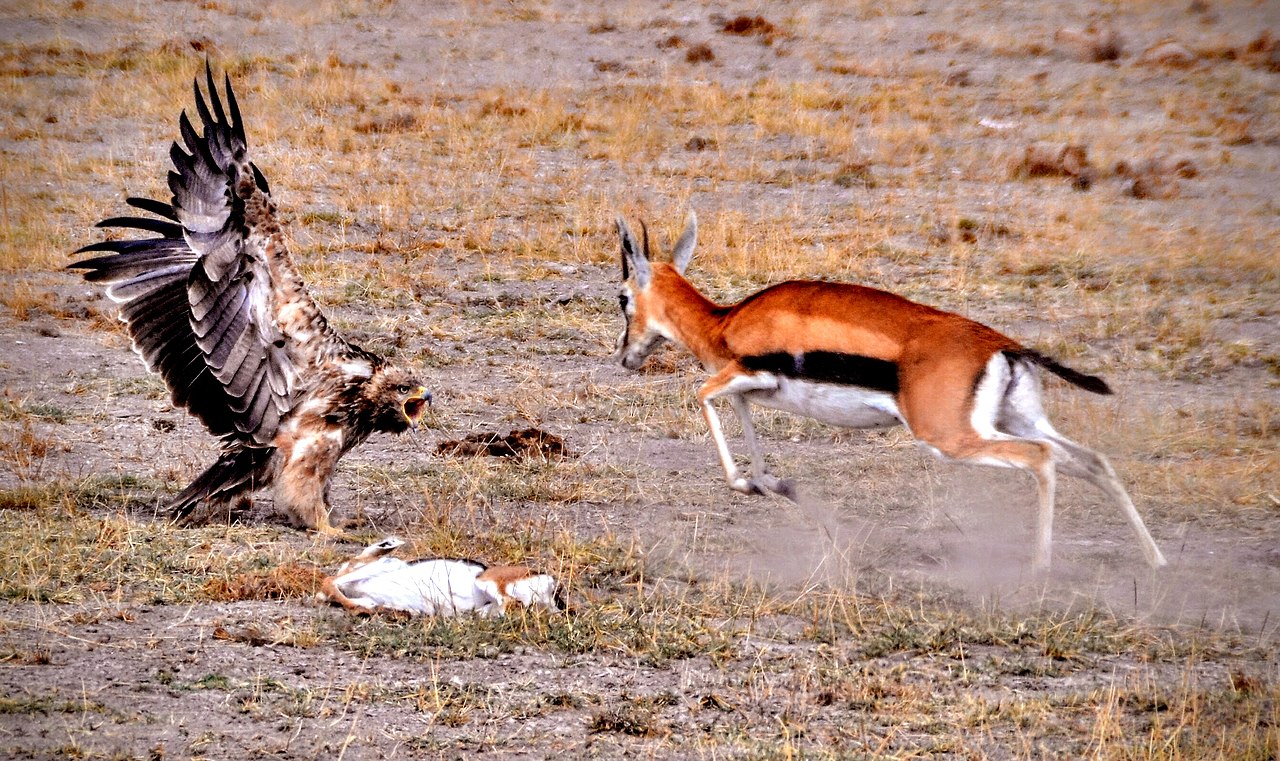
A juvenile imperial eagle facing off with a Thomson's gazelle mother over its dead calf

European ground squirrels are an important food source for eastern imperial eagles.

An eastern imperial eagle in the upper right side can be seen hunting flocks of bar-headed goose and northern pintail.

A falconer's eastern imperial eagle, of subadult age, shows its impressive dive toward a fox dummy, completed in seconds.

Eastern imperial eagles may be attracted to carrion quite often especially in winter. Here with another scavenger, the Egyptian vulture, in the background.

Nest of eastern imperial eagle in Georgia.

Egg, Collection Museum Wiesbaden

A captive adult eastern imperial eagle.

A juvenile eastern imperial eagle in Rajasthan, India

Biologists working to place an artificial nests for imperial eagles to use.
Temperament
solitary and territorial
Flight Pattern
soaring glider
Social Behavior
Typically forms long-term pairs that defend large territories. Nests are built high in mature trees; a clutch of 1–3 eggs is laid, with 1–2 fledglings commonly raised. Nesting success depends on prey abundance and the availability of large trees near open hunting grounds.
Migratory Pattern
Partial migrant
Song Description
Generally silent away from nests. Near the nest it gives harsh, barking calls and yelps, with softer whistles during pair interactions. Vocal activity intensifies during breeding and territorial encounters.
Plumage
Dark chocolate-brown with paler feather edges and a contrasting pale-golden nape; feathered tarsi. Juveniles show a broad white panel on the upperwing (shoulder patches) and more tawny, streaked underparts; tail faintly barred. Adults appear uniformly dark above with subtle pale scapulars and a slightly paler crown and nape.
Diet
An opportunistic predator taking mainly small to medium mammals such as ground squirrels, hamsters, and hares. It also hunts birds including corvids, waterfowl, and gamebirds, and will take reptiles when available. Carrion is readily used, especially in winter, and it may pirate prey from other raptors.
Preferred Environment
Hunts over open steppe, grasslands, and agricultural fields, often along woodland edges and river corridors. Perches on tall trees, pylons, or poles to scan for prey, and also hunts on the wing over open terrain.


