

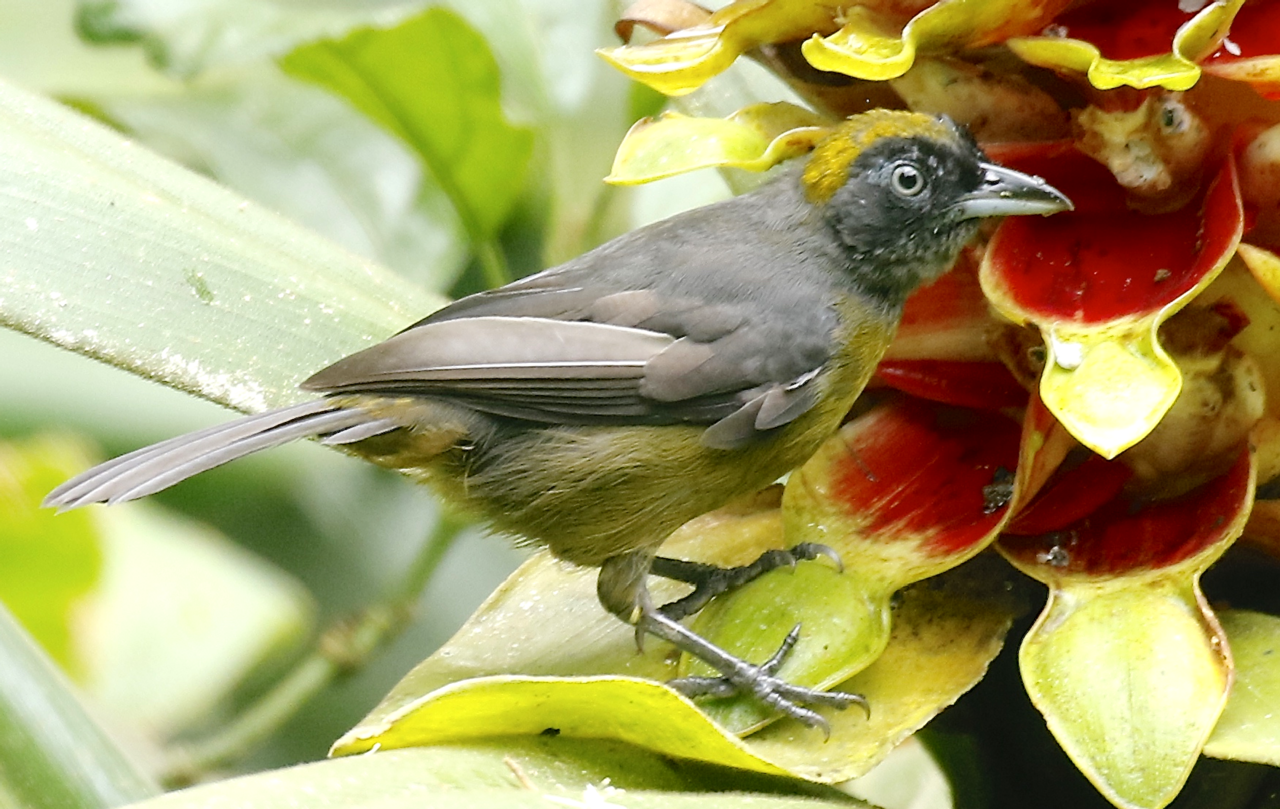
The dusky-faced tanager is a species of bird in the family Mitrospingidae. It is found in Colombia, Costa Rica, Ecuador, and Panama.
Region
Central America and Chocó bioregion
Typical Environment
Occurs from the Caribbean and Pacific slopes of Costa Rica through Panama into western Colombia and northwestern Ecuador. It favors humid lowland and foothill forests, edges, and secondary growth, especially along streams and in thickets. The species is common in dense understory with Heliconia, vine tangles, and young Cecropia. It tolerates semi-open and disturbed habitats near forest but avoids extensive open farmland. Often accompanies mixed-species flocks moving through the lower to mid-levels.
Altitude Range
Sea level to 1200 m
Climate Zone
Tropical
Ease of Keeping
Beginner friendly: 1/5
The dusky-faced tanager is a forest-edge specialist now placed in the family Mitrospingidae after being split from the true tanagers. It often travels in small, chatty groups through dense understory and frequently joins mixed-species flocks. By consuming small berries, it helps disperse seeds in regenerating forests.


Canopy Lodge - El Valle, Panama
Temperament
social and active
Flight Pattern
short rapid wingbeats
Social Behavior
Usually found in pairs or small, noisy family groups moving together through dense cover. Frequently joins mixed-species flocks of understory birds while foraging. Nests are typically cup-shaped and placed low to mid-level in thick vegetation, with both parents attending the young.
Migratory Pattern
Resident
Song Description
Vocalizations include high, thin chips and squeaky twitters given in quick series. The song is a hurried, scolding chatter with variable pitch, often exchanged antiphonally within the group.
Plumage
Olive-brown upperparts with a contrasting dusky gray face mask; underparts yellow-olive to yellow with a slightly paler throat; wings and tail darker olive with a smooth, uniform texture.
Diet
Feeds on small fruits and berries, especially from Melastomes and Cecropia, and supplements its diet with insects and spiders gleaned from foliage. It will snatch small arthropods during short sallies from perches. Diet flexibility helps it thrive in secondary growth and forest edges.
Preferred Environment
Forages primarily in dense understory and along forest edges, riverbanks, and vine tangles. Common around Heliconia stands, second-growth thickets, and shaded plantation margins near forest.


