

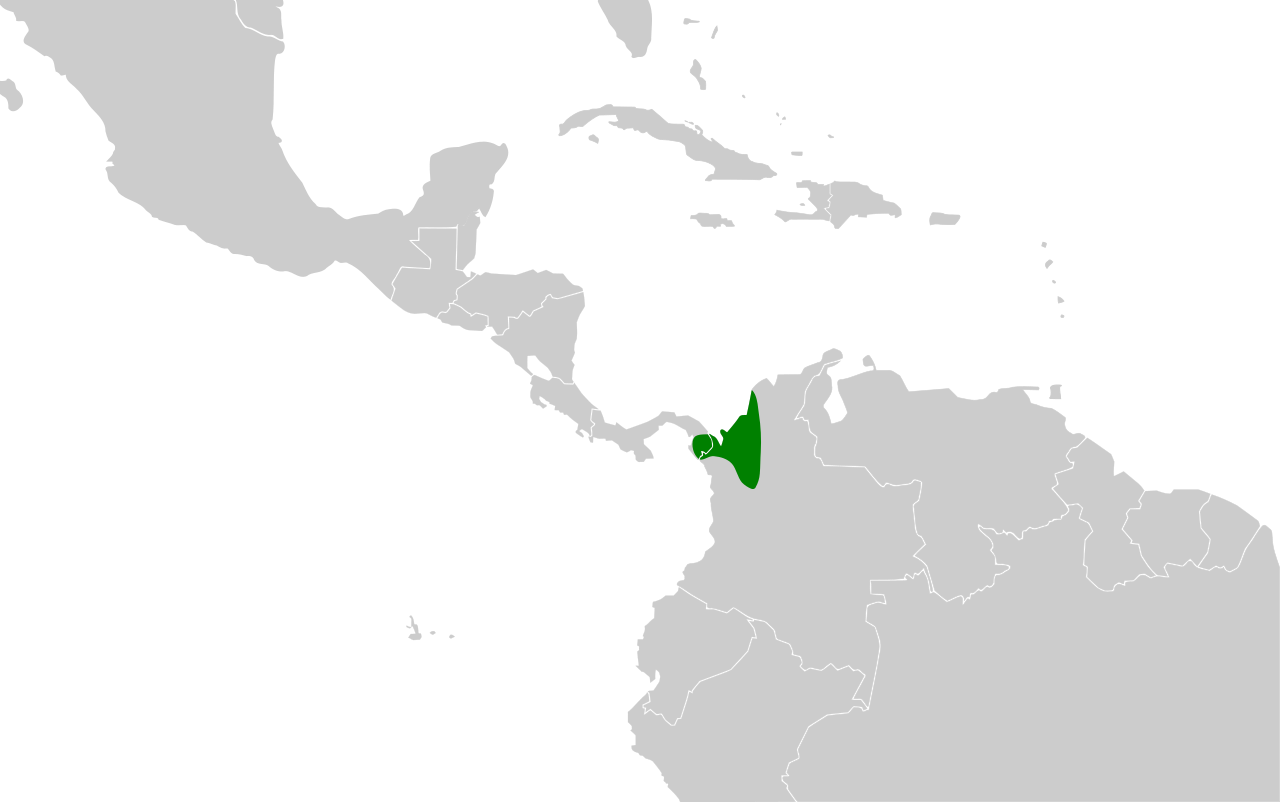
The dusky-backed jacamar is a species of bird in the family Galbulidae. It is found in Colombia and Panama.
Region
Chocó–Darién region
Typical Environment
Occurs in humid lowland and foothill forests from northwest Colombia into eastern Panama. It is most often found along forest edges, riverbanks, and light gaps, and also uses secondary growth where tall perches are available. Birds typically sit on exposed branches a few meters above the ground and make short sallies to catch flying insects. While sensitive to heavy deforestation, it can persist in semi-open forest mosaics if suitable perches and nesting banks remain.
Altitude Range
Sea level to 900 m
Climate Zone
Tropical
Ease of Keeping
Beginner friendly: 1/5
The dusky-backed jacamar is a small insect-eating bird that perches quietly before sallying out to snatch flying prey. It favors forest edges and riverine corridors in the Chocó–Darién region of Colombia and Panama. Like other jacamars, it nests in burrows excavated in earthen banks, where both parents participate in incubation and chick rearing.

Temperament
quiet and watchful
Flight Pattern
short rapid wingbeats with quick sallies
Social Behavior
Usually found singly, in pairs, or small family groups. Pairs defend small territories along forest edges and riparian corridors. They nest in burrows excavated in earthen or sand banks, where both sexes share incubation and provisioning.
Migratory Pattern
Resident
Song Description
Gives thin, high-pitched whistles and sharp ticks from exposed perches. Vocalizations are simple and repeated, carrying well along forest edges and streams.
Plumage
Dark, sooty-brown upperparts with a contrasting clean white throat and upper breast, grading to warm rufous underparts. Feathers appear smooth and sleek, with minimal spotting. The long, straight bill and upright perching posture are distinctive.
Diet
Feeds mainly on flying insects such as butterflies, dragonflies, bees, wasps, and beetles. Typically launches from a perch to snatch prey in flight and returns to the same or nearby perch. Prey with stingers are often subdued by beating them against the perch before swallowing.
Preferred Environment
Forages along forest edges, gaps, and riverbanks where aerial insect activity is concentrated. Often uses sunlit perches a few meters above ground with clear flight paths.


