

The Dalmatian pelican, also known as the curly-headed pelican, is the largest member of the pelican family and among the heaviest flying birds in the world. With a wingspan typically ranging between 2.7 and 3.2 metres, it ranks among the largest soaring birds. These pelicans are known for their graceful flight and often travel in synchronised flocks. With a range spanning across much of Central Eurasia, from the eastern Mediterranean in the west to the Taiwan Strait in the east, and from the Persian Gulf in the south to Siberia in the north, it is a short-to-medium-distance migrant between breeding and overwintering areas.
Region
Central and Southeastern Eurasia
Typical Environment
Breeds patchily from the eastern Mediterranean and Balkans through the Black and Caspian Sea basins to Central Asia and western China, with notable colonies in Greece, Montenegro, Romania, Turkey, Russia, and Mongolia. Winters on ice-free lakes, deltas, estuaries, and sheltered coastal lagoons from the eastern Mediterranean and Middle East to South Asia and southern China. Prefers expansive, shallow freshwater or brackish wetlands with extensive reedbeds and low, isolated islets. Key strongholds include the Danube Delta and the Prespa Lakes region.
Altitude Range
Sea level to 1400 m
Climate Zone
Temperate
Ease of Keeping
Beginner friendly: 1/5
The Dalmatian pelican is the largest pelican and among the heaviest flying birds, with a distinctive shaggy, curly nape. Breeding adults show a vivid orange-red gular pouch and a silvery-grey mantle. They depend on large, undisturbed wetlands and nest on floating vegetation or low islands. Key threats include wetland loss, disturbance, power line collisions, and disease outbreaks, but targeted conservation (e.g., nesting rafts) has helped some colonies recover.


Edward Lear's hand-coloured lithograph of a Dalmatian Pelican (1837). Pencil and watercolour.
![Phylogenetic relationship of the Dalmatian pelican (P. cripus; in red), based on the phylogenetic structure.[11] The division between P. crispus and P. philippensis is emphasized by placing two images next to the phylogeny, exemplifying the morphological differences between them.](https://upload.wikimedia.org/wikipedia/commons/thumb/4/40/Phylogeny_Dalmatian_Pelican.png/960px-Phylogeny_Dalmatian_Pelican.png)
Phylogenetic relationship of the Dalmatian pelican (P. cripus; in red), based on the phylogenetic structure.[11] The division between P. crispus and P. philippensis is emphasized by placing two images next to the phylogeny, exemplifying the morphological differences between them.
![Comparison of the median wingspans of pelican species overlapping with the Dalmatian pelican's distribution. The diagram illustrates the size difference between the Dalmatian pelican and other sympatric pelicans, highlighting its status as the largest pelican species. Median wingspans are based on field measurements and modern standard guides.[17][18][19][20]](https://upload.wikimedia.org/wikipedia/commons/thumb/2/24/Dalmatian_Pelican_Wingspan_Comparison_Diagram.png/500px-Dalmatian_Pelican_Wingspan_Comparison_Diagram.png)
Comparison of the median wingspans of pelican species overlapping with the Dalmatian pelican's distribution. The diagram illustrates the size difference between the Dalmatian pelican and other sympatric pelicans, highlighting its status as the largest pelican species. Median wingspans are based on field measurements and modern standard guides.[17][18][19][20]

Chicks of the Dalmatian pelican at the Rostov Nature Reserve.
![Present breeding colonies (orange) of the Dalmatian pelican[34] and the geographic position of the subfossil pelican records (blue).[33]](https://upload.wikimedia.org/wikipedia/commons/thumb/7/79/Dalamatian_pelican_historic_distribution.gif/1280px-Dalamatian_pelican_historic_distribution.gif)
Present breeding colonies (orange) of the Dalmatian pelican[34] and the geographic position of the subfossil pelican records (blue).[33]

Dalmatian pelicans swimming in coordination at the Nal Sarovar Bird Sanctuary, India.

Dalmatian pelican flock in Lake Kerkini, Macedonia, Greece.

Dalmatian pelicans in flight at Lake Orestiada, Greece.

The takeoff from water of the Dalmatian Pelican is energetic, requiring strong pushes with both feet and heavy flapping.

Northern Pike (Esox lucius), a large predatory freshwater fish.
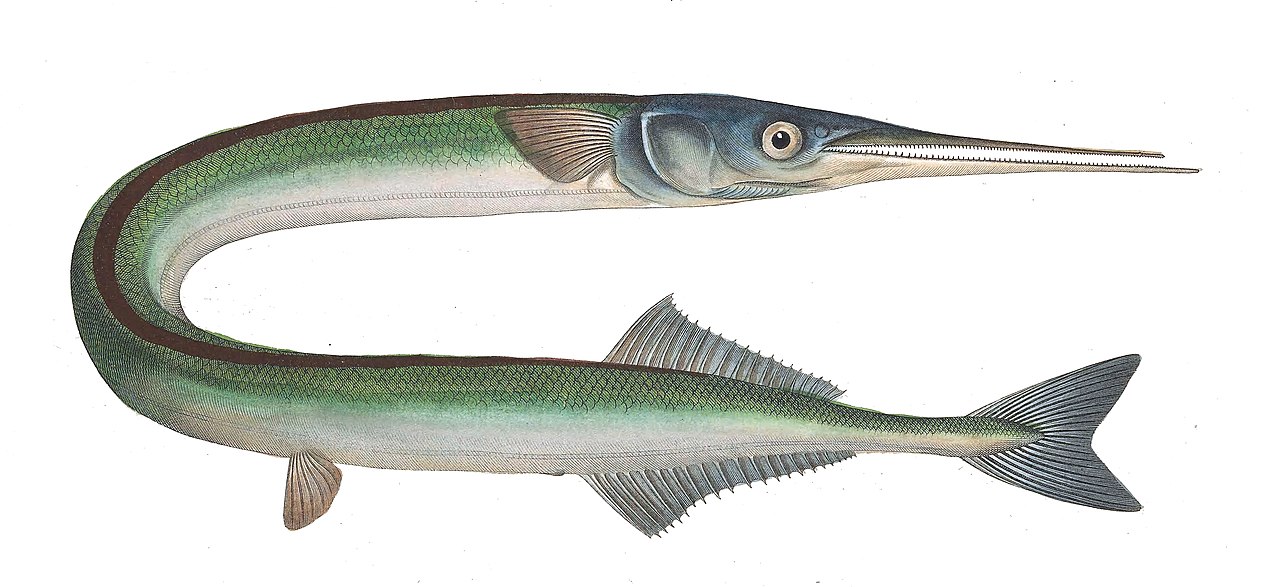
Garfish (Belone belone), a pelagic fish found in coastal and brackish waters.

Ninespine stickleback (Pungitius pungitius), a euryhaline fish inhabiting freshwater, brackish, and marine environments.
![Dalmatian pelican using his pouch to hold fish weighing more than 1 kg (2.2 lb).[20][39]](https://upload.wikimedia.org/wikipedia/commons/thumb/a/a1/Pelecanus_crispus_Herberstein.jpg/1280px-Pelecanus_crispus_Herberstein.jpg)
Dalmatian pelican using his pouch to hold fish weighing more than 1 kg (2.2 lb).[20][39]
![Great cormorants (Phalacrocorax carbo) feed among Dalmatian pelicans, sometimes as competitors,[39][42] other times as collaborators.[43]](https://upload.wikimedia.org/wikipedia/commons/thumb/7/71/Cormorant_%28Phalacrocorax_carbo%29_%2814%29.JPG/1280px-Cormorant_%28Phalacrocorax_carbo%29_%2814%29.JPG)
Great cormorants (Phalacrocorax carbo) feed among Dalmatian pelicans, sometimes as competitors,[39][42] other times as collaborators.[43]

Golden jackal (Canis aureus) in Iran.
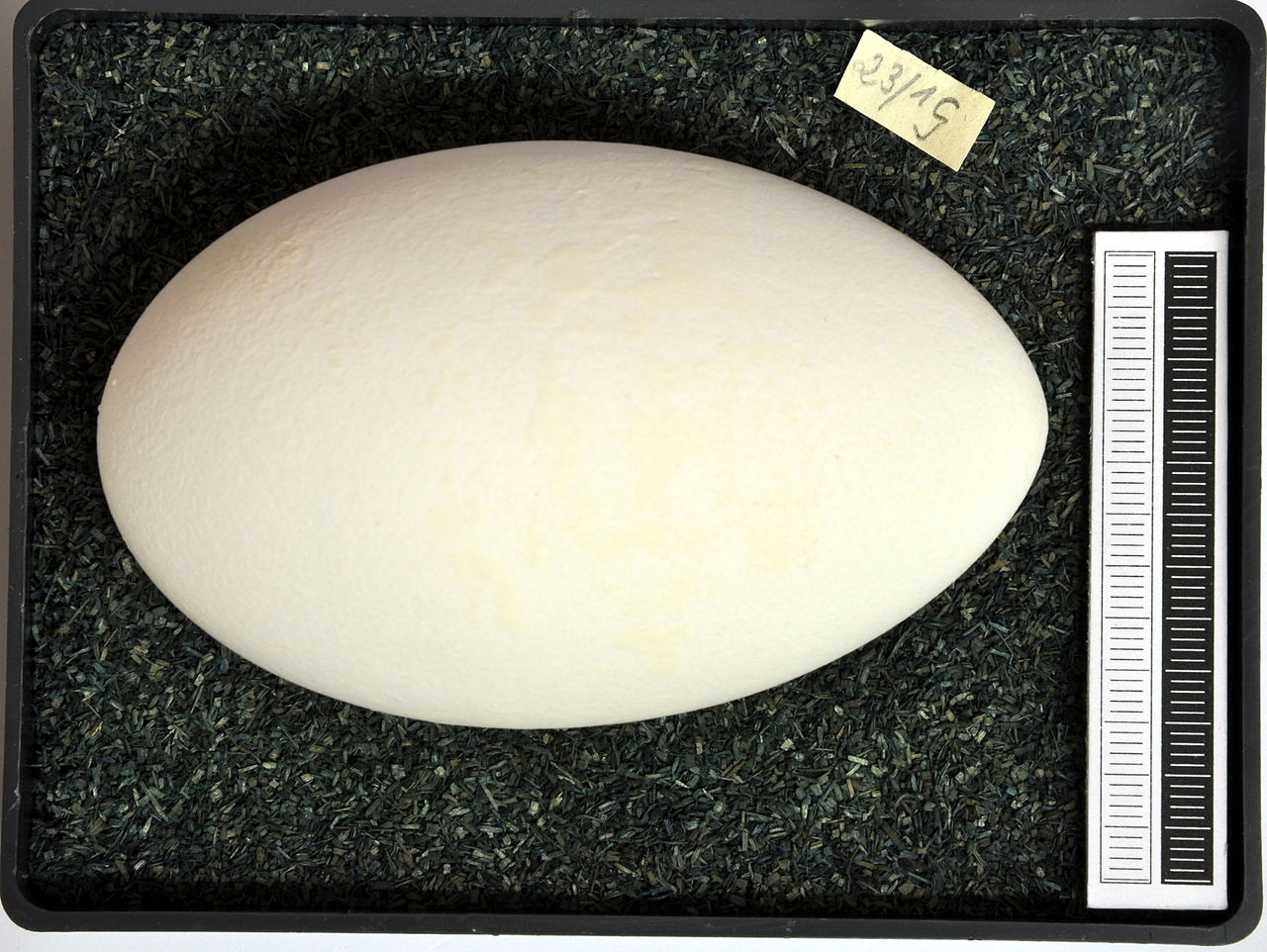
Egg, Collection Museum Wiesbaden

Dalmatian pelicans with fisherman at Qeshm, Iran.

Kuşcenneti National Park, Turkey, showing rafts and platforms that allow pelicans to nest.
Temperament
social and wary near disturbance
Flight Pattern
soaring glider with slow, deep wingbeats
Social Behavior
Breeds colonially on floating vegetation mats or low islands, often constructing nests of reeds and sticks. Pairs are seasonally monogamous and defend small territories around the nest. Outside the breeding season, individuals gather in loose flocks at rich feeding sites and communal roosts.
Migratory Pattern
Partial migrant
Song Description
Generally quiet; lacks a true song. Emits low grunts, croaks, and hisses, especially at colonies and during aggressive or courtship interactions.
Plumage
Mostly silvery-grey to whitish with a shaggy, curly nape and back; darker grey in non-breeding season and cleaner, brighter tones in breeding plumage.
Diet
Primarily piscivorous, taking medium-sized fish such as carp, mullet, and eels, typically 100–500 g in weight. It captures prey by surface-dipping and scooping with its bill pouch rather than plunge-diving. Occasionally consumes amphibians and small aquatic invertebrates. Forages alone or in small groups, sometimes loosely coordinated to concentrate fish.
Preferred Environment
Shallow freshwater lakes, slow rivers, deltas, and brackish lagoons with abundant fish and open water. Often feeds along vegetated margins, channels, and sheltered coves with minimal human disturbance.


