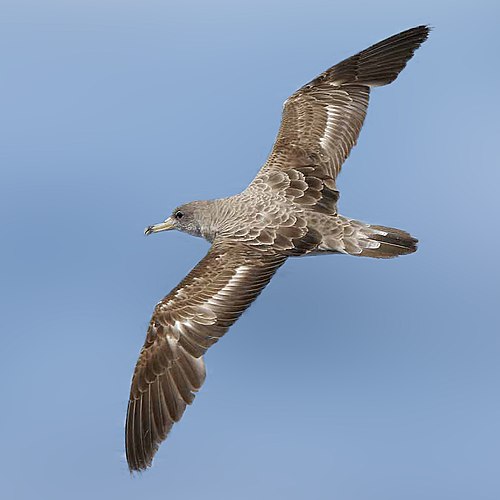
The correndera pipit is a species of bird in the family Motacillidae. It is found in Argentina, Bolivia, southern Brazil, Chile, the Falkland Islands, Paraguay, Peru, and Uruguay. Its natural habitats are temperate grassland, subtropical or tropical high-altitude grassland, and pastureland.
Region
Southern South America
Typical Environment
Occurs from southern Peru and Bolivia through Paraguay, Uruguay, and southern Brazil to Argentina and Chile, and also on the Falkland Islands. It favors open habitats such as temperate grasslands, pampas, and steppe, as well as puna and other high-altitude grasslands. Common in grazed pasturelands and along roadsides and airfields with short swards. Frequently uses slightly damp meadows and valley bottoms where invertebrates are abundant.
Altitude Range
Sea level to 4500 m
Climate Zone
Temperate
Ease of Keeping
Beginner friendly: 1/5
Named from Spanish for “runner,” the correndera pipit spends much of its time walking and sprinting through open grass. Males perform fluttering song-flights over territories during the breeding season. It adapts well to grazed pasturelands and can be seen near livestock where insects are plentiful.


Temperament
wary and terrestrial
Flight Pattern
low, undulating flights with short rapid wingbeats
Social Behavior
Typically seen singly or in pairs, forming small groups outside the breeding season. Nests are cup-shaped and placed on the ground concealed in grass tussocks. Pairs are territorial in breeding months, with males displaying in flight over open patches.
Migratory Pattern
Partial migrant
Song Description
A series of thin, tinkling trills and twittering phrases often delivered during a brief display flight. Ground calls include sharp tsip notes and soft contact calls when foraging.
Plumage
Streaked brown upperparts with fine dark mottling and paler fringes; buff to whitish underparts with streaking across the breast. Tail is dark with prominent white outer tail feathers. Feathers are sleek and lie close to the body, aiding a slim, elongated look.
Diet
Primarily small invertebrates including beetles, flies, caterpillars, and spiders. It gleans and probes among short grass and bare soil, often capturing insects flushed by grazing animals. Seeds and small plant material may be taken opportunistically outside the breeding season.
Preferred Environment
Feeds in short, open swards of natural grassland, pampas, and steppe. Common around grazed pastures, airfields, and road verges where visibility and insect availability are high.