
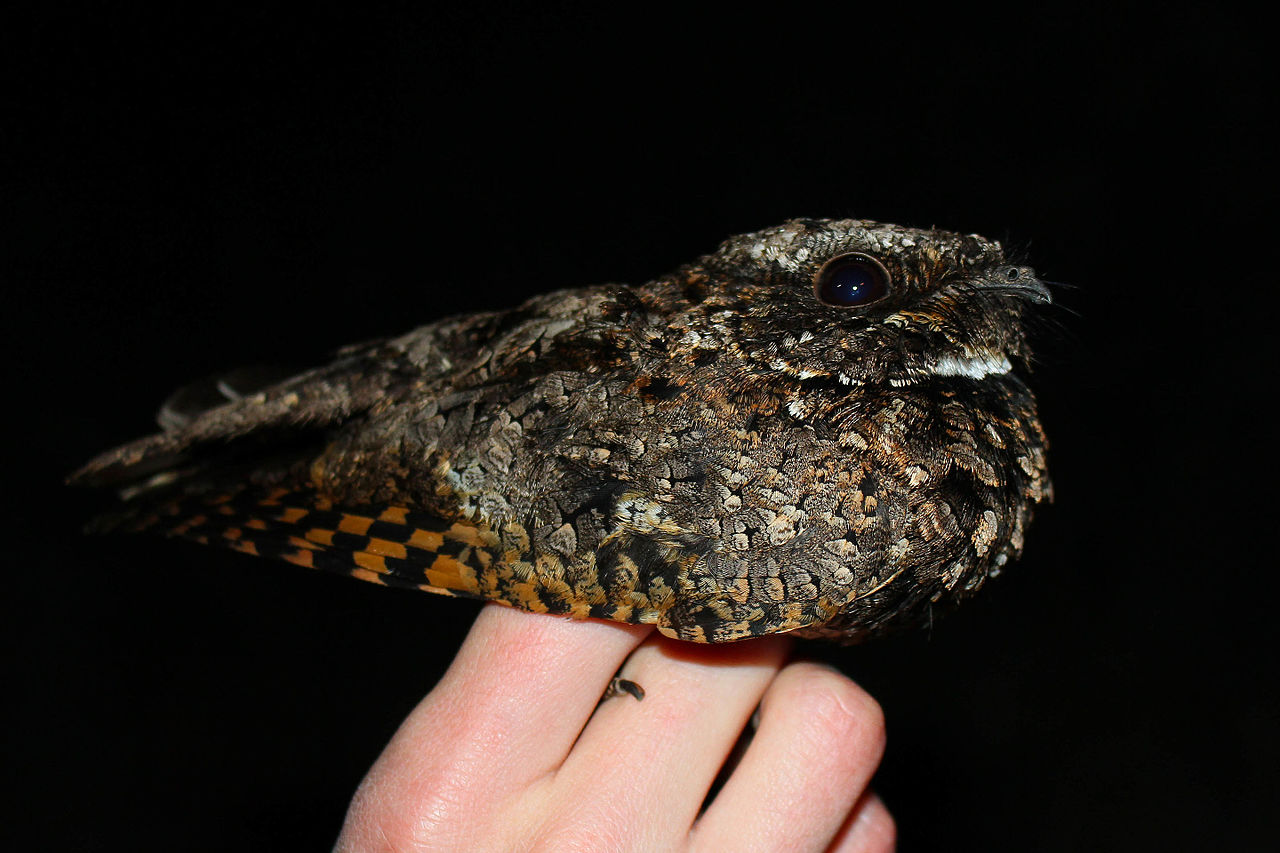
The common poorwill is a nocturnal bird of the family Caprimulgidae, the nightjars. It is found from British Columbia and southeastern Alberta, through the western United States to northern Mexico. The bird's habitat is dry, open areas with grasses or shrubs, and even stony desert slopes with very little vegetation.
Region
Western North America
Typical Environment
Occurs from southern British Columbia and southeastern Alberta through the western United States to northern and central Mexico. Prefers dry, open habitats such as sagebrush steppe, chaparral, pinyon-juniper woodlands, and stony desert slopes with sparse vegetation. Often uses rocky washes, canyon edges, and open foothills with scattered shrubs. It roosts and nests on bare ground or among leaf litter, relying on camouflage. Avoids dense forests and very wet habitats.
Altitude Range
Sea level to 2500 m
Climate Zone
Arid
Ease of Keeping
Beginner friendly: 1/5
The common poorwill is the only bird known to enter prolonged hibernation-like torpor, sometimes for days to weeks during cold or food-scarce periods. Its cryptic plumage makes it nearly invisible on the ground where it roosts and nests. The repetitive "poor-will" call carries at night in dry, open country. It hawks insects with a wide gape and has bristles around the bill that help funnel prey.


Common Poorwill, Phalaenoptilus nuttallii. Nominate race in foreground, Dusky Poorwill, Phalaenoptilus nuttalli californicus, in background.
Temperament
secretive and crepuscular-nocturnal
Flight Pattern
short, silent fluttering flight with brief glides close to the ground
Social Behavior
Generally solitary or in pairs during breeding; forms loose aggregations where food is abundant. Nests directly on the ground without a constructed nest, typically laying two eggs. Both sexes incubate and rely on camouflage and stillness to avoid predators. Adults may perform distraction displays if approached.
Migratory Pattern
Partial migrant
Song Description
A clear, whistled, two-syllable "poor-will" repeated steadily, often for long periods at night. Also gives soft clucks and low churrs. The call can seem ventriloquial and carries well in open terrain.
Plumage
Finely mottled gray, brown, and black with buff speckling, providing excellent camouflage against rocky or leaf-littered ground.
Diet
Feeds primarily on nocturnal flying insects such as moths, beetles, and katydids. Captures prey in mid-air using sallies from the ground or low perches and a very wide gape. Will also take ants and other small invertebrates near the ground when available. Foraging intensity often increases during insect hatches.
Preferred Environment
Hunts along open slopes, washes, roadsides, and shrub edges where insect flight paths are concentrated. Often forages from ground roosts or low rocks and logs, making short aerial sorties.


