

The coal tit is a small passerine bird in the tit family, Paridae. It is a widespread and common resident breeder in forests throughout the temperate to subtropical Palearctic, including North Africa. The black-crested tit is now usually included in this species.
Region
Palearctic (Europe, North Africa, and temperate Asia)
Typical Environment
Found widely in coniferous and mixed woodlands dominated by spruce, fir, and pine, but also uses broadleaf edges and gardens. It is common in plantations, mature forests, parks, and hedgerows, particularly in winter. In montane areas it reaches the treeline and exploits dwarf conifers and scrub. It frequently visits bird feeders near human settlements during colder months.
Altitude Range
Sea level to 2500 m
Climate Zone
Temperate
Ease of Keeping
Beginner friendly: 2/5
Coal tits are agile canopy feeders that favor conifers and readily visit garden feeders, especially in winter. They cache seeds in bark crevices and leaf litter to retrieve later. A distinctive white nape patch and twin wing bars help separate them from other small tits. Some Asian forms were once treated separately (e.g., black-crested tit) but taxonomy has varied over time.


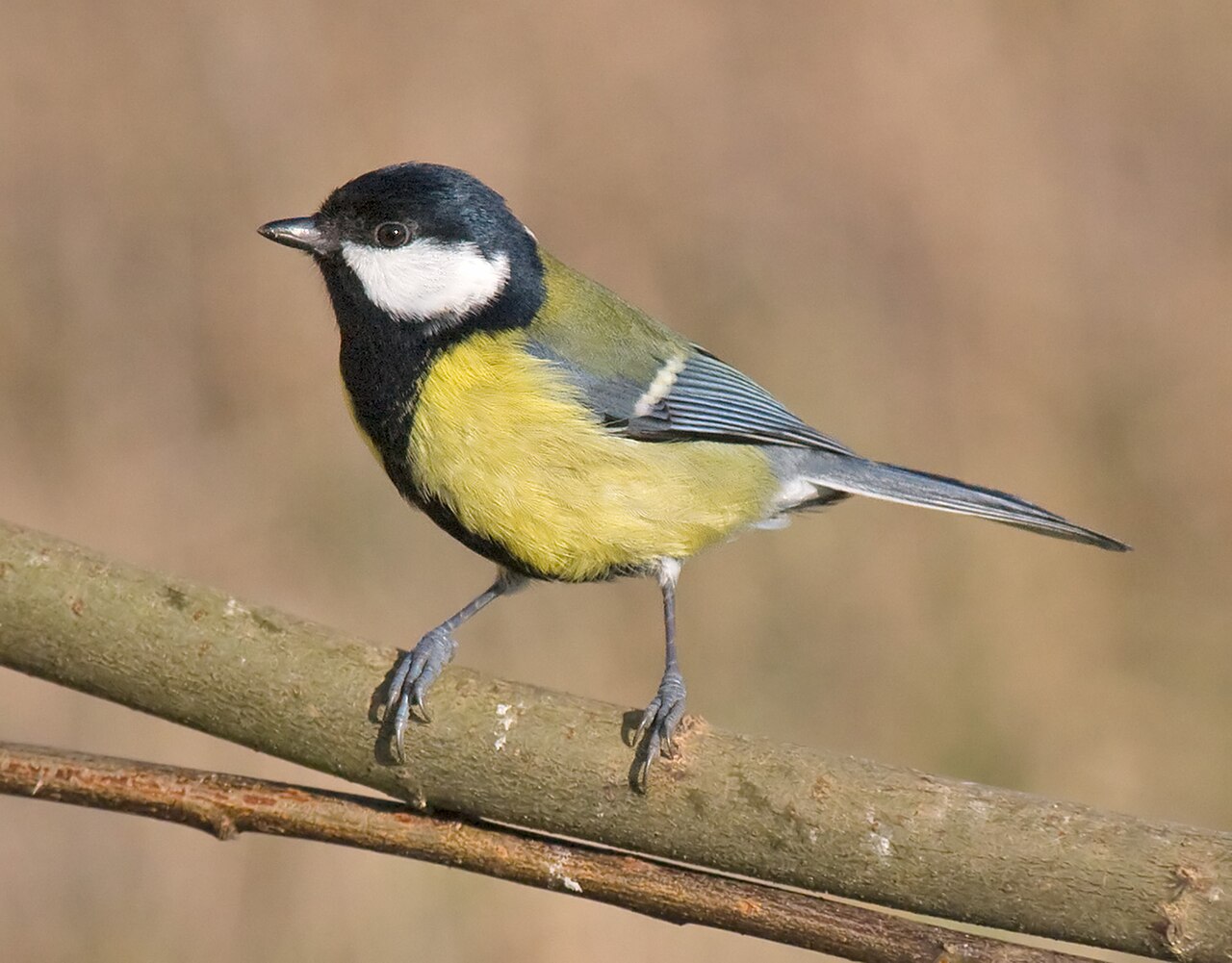
The colourful great tit (Parus major) with its bold wing-stripe. Before binomial nomenclature, naturalists found the folk taxonomy of this species and the coal tit quite confusing.

Illustration of Parus ater cypriotes by John Gerrard Keulemans


Eggs, Collection Museum Wiesbaden
Temperament
social and active
Flight Pattern
short rapid wingbeats with agile, bounding movements through foliage
Social Behavior
Forms monogamous pairs in the breeding season and small to mixed-species flocks outside it. Nests in cavities, crevices, or nest boxes, sometimes near the ground; clutch sizes are typically large for a small passerine. Caches food in scattered sites and shows strong site memory.
Migratory Pattern
Partial migrant
Song Description
Song is a high-pitched, repetitive see-see or tee-tee-tee phrase, delivered quickly and insistently. Calls include thin, sharp tsi or tsee notes, often given in rapid series when foraging in flocks.
Plumage
Compact tit with a black cap and bib, bright white cheeks and nape patch, grey upperparts, and pale buff underparts. Shows two neat white wing bars and a relatively small, neat appearance.
Diet
Feeds on small insects and spiders in spring and summer, gleaning from needles and twigs and occasionally hover-gleaning. In autumn and winter it shifts heavily to seeds, especially from conifers such as spruce, fir, and pine. Frequently visits garden feeders for sunflower seeds, peanuts, and suet. Stores surplus seeds in bark crevices and moss for later use.
Preferred Environment
Most often forages in the mid to upper canopy of coniferous trees, especially on outer twigs and needle clusters. Also feeds along forest edges, in mixed woodland, and at bird tables in villages and parks.


