

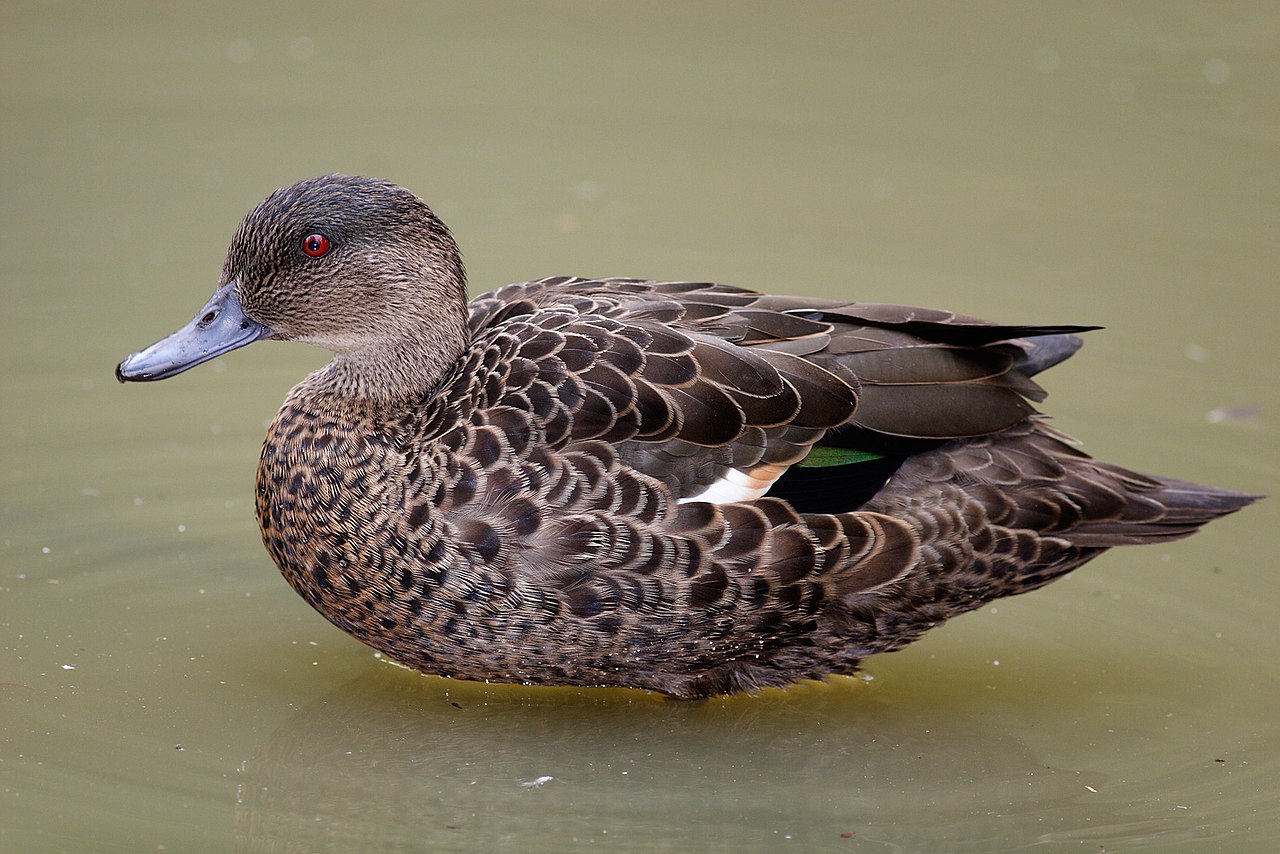
The chestnut teal is a dabbling duck found in Australia. It is protected under the National Parks and Wildlife Act 1974.
Region
Australia
Typical Environment
Most common along southern and eastern Australia, including Tasmania, in estuaries, coastal lagoons, saltmarsh, and brackish swamps. It also uses freshwater wetlands, farm dams, and flooded paddocks, especially after rains. Birds in Tasmania are largely resident, while mainland birds can disperse widely with changing water conditions. They roost on sheltered waters and forage in shallow margins and tidal flats.
Altitude Range
Sea level to 1000 m
Climate Zone
Temperate
Ease of Keeping
Beginner friendly: 3/5
The chestnut teal is a small dabbling duck native to Australia, with males showing a glossy green head and rich chestnut flanks. It tolerates brackish and saline wetlands better than many other ducks, often frequenting coastal estuaries and saltmarsh. Pairs often remain together year-round, and the species readily uses nest boxes placed near water.


Female and six ducklings, including two albinos (Tasmania)
Temperament
social and active
Flight Pattern
short rapid wingbeats with fast, direct flight
Social Behavior
Often seen in pairs or small flocks, with larger aggregations forming on productive estuaries. Pairs commonly persist through the year. Nests are placed in tree hollows, dense vegetation, or nest boxes near water; the female incubates while the male stands guard. Broods gather at safe nursery areas where multiple families may associate.
Migratory Pattern
Partial migrant
Song Description
The male gives soft, whistled notes and piping calls, especially during courtship. Females produce louder, rasping quacks used for contact and to call ducklings.
Plumage
Male with glossy green head, rich chestnut breast and flanks, and darker back; female mottled brown with paler throat and face. Both sexes show an iridescent green speculum edged with white and a relatively dark upperparts tone. Feathers are compact and waterproof for dabbling.
Diet
A versatile omnivore that dabbles for aquatic invertebrates such as insects, crustaceans, and mollusks, as well as seeds and plant material. It also grazes on algae and detritus along muddy margins. When tidal flats are exposed, it picks small prey from the surface and sieves them with its lamellate bill. Opportunistic feeding increases after rains when temporary wetlands form.
Preferred Environment
Shallow edges of estuaries, saltmarsh, brackish lagoons, and sheltered bays are prime feeding areas. It also forages on freshwater swamps, flooded paddocks, and farm dams. Birds often move between roosts and feeding sites with the tide.


